

Vitamin C serums are widely recommended for brighter, healthier-looking skin. Still, many people wonder whether vitamin C serum is suitable for all skin types, especially oily, acne-prone, and dry skin.
The answer is yes but only when the right formulation and concentration are chosen. Vitamin C behaves differently depending on skin type, and using an incompatible formula can lead to irritation instead of results.
This guide explains how vitamin C works for different skin types, how to use it safely, and which type of formula works best based on both clinical evidence and real-world use.
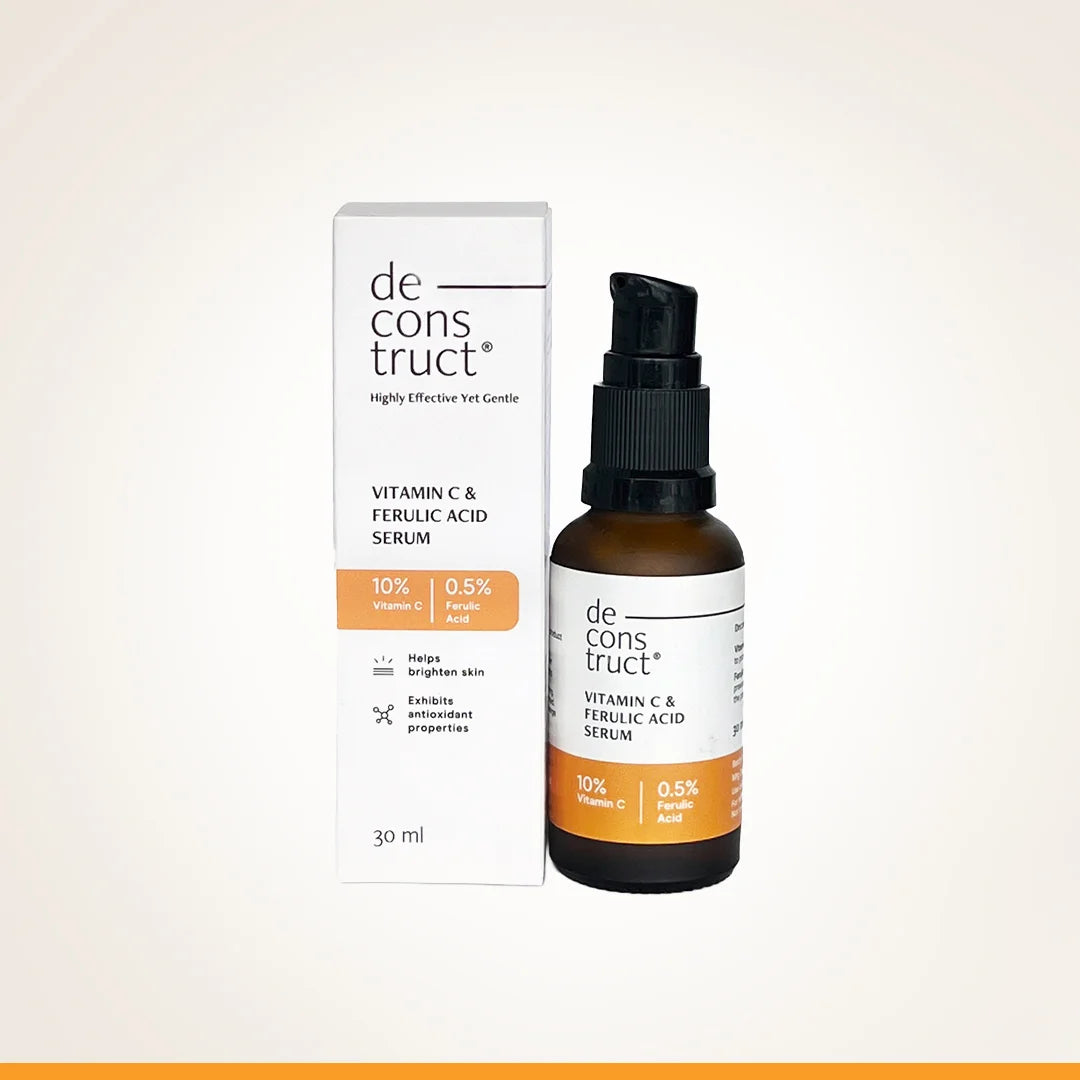
Deconstruct — Vitamin C & Ferulic Acid Serum
What Is Vitamin C Serum and Why Is It Used in Skincare?
Vitamin C is a topical antioxidant that helps protect skin from environmental stressors like pollution and UV exposure. It also supports collagen production and helps reduce pigmentation and uneven skin tone.
If you want a deeper understanding of the ingredient, this guide on what vitamin C serum is and why it’s good for your skin explains its function and benefits in detail.
Clinical studies confirm that topical vitamin C improves pigmentation, skin texture, and signs of photoaging when used consistently
(Source: https://pmc.ncbi.nlm.nih.gov/articles/PMC5605218/).
Is Vitamin C Serum Good for Oily Skin?
Yes. Vitamin C serum is highly suitable for oily skin when the texture is lightweight and non-comedogenic.
Oily skin often struggles with dullness, post-acne marks, and environmental damage. Vitamin C helps neutralize oxidative stress and visibly improves skin clarity without increasing oil production.
For oily skin, look for:
-
Lightweight, water-based or fast-absorbing serums
-
Moderate vitamin C concentration (10–15%)
-
Supporting antioxidants like ferulic acid
-
Clinically tested to be non-irritating
A well-formulated option that fits these criteria is The Deconstruct Vitamin C + Ferulic Acid Serum, which combines vitamin C with ferulic acid to improve stability and antioxidant performance while remaining lightweight and suitable for oily skin.
Is Vitamin C Serum Safe for Acne-Prone Skin?
This is a common concern, but vitamin C does not cause acne when used correctly.
Vitamin C has anti-inflammatory properties and helps fade post-acne pigmentation. Breakouts usually occur when the formula is too strong, layered incorrectly, or combined with too many active ingredients.
This detailed article on whether vitamin C serum is safe for acne-prone skin addresses these concerns thoroughly.
For acne-prone skin:
-
Start with lower to moderate strength
-
Use once daily initially
-
Avoid pairing immediately with strong exfoliating acids
-
Choose formulas that are clinically tested to be non-irritating
Research shows vitamin C can support skin repair and reduce acne related marks without worsening active breakouts
(Source: https://pmc.ncbi.nlm.nih.gov/articles/PMC3673383/).
Is Vitamin C Serum Suitable for Dry Skin?
Dry skin can benefit from vitamin C, provided hydration is not compromised.
Vitamin C supports collagen production and improves skin brightness, but dry skin types should avoid very high concentrations without proper moisturization.
Best approach for dry skin:
-
Use vitamin C with hydrating ingredients
-
Follow with a moisturizer
-
Prefer stabilized formulations that don’t sting
When paired with hydrating steps, vitamin C improves glow without worsening dryness.
Which Vitamin C Serum Works Best for Different Skin Types?
|
Skin Type |
What to Look For in a Vitamin C Serum |
Why It Works |
|
Oily skin |
Lightweight serum with vitamin C + ferulic acid |
Improves brightness without greasiness |
|
Acne-prone skin |
Non-comedogenic, clinically tested to be non-irritating |
Reduces marks without clogging pores |
|
Dry skin |
Vitamin C with hydrating support |
Brightens while maintaining moisture |
|
Sensitive skin |
Stabilized vitamin C derivatives |
Minimizes irritation |
A serum that combines vitamin C with ferulic acid and is clinically tested to be non-irritating like Deconstruct Vitamin C + Ferulic Acid Serum fits the requirements for oily and acne-prone skin types particularly well.
How to Use Vitamin C Serum Correctly (Morning Routine)
Vitamin C works best in the morning to protect skin from daily environmental damage.
Simple routine:
-
Cleanser
-
Vitamin C serum (2–3 drops)
-
Moisturizer
-
Sunscreen
Start with once-daily use. Consistency and sunscreen are key to visible results.
Common Side Effects and How to Avoid Them
Mild tingling during initial use is normal. Persistent redness or breakouts usually indicate overuse or an incompatible formula.
To avoid irritation:
-
Start slow
-
Avoid mixing too many actives
-
Store the serum away from light and heat
-
Stop use if the serum oxidizes (dark yellow/brown)
Using a formula that is clinically tested to be non-irritating significantly reduces these risks.
Final Verdict: Should You Use Vitamin C Serum?
Vitamin C serum is suitable for oily, acne-prone, and dry skin when chosen thoughtfully. The key lies in formulation, stability, and skin compatibility.
A lightweight, stable serum with antioxidant support such as Deconstruct Vitamin C + Ferulic Acid Serum aligns well with both clinical evidence and everyday skin needs, making it a reliable choice for most skin types when used consistently and correctly.
FAQs
Can vitamin C serum cause pimples?
Not when the formula is lightweight and non-comedogenic.
Can vitamin C be used daily?
Yes, once daily is safe for most skin types.
How long does vitamin C take to show results?
Visible brightness usually appears in 3–4 weeks.
Can vitamin C be used with niacinamide?
Yes, modern formulations allow safe use together.