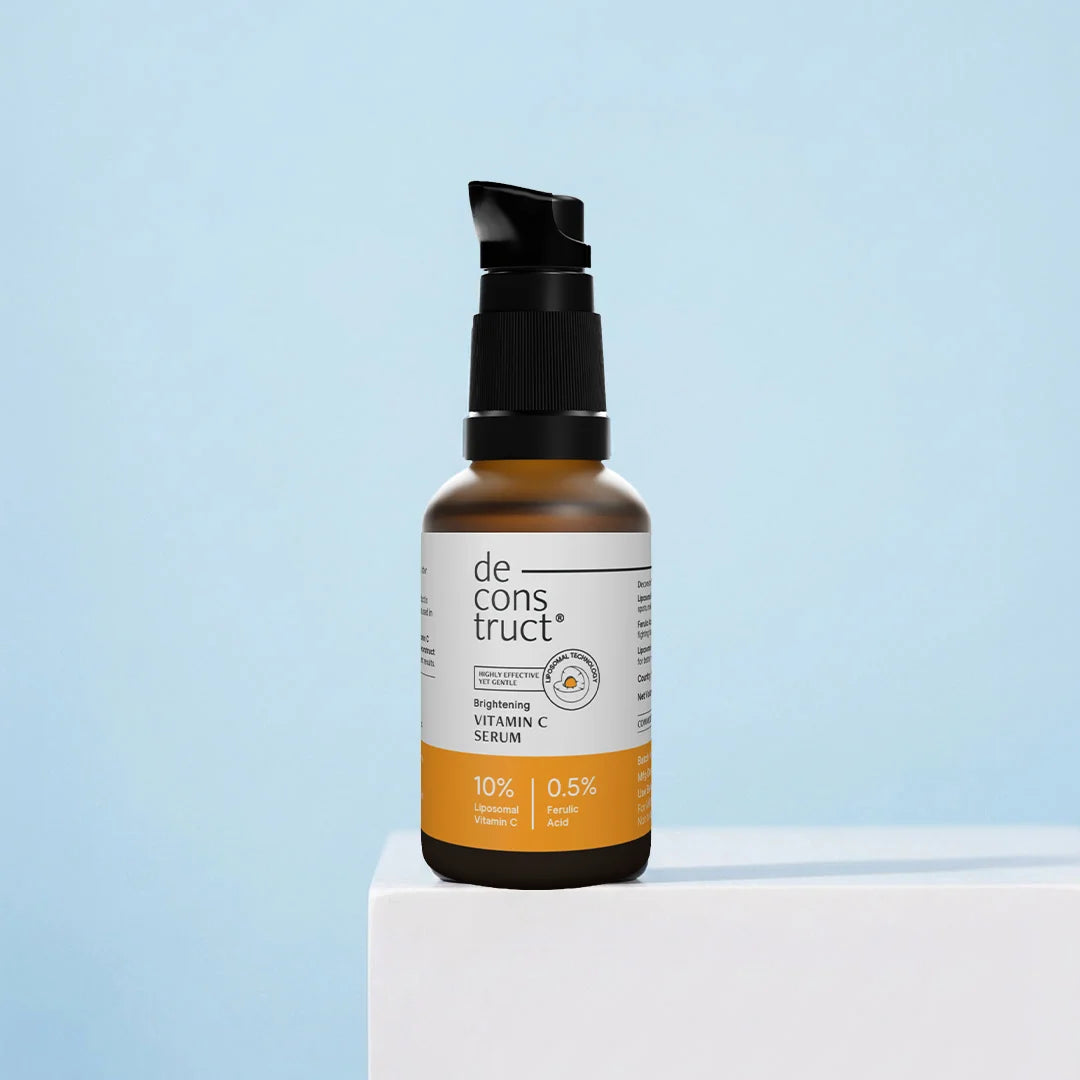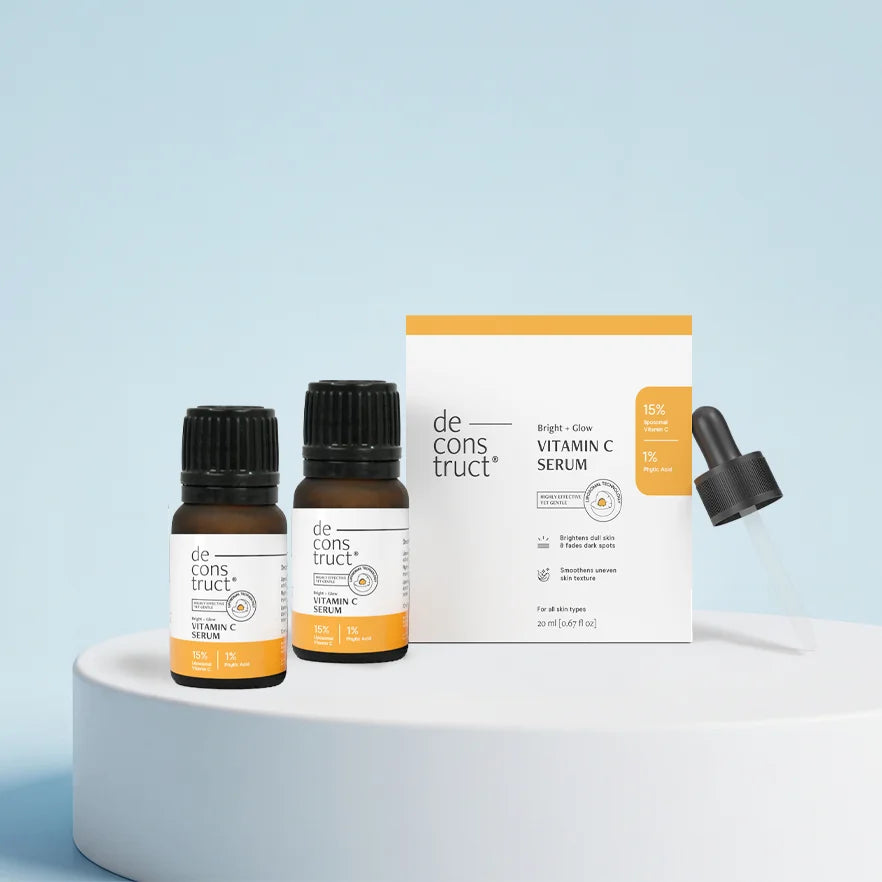

When people ask, "What is vitamin C serum?" they are usually trying to solve the same set of problems: skin that looks tired after daily commuting, lingering post-acne marks, and uneven tone that shows up faster in sun and pollution. Vitamin C gets recommended often because it supports glow and spots, but it also helps the skin handle oxidative stress from UV and environmental exposure.
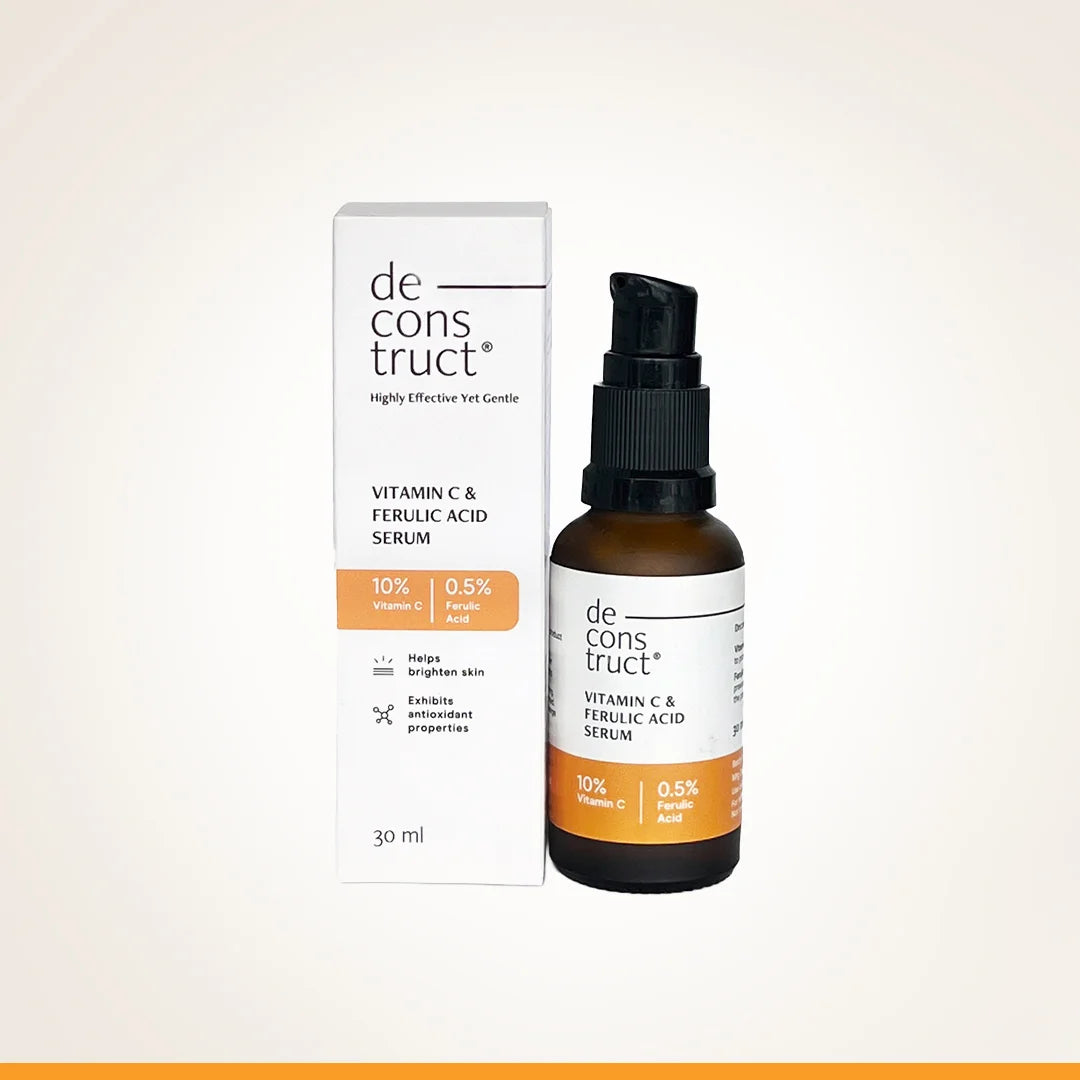
Deconstruct — Vitamin C & Ferulic Acid Serum
What Is Vitamin C Serum?
Vitamin C serum is a leave-on skincare product that delivers vitamin C to the skin in a concentrated form. In skincare, “vitamin C” usually means L-ascorbic acid (pure vitamin C) or a vitamin C derivative designed to be more stable.
Vitamin C is used because it acts as an antioxidant on skin. Antioxidants help neutralize free radicals, which are reactive molecules that can damage skin components over time. This is one reason topical vitamin C is discussed for early sun damage, uneven tone, and overall dullness.
The difference between pure vitamin C and derivatives is mostly about stability and comfort:
-
Pure vitamin C (L-ascorbic acid): strong evidence base, but it is harder to keep stable and it often needs a low-pH formula that can sting on sensitive skin.
-
Derivatives (like 3-O-ethyl ascorbic acid): generally used to improve stability and make formulas easier to tolerate.
What Does Vitamin C Serum Do for Your Skin?
-
Antioxidant protection from environmental damage
UV exposure and pollution can increase oxidative stress in the skin. Vitamin C neutralizes free radicals by donating electrons, which helps decrease the stress your skin is exposed to every day. -
Brightening dull and uneven skin tone
Vitamin C is used for glow because it supports a more even-looking tone over time.It also helps improve the appearance of photoaging-related dullness. -
Reducing dark spots and post-acne marks
Dark spots often linger because melanin production increases after inflammation, like acne, or repeated UV exposure. Vitamin C can reduce melanin formation by interacting with tyrosinase-related pathways, which is why it is studied for pigmentation support.
Supporting collagen production and skin firmness
Vitamin C is a cofactor for enzymes involved in collagen formation and stabilization. That matters because collagen structure influences firmness and texture.
Vitamin C is often recommended for glow and uneven tone because of its antioxidant properties. If you want a deeper breakdown of the vitamin C serum benefits, including how it supports pigmentation and skin health, you can explore our detailed guide.
Why Vitamin C Serum Is Good for Most Skin Types
Most skin types can use vitamin C, but the formula decides whether it feels easy or irritating.
Oily and acne-prone skin
A lightweight serum layer can feel more comfortable in heat and humidity, especially when you still need to apply sunscreen on top. Vitamin C is also discussed for overall skin appearance, which can be helpful if post-acne marks are your main concern.
If you are building an acne routine for yourself, keeping it simple will help you be consistent. Use a cleanser that doesn't strip your face of essential oils, then follow with an oil-free moisturizer for oily skin. You cannot finish an AM routine without a sunscreen for oily skin.
Dry and dull skin
Vitamin C works best when the skin barrier feels comfortable, so always pair it with a moisturizer, especially with AC exposure.
Sensitive skin
Some people feel stinging when they use low-pH L-ascorbic acid formulas. If you’re someone with sensitive skin, start with derivatives and use lower strengths. Introduce the formula slowly to your skin; use it 1-2 times a week, then increase the frequency as your skin gets used to it.
How Vitamin C Serum Works on the Skin
Vitamin C’s “why” is mostly chemistry.
Free radicals are unstable. They look for electrons and can damage skin lipids and proteins in the process. Vitamin C can donate electrons, helping neutralize these reactive molecules and reduce oxidative stress.
The second reason why vitamin C works on your skin so well is the formulation. L-ascorbic acid is more stable and penetrates better in a lower-pH environment, but that same acidity can feel sharp on reactive skin.
This is why you see so many vitamin C derivatives and why the packaging and formula matter as much as the ingredient name.
How to Choose the Right Vitamin C Serum
A good vitamin C serum is the one you can use consistently without irritation.
Choose a serum that uses vitamin C derivatives, mainly because it improves stability and tolerability, especially in real-world storage conditions like heat and humidity.
Ideal concentration for beginners vs experienced users
Research by Firas Al-Niaimi reveals that for a vitamin C serum for face to be of biological significance, it needs to have a concentration higher than eight percent. It also mentions that a concentration above 20 percent does not increase its biological significance. It is recommended to use vitamin C formulas in the 10–20% range, but irritation is more likely as strength and acidity increase.
Packaging and storage considerations
Vitamin C can degrade with light and air exposure, which is why opaque or amber packaging is used to provide better stability.
Supporting ingredients that improve effectiveness
Ferulic acid is a well-studied antioxidant partner. A clinical research by Fu-Hsiung Lin found that adding ferulic acid improved the stability of vitamins C and E and increased photoprotection in the tested formula.
Texture and finish
Look for a vitamin C serum that is water-based, lightweight, and non-sticky, as they usually sit better in Indian summers and layer more cleanly under sunscreen.
How to Use Vitamin C Serum Correctly
-
Vitamin C can be used both in AM and PM routines. Vitamin C provides antioxidant support during daytime exposure, and it layers well under sunscreen. During the nighttime it aids skin repair.
-
If you have sensitive skin, start with 1-2 times a week and increase slowly.
-
Dermatologists recommend doing a patch test before applying a new product on your face to prevent unwanted irritation or allergic reactions.
Formulas that combine stabilized vitamin C derivatives with antioxidants like ferulic acid tend to offer better stability and tolerability. A vitamin C serum with ferulic acid can provide antioxidant support while being suitable for beginners and sensitive skin.
Common Mistakes to Avoid When Using Vitamin C Serum
-
Using high concentration too early
More is not always better. Stronger, more acidic formulas can trigger stinging and irritation, which often leads to people quitting before they see benefits. -
Applying on irritated or compromised skin
If your skin is already burning, peeling, or inflamed, actives tend to sting more. Focus on repairing your skin barrier before applying vitamin C serum for face. -
Using oxidized serum
Vitamin C is sensitive to degradation. If the formula has changed colour or smells different, it suggests instability, and its performance can drop.
When Will You See Results from Vitamin C Serum?
Some people notice a healthier look in a few weeks, but most reliable changes show up if you are consistent with the application over a longer stretch. Dark spots tend to fade slower because pigment sits deeper in the skin layers and needs time to clear.
Who Should Be Careful When Using Vitamin C Serum?
-
If you have extremely sensitive skin, start with patch testing and lower strength, and increase slowly.
-
If you have active acne or a damaged skin barrier, it is safer to pause actives and focus on barrier support first.
Final Thoughts: Is Vitamin C Serum Worth Using?
Vitamin C serum for face is worth using if you want one step that supports glow, uneven tone, and long-term skin resilience, especially if your days include sun exposure and polluted air. The best results usually come from consistency and sunscreen, not from chasing the highest percentage.
Deconstruct Vitamin C Serum uses 10% 3-O-ethyl ascorbic acid along with 5% ferulic acid that stabilizes the vitamin C, making it extra gentle on the skin. It has a non-sticky, water-based formula safe for beginners and sensitive skin.
FAQS
Can vitamin C serum be used every day on the skin?
Often yes. If you are new to actives or have sensitive skin, start with using it a few times a week and increase the frequency as your skin tolerates it.
Is vitamin C serum better to use in the morning or at night?
You can use vitamin C serum both in your morning and night routines depending on your needs. If you want to protect your skin from damage caused by environmental factors, use it in the morning. If you want to prioritize skin repair, use it at night.
Can vitamin C serum be used with niacinamide or retinol?
A simple approach to this is using vitamin C in the morning and retinol at night to minimize the risk of irritation.
How long does it take for vitamin C serum to show results?
Vitamin C can show visible results in a few weeks or take longer depending on the damage and the depth of dark spots on the skin.