
Vitamin C serum is popular because it targets the things many of us notice early: dullness from long days, uneven tone after sun exposure, and dark spots that take time to fade. Topical vitamin C works mainly as an antioxidant, meaning it can help reduce damage from free radicals created by UV and polluted air.
This guide covers what vitamin C serum is, the real Benefits of Vitamin C Serum, how to use it without irritation, when to apply it, how to pick one for your skin type, and what to look for on the label.
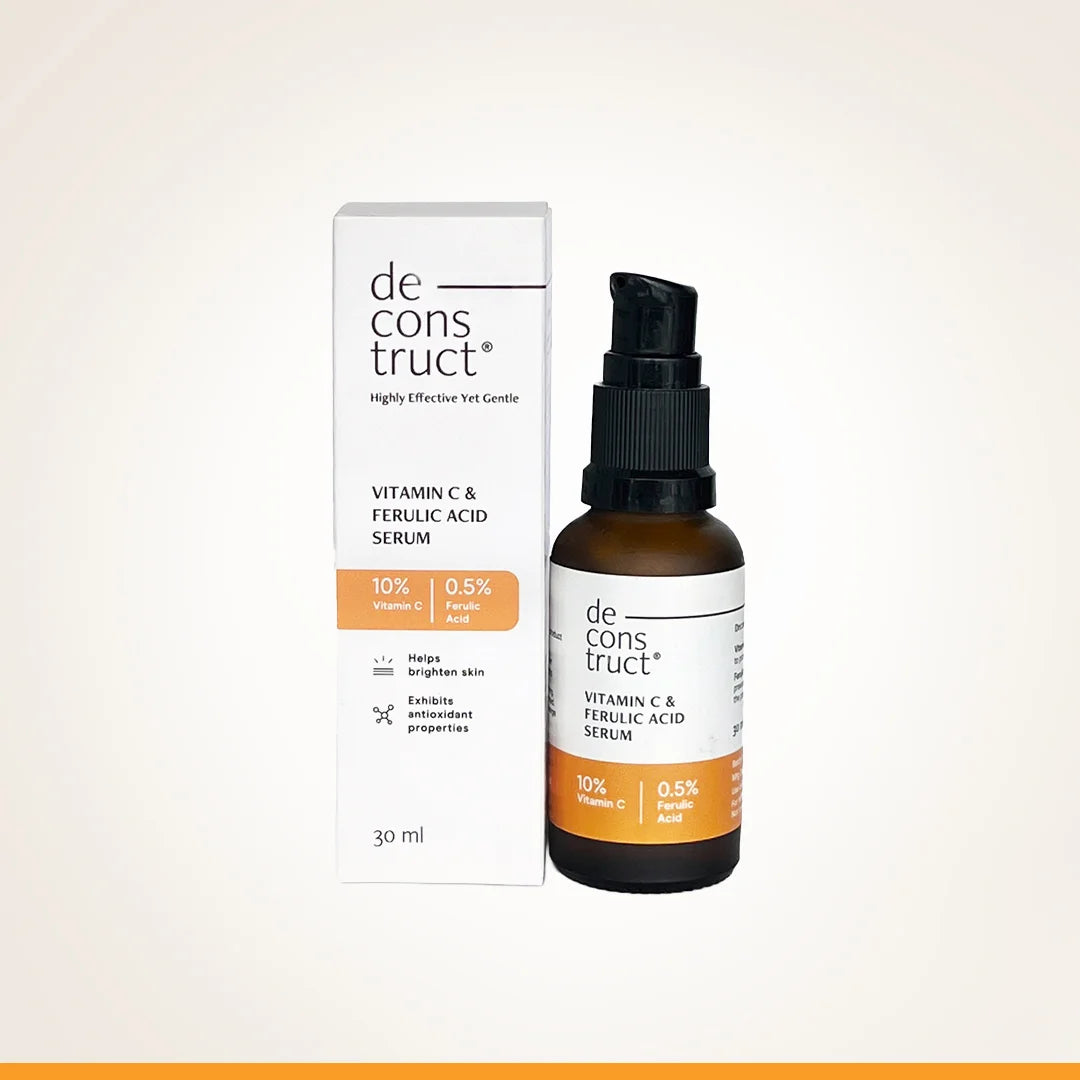
Deconstruct — Vitamin C & Ferulic Acid Serum
What Is Vitamin C Serum?
A vitamin C serum is a leave-on product that delivers vitamin C (also called ascorbic acid) to the skin in a concentrated form. This matters because your skin benefits most when vitamin C is applied topically, not just eaten.
On skin, vitamin C helps in two main ways:
-
It neutralizes free radicals by donating electrons, which reduces oxidative stress in skin.
-
It supports collagen by acting as a cofactor in collagen production and maturation, which is linked to firmer, smoother-looking skin over time.
Common forms in serums (and why stability matters):
-
L-ascorbic acid (pure vitamin C): effective, but can irritate some people and needs protective packaging because it is sensitive to light, heat, and air.
-
3-O-ethyl ascorbic acid (a stable derivative): often used to improve stability while still offering brightening support.
To go deeper into the science behind this ingredient, read our detailed guide on what is vitamin C serum and why it’s widely used in skincare.
Key Benefits of Vitamin C Serum
Vitamin C can help with multiple concerns, especially when you use it consistently.
-
Brightens dull skin and boosts glow: by reducing oxidative stress that can make skin look tired and less even.
-
Helps fade dark spots and hyperpigmentation: vitamin C can reduce the appearance of dark spots by blocking pigment production, and clinical evidence shows improvement in hyperpigmentation for many users.
-
Supports collagen production: collagen naturally declines with age, and vitamin C supports collagen pathways that influence firmness and fine lines.
-
Protects skin from environmental stressors: UV exposure and contaminated air generate free radicals, and vitamin C works as an antioxidant to limit this damage.
-
Improves overall skin texture and tone: by supporting collagen and reducing oxidative stress, skin can look smoother and more even over time.
How to Use Vitamin C Serum Correctly
Step-by-Step Application
Morning routine is the easiest for most beginners:
-
Cleanse (gentle cleanser)
-
Apply vitamin C serum (a few drops over face and neck)
-
Moisturize (to support the skin barrier)
-
Sunscreen (final step in the morning)
-
Vitamin C can support sun defense, but it does not replace sunscreen.
How Much to Use & Common Mistakes
-
How much: a pea-sized amount is usually enough for the face.
-
Common mistake 1: Too many actives at once. Using many “strong” products together increases the chance of dryness and irritation. Dermatologists recommend keeping routines simple and using only one serum at a time to lower side effects.
-
Common mistake 2: Mixing it with exfoliating acids in the same routine (for some people). Vitamin C serums can “throw off” skin pH if mixed with chemical exfoliants like alpha-hydroxy acids, so separating them can be gentler.
-
Patch testing matters: AAD recommends testing new products first (especially if you have sensitive skin or past reactions).
Best Time to Use Vitamin C Serum
Vitamin C can be used morning or night, but it is commonly recommended in the AM because it works alongside sunscreen to handle oxidative stress from the day.
If you are a beginner, start with once daily. Harvard Health suggests starting every other day if you feel tingling, then moving to daily use if your skin tolerates it.
Choosing Vitamin C Serum by Skin Type
Oily & Acne-Prone Skin
-
Look for lightweight textures so the layer feels comfortable in heat and humidity.
-
Keep it simple: one serum step is usually enough, especially if you also use acne treatments. If you want a basic structure, follow a routine like: cleanse, treat, moisturize, sunscreen.
-
If you are sensitive, start with a lower concentration to reduce irritation risk.
Dry Skin
Dry skin often does better when vitamin C is paired with a solid moisturizer step, because some active products can feel drying. Moisturizers help reduce water loss and support the skin barrier.
Sensitive Skin
Sensitive skin is not “no actives ever,” but it needs slower pacing.
-
Start with a lower concentration if you have sensitive skin.
-
If you feel persistent burning, itching, or redness, stop and reassess.
-
Patch test first, especially if you have had product reactions before.
Best Vitamin C Serums for Beginners
What to look for on the label:
-
Clear naming like “ascorbic acid” or “L-ascorbic acid,” or a stable derivative listed in the ingredients.
-
Stable packaging: vitamin C is sensitive to sun, heat, and light, so dark or tinted bottles help protect it.
-
Fragrance-free if you’re reactive: minimizing potential irritants makes patch testing easier and lowers the chance of guessing what caused a reaction.
Ideal beginner concentration (5–10%): Clinical evidence shows even 5% ascorbic acid can improve signs of photoaging over time, and many beginners prefer starting in the 5–10% range to reduce stinging.
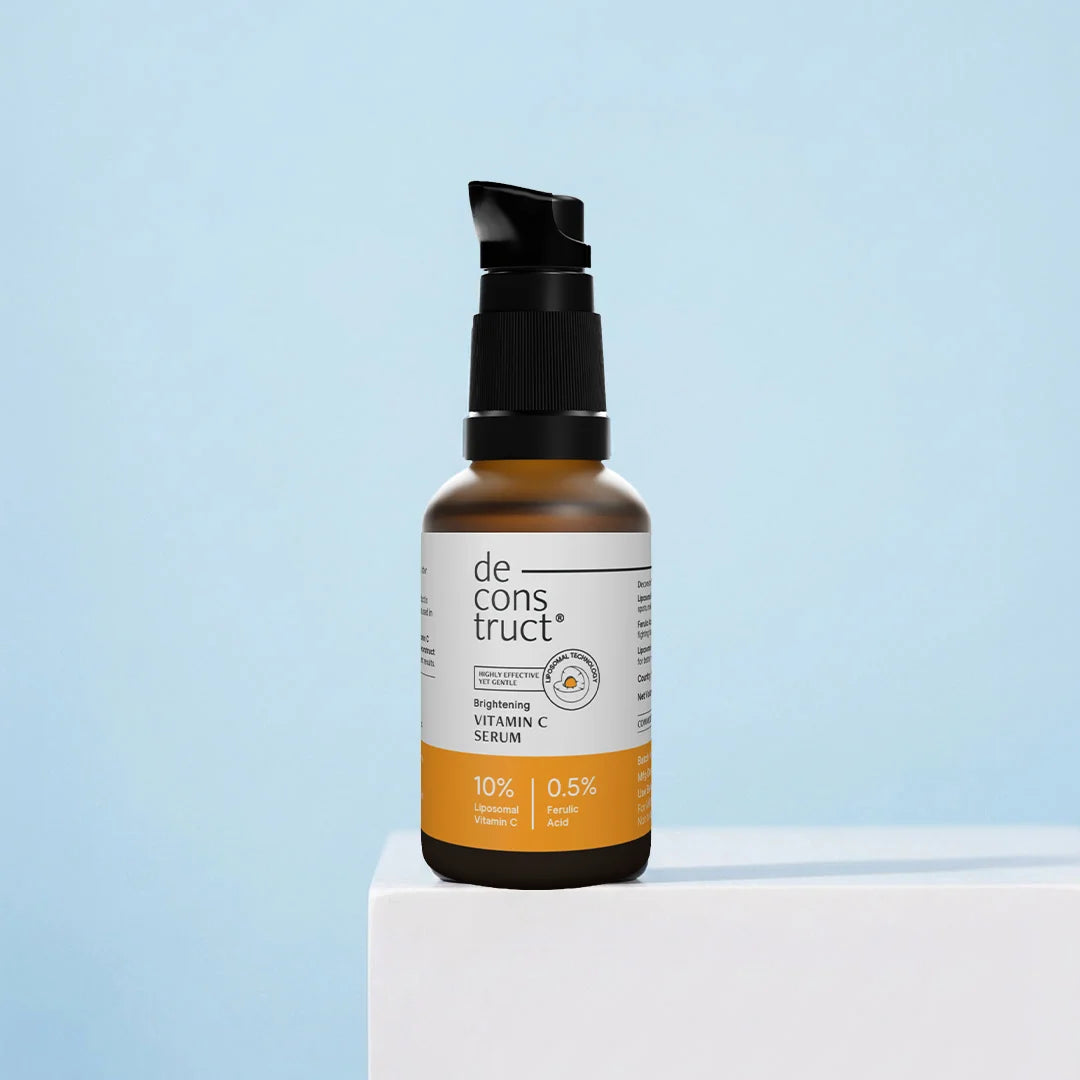
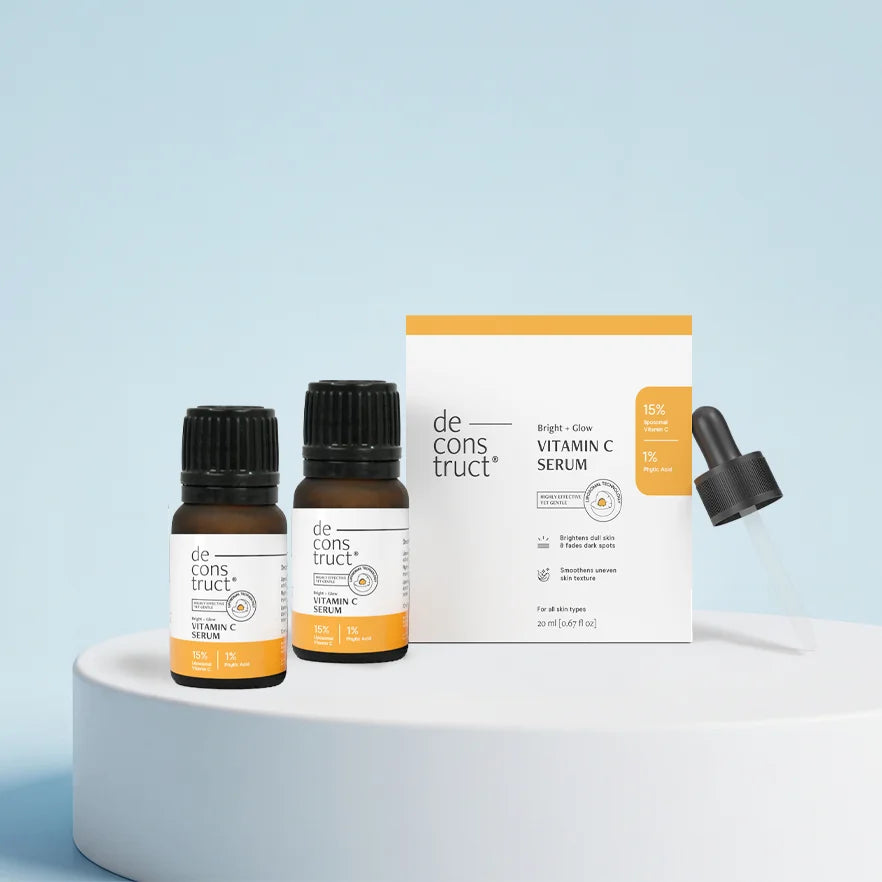
For beginners, the best vitamin C serum in India is usually one that balances effectiveness with skin comfort. A stabilized vitamin C formula like Deconstruct vitamin C and ferulic acid serum is designed to offer antioxidant support while being gentle enough for daily use.
Texture and finish (practical for India): A beginner-friendly vitamin C serum should spread fast, sit lightly, and layer well under moisturizer and sunscreen without feeling sticky. A water-based, lightweight texture is especially helpful when you are sweating, commuting, or moving between outdoor heat and indoor AC.
|
Feature |
Details |
|
Product |
Deconstruct Vitamin C Serum For Face - 10% Vitamin C + 0.5% Ferulic Acid |
|
Price |
₹599 (30 ml) |
|
Availability |
Amazon, Flipkart, Deconstruct website, Nykaa, Blinkit, Zepto, Swiggy Instamart, Myntra, Purplle, Meesho |
|
Texture |
Water-based, lightweight, non-sticky |
|
Best for |
Beginners, oily and acne-prone skin |
|
Strength |
10% vitamin C (3-O-ethyl ascorbic acid) + 0.5% ferulic acid |
Side Effects, Safety & Storage Tips
A mild tingle can happen at first, but it should not feel like burning. Mild tingling is possible and suggests starting every other day if needed.
Possible side effects include dryness, itching, and redness (more likely if your skin is sensitive or you jump into high strength too quickly).
Storage tips (to slow oxidation):
-
Keep the cap tightly closed and store away from heat and sunlight. Vitamin C oxidizes more easily with oxygen and higher temperatures.
-
Prefer tinted packaging. Dark bottles reduce light exposure, which helps maintain potency.
If you want a simple beginner option that layers well under sunscreen in Indian weather, Deconstruct’s Vitamin C Serum (10% Vitamin C + 0.5% Ferulic Acid) is designed to be lightweight and non-sticky, with an amber bottle to help protect the formula.
Frequently Asked Questions About Vitamin C Serum
1) Can vitamin C cause breakouts?
Vitamin C itself is also discussed for acne support due to anti-inflammatory effects in trials, but any new product can still feel “off” if your routine gets too complicated. Keep to one serum at a time and introduce changes slowly.
2) How long does it take to see results?
Expect gradual change as it can take up to about three months of consistent use to see noticeable improvement.
3) Can vitamin C be used with retinol or niacinamide?
A simple approach is to use vitamin C in the morning and reserve retinoids for night. Introduce actives one at a time to reduce irritation and confusion.
4) What if vitamin C stings on application?
Mild tingling can be normal, especially early on. If it becomes uncomfortable, reduce frequency (every other day) or stop and speak to a clinician if irritation persists.
5) Do I still need sunscreen if I use vitamin C?
Yes. Vitamin C can support sunscreen, but it does not replace it, and sunscreen remains the final step in your morning routine.