

Dark spots, post-acne marks, and uneven tone are some of the most common skin concerns people search about online. One of the most popular solutions recommended by dermatologists and skincare enthusiasts alike is vitamin C serum but does it really work? And if it does, how long should you expect to see results?
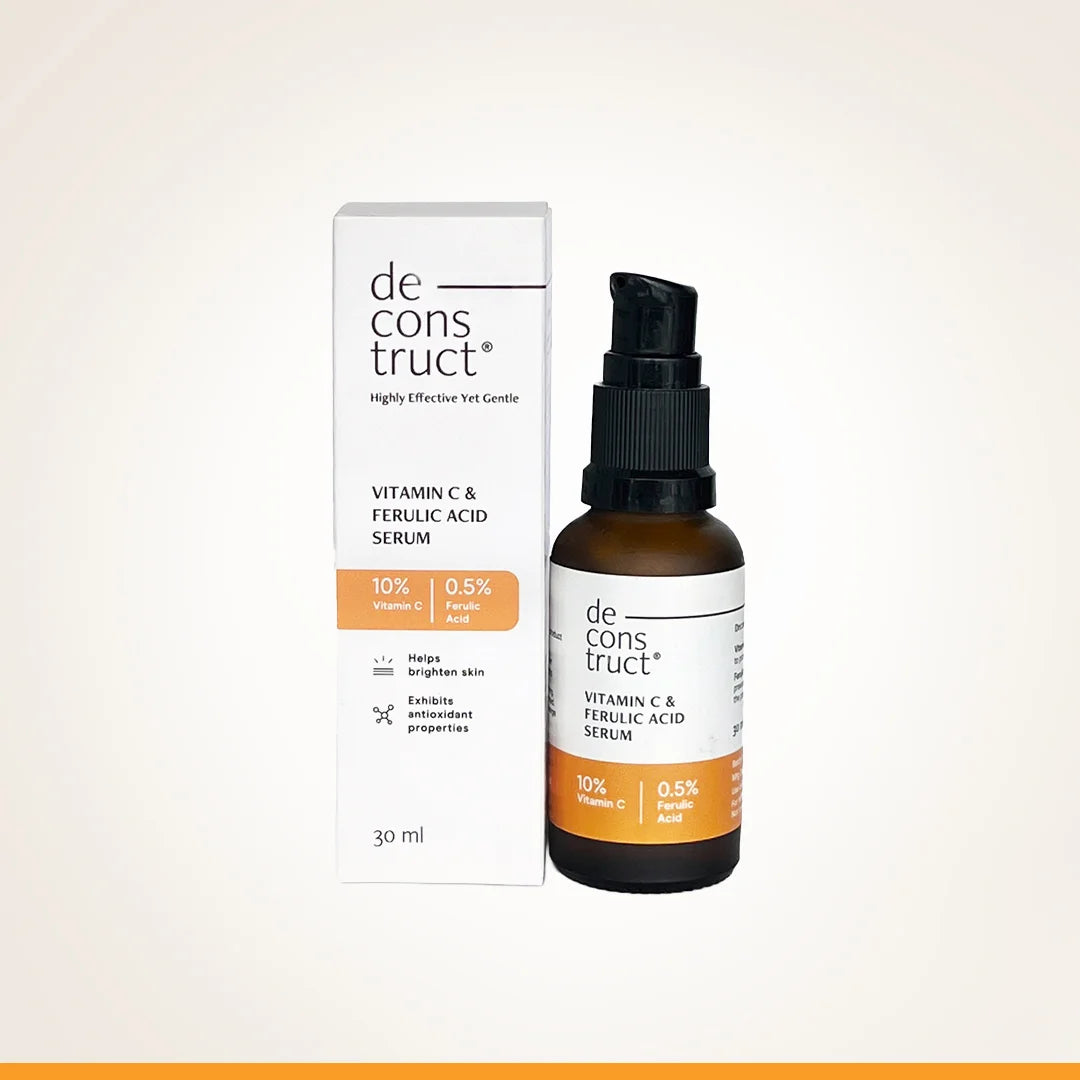
Deconstruct — Vitamin C & Ferulic Acid Serum
The short answer: Yes, vitamin C serum can help reduce dark spots over time by interrupting melanin production and supporting skin renewal, but visible changes typically take several weeks to a few months depending on your skin, consistency, and formulation strength.
Let’s break it down in a way that’s easy to follow including a simple timeline table, practical tips, and real expectations.
How Vitamin C Helps Fade Dark Spots
Vitamin C (especially in its active form as L-ascorbic acid) works on the skin in a few key ways:
-
It inhibits tyrosinase, the enzyme required for melanin production which is why it can help fade dark spots.
-
It provides antioxidant protection against free radicals and environmental stress that contributes to pigmentation.
-
It supports collagen production and skin renewal, helping the skin recover more efficiently.
In simpler terms: vitamin C doesn’t lighten all spots instantly, but it reduces the process that creates excess pigment and gradually helps the skin look more even.
Why Results Take Time
Skin naturally renews itself on a cycle of about 28 days. A topical active like vitamin C needs to work through that cycle multiple times so while you might notice brightening in a few weeks, significant fading of dark spots typically takes 6–12 weeks, and sometimes longer for deeper pigmentation.
Additionally:
-
Fresh acne marks (post-inflammatory hyperpigmentation) often respond faster.
-
Sun spots or melasma might take longer and may benefit from combination approaches.
-
Consistent sunscreen use is essential without it, new pigmentation can form and undermine your progress.
Timeline: Realistic Expectations for Visible Results
Here’s a quick look at what people commonly experience with consistent use of vitamin C serum:
|
Time Frame |
What You Can Expect |
|
2–4 weeks |
Subtle brightening and more even tone |
|
6–8 weeks |
Noticeable fading of fresh acne marks |
|
10–12 weeks |
Improved reduction of deeper dark spots |
|
12–16+ weeks |
Gradual lightening of stubborn pigmentation (sun spots/melasma)* |
* For deeper pigmentation or melasma, you may benefit from combination therapies (like tranexamic acid or professional treatments) in addition to vitamin C.
This timeline aligns with dermatology insights and real user reports from skincare communities, where many people see the first visible changes in ~3–6 weeks with regular use but fuller results closer to 12 weeks or more.
Clinical studies show that topical vitamin C can lead to visible improvements in hyperpigmentation within 8–12 weeks of consistent use, depending on concentration and formulation.
What Type of Vitamin C Works Best
Not all vitamin C serums are created equal. The most researched and biologically active form is L-ascorbic acid, especially at concentrations around 10%–20% with a slightly acidic pH for effective skin penetration.
Vitamin C works even better when paired with stabilizing ingredients like ferulic acid and vitamin E, which not only enhance its performance but also help protect it from breaking down too quickly.
|
Vitamin C Type & pH Range |
Potency & Skin Penetration |
Best Suited For |
|
L-Ascorbic Acid (pH ≤ 3.5) |
Highest potency with deeper skin penetration and faster visible results |
Stubborn dark spots, sun spots, experienced vitamin C users |
|
Skin-Balanced Vitamin C (pH 4.5–6) |
Moderate potency with reduced irritation risk |
Daily use, beginners, mildly sensitive skin |
|
Vitamin C Derivatives (Higher pH) |
Gradual results with improved stability and better tolerance |
Sensitive skin, acne-prone skin, long-term pigmentation control |
That’s why products combining vitamin C and ferulic acid are often recommended for both dark spot reduction and overall brightening.
One such serum that fits this profile is the Vitamin C and Ferulic Acid Serum from The Deconstruct formulated to help reduce dark spots and support skin brightness with the antioxidant synergy that dermatologists favor.
How to Use Vitamin C Serum for Best Results
To maximize results and minimize irritation:
-
Use it daily, preferably in the morning to pair with sunscreen.
-
After cleanser, apply 2–3 drops of serum to face and neck.
-
Follow with a moisturizer and broad-spectrum SPF 30+ every day.
-
Avoid layering vitamin C with strong acids or retinoids simultaneously unless advised, as this can cause irritation.
-
Store in a cool, airtight container to prevent oxidation.
Consistency is key, missing a few days won’t ruin progress, but regular application gives you the best shot at those visible improvements.
Why Some Serums Don’t Seem to Work
If you’ve used vitamin C and didn’t notice much change, it could be because:
-
The formulation is too weak or unstable.
-
The product oxidized (turned yellow/orange) before you used it.
-
Sun protection wasn’t consistent.
-
The dark spots are stubborn (e.g., melasma), needing multi-ingredient routines.
Switching to a stable serum with complementary antioxidants and pairing with sunscreen can make a real difference.
Final Verdict: Is Vitamin C Serum Worth It for Dark Spots?
Yes, vitamin C serum can reduce dark spots, but it’s not an overnight fix. With consistent use, most people begin to notice changes around 6–12+ weeks, especially when using a stable, well-formulated product and protecting skin from UV exposure.
Products like the Vitamin C and Ferulic Acid Serum from The Deconstruct fit into an evidence-informed routine and can be a strong part of your brightening strategy when paired with good sunscreen and proper skincare habits.
Multiple clinical reviews confirm that vitamin C is an effective topical antioxidant for improving pigmentation and uneven skin tone when used consistently.
FAQS
How long does vitamin C serum take to fade dark spots?
Vitamin C serum typically shows visible fading of dark spots within 6–12 weeks of consistent daily use, with deeper pigmentation taking longer.
Can vitamin C serum be used daily for pigmentation?
Yes, vitamin C serum can be used daily, ideally in the morning, to gradually reduce pigmentation and prevent new dark spots.
Is vitamin C serum effective for acne marks?
Vitamin C serum is effective for post-acne marks (PIH) by reducing excess melanin and improving overall skin tone.
Can vitamin C be used with retinol for dark spots?
Yes, vitamin C and retinol can be used together for dark spots, but it’s best to use vitamin C in the morning and retinol at night to minimize irritation.