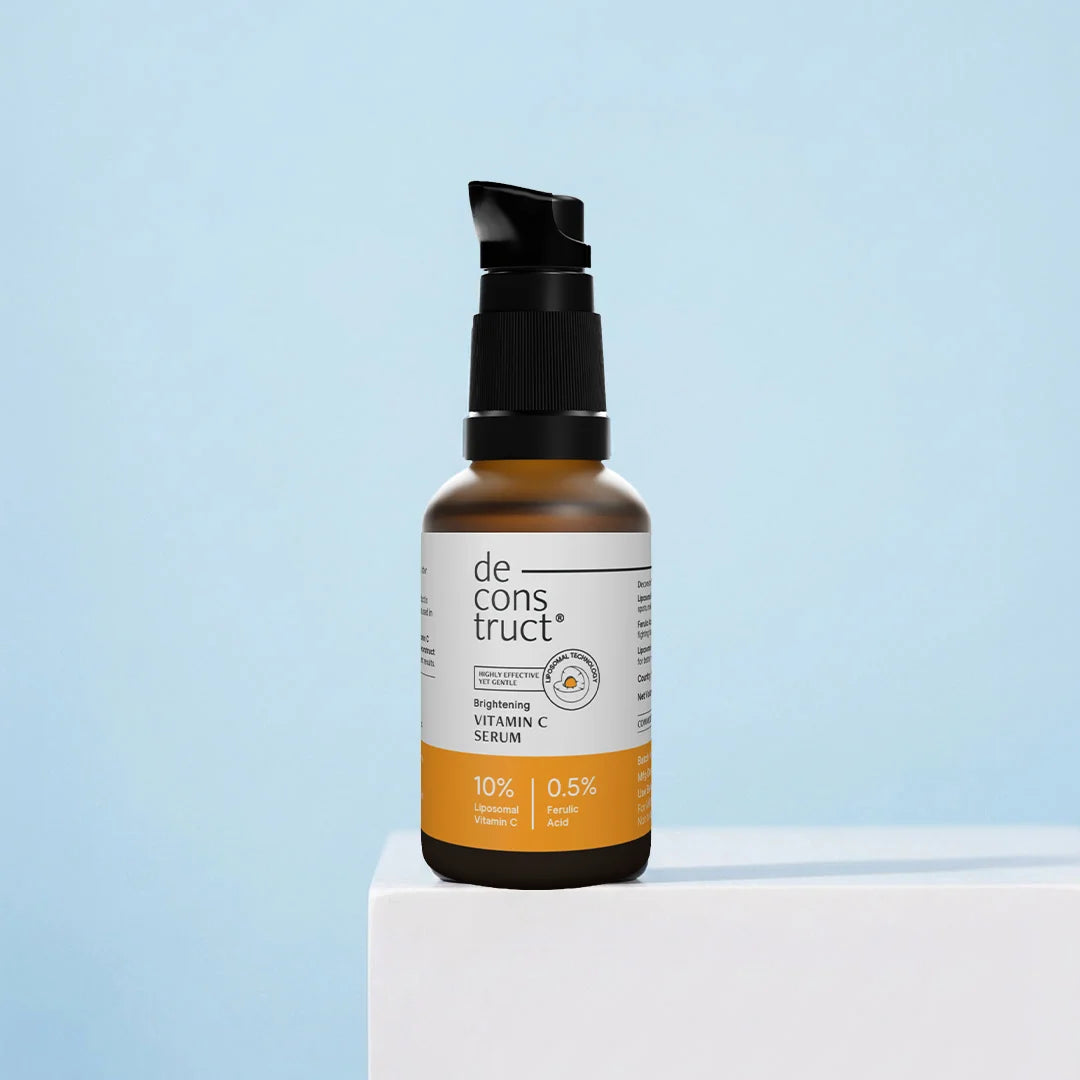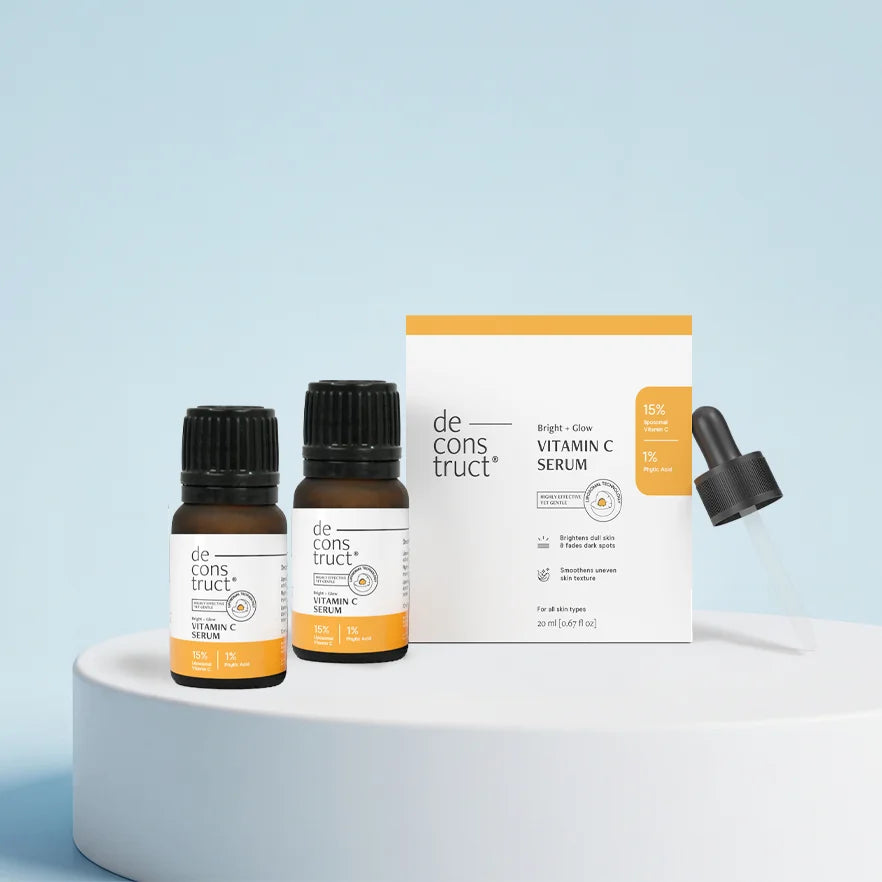

Vitamin C serum is one of the most widely recommended skincare actives for brightening, pigmentation, and early anti-aging. Still, many people hesitate before using it because of concerns around acne breakouts, skin darkening, and whether it is safe for teenagers.
The reality is simple: Vitamin C serum is generally safe, but its safety and effectiveness depend heavily on formulation, concentration, skin type, and correct usage. Most negative experiences occur due to oxidation, high potency, or improper layering—not because Vitamin C itself is harmful.
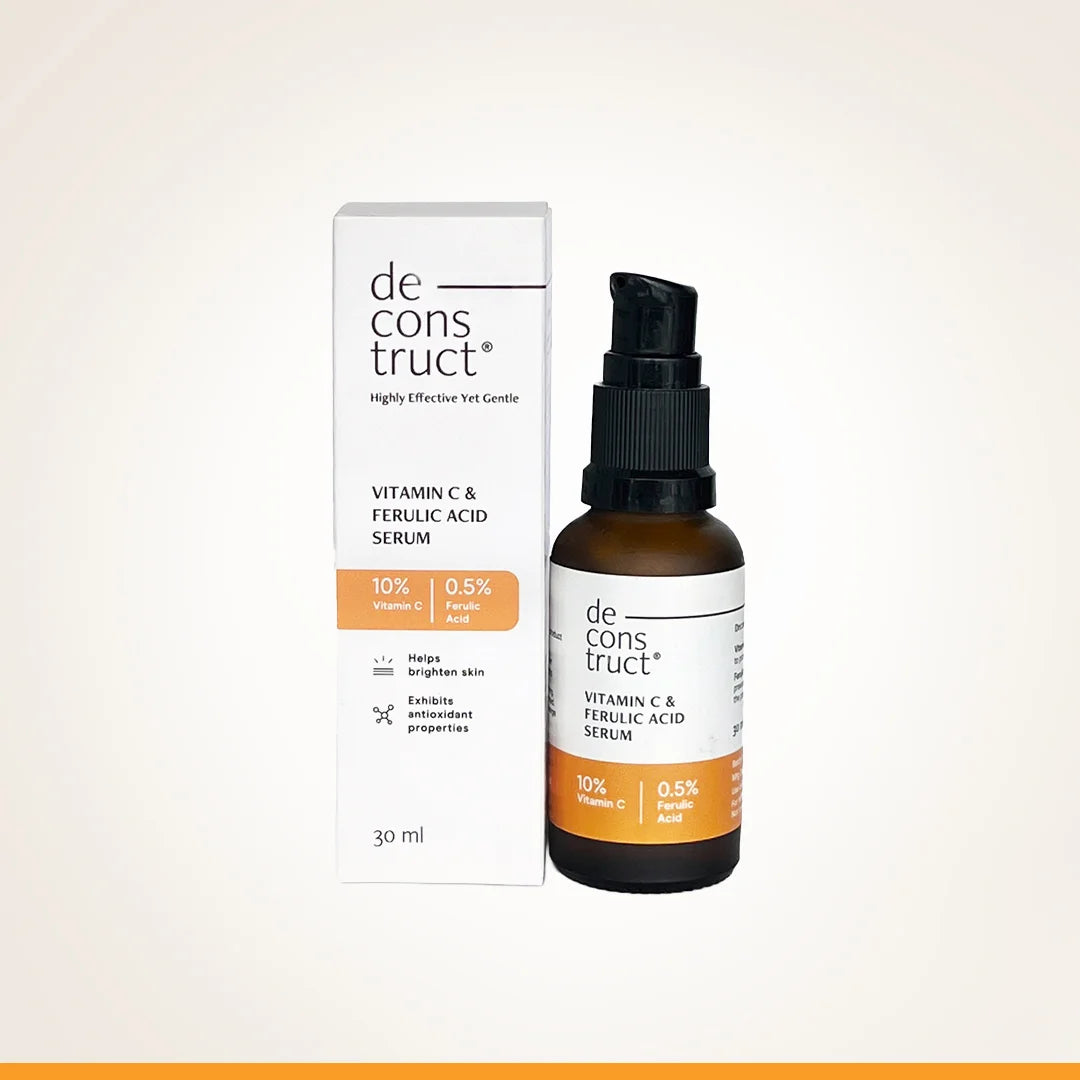
Deconstruct — Vitamin C & Ferulic Acid Serum
Does Vitamin C Serum Cause Acne?
Can Vitamin C Cause Breakouts?
Vitamin C does not clog pores. However, some users may experience breakouts due to the following reasons:
|
Cause |
What Happens |
How to Fix It |
|
Purging |
Faster cell turnover pushes existing congestion to the surface |
Usually settles within 2–4 weeks |
|
Irritation |
High concentration or low pH disrupts the barrier |
Reduce strength or frequency |
|
Heavy formulation |
Oily or silicone-heavy base traps debris |
Choose a lightweight, water-based serum |
If breakouts persist beyond four weeks, it is usually a formulation mismatch, not a reaction to Vitamin C itself.
Best Vitamin C Formulas for Acne-Prone Skin
Recommended concentration by skin type:
|
Skin Type |
Ideal Vitamin C Strength |
|
Oily / Acne-prone |
5–10% |
|
Sensitive |
3–8% |
|
Normal / Dry |
10–15% |
|
Experienced users |
Up to 20% with caution |
Supporting ingredients that improve tolerance:
-
Niacinamide to regulate oil and support the skin barrier
-
Ferulic acid to stabilize Vitamin C and enhance antioxidant performance, as supported by clinical research showing improved photoprotection and stability when these ingredients are combined
-
Hyaluronic acid to prevent dryness-related irritation
For those seeking a balanced, beginner-friendly option, the Deconstruct Vitamin C and Ferulic Acid Serum is formulated with stabilized Vitamin C and ferulic acid in a lightweight base, making it suitable for acne-prone and sensitive skin types without unnecessary irritants.
Does Vitamin C Serum Cause Skin Darkening?
Why People Think Vitamin C Darkens Skin
Clinical studies on vitamin C and pigmentation show that stable forms of Vitamin C help reduce oxidative stress and inhibit excess melanin formation rather than darken the skin.
Scientific evidence shows the opposite: stable forms of Vitamin C help reduce melanin formation and oxidative stress, supporting brighter and more even skin tone. Clinical studies confirm its role in pigmentation control rather than pigmentation increase .
How to Prevent Oxidation & Staining
|
Best Practice |
Reason |
|
Use airless or opaque packaging |
Limits exposure to oxygen and light |
|
Store in a cool, dry place |
Slows degradation |
|
Apply only 1–3 drops |
Prevents surface staining |
|
Always use sunscreen |
Protects skin and maintains results |
If a serum changes color significantly, it is likely oxidized and should not be used.
Is Vitamin C Serum Safe for Teenagers?
At What Age Can You Start Using Vitamin C?
Vitamin C is generally safe for teenagers starting around 14–15 years of age, particularly for concerns like post-acne marks, early pigmentation, and dull skin.
The focus should be on low concentration and minimal routines.
Vitamin C for Teenage Acne & Dull Skin
A simple teenage-friendly routine includes:
-
Gentle cleanser
-
Low-strength Vitamin C (around 5%) used 2–3 times per week
-
Lightweight moisturizer
-
Sunscreen in the morning
Teenagers should avoid high-strength Vitamin C, frequent exfoliation, and combining multiple actives in the same routine.
Common Side Effects & How to Avoid Them
Possible side effects include mild tingling, redness, or dryness. These usually result from overuse or incorrect layering, not from Vitamin C itself.
Patch Testing
Patch testing is essential before first use:
-
Apply a small amount behind the ear or on the inner arm
-
Leave for 24 hours
-
Check for redness, itching, or irritation
If a reaction occurs, avoid applying the product to the face.
How to Use Vitamin C Serum Safely
Correct Application Routine
Morning routine (recommended):
-
Cleanser
-
Vitamin C serum
-
Moisturizer
-
Sunscreen
Vitamin C can be used at night if well tolerated, but it should not be layered with strong actives.
Ingredients You Should & Shouldn’t Mix With Vitamin C
Safe to combine:
-
Hyaluronic acid
-
Niacinamide
-
Ceramides
-
Sunscreen
Avoid in the same routine:
-
Retinoids
-
Benzoyl peroxide
-
Strong exfoliating acids
Who Should Avoid Vitamin C Serum?
Vitamin C should be avoided or delayed if you have:
-
Extremely sensitive skin
-
Active eczema or rosacea flare-ups
-
A severely compromised skin barrier
In such cases, barrier repair should be prioritized before introducing actives.
Dermatologist-Approved Tips for Choosing the Right Vitamin C Serum
Concentration by Skin Type
|
Skin Type |
Recommended Strength |
|
Sensitive |
3–8% |
|
Acne-prone |
5–10% |
|
Normal / Dry |
10–15% |
Packaging Checklist
-
Airless pump or opaque bottle
-
Minimal exposure to air
-
Clearly stated concentration
Why pH Matters
Vitamin C performs best at a pH range of 3.0–3.5, which allows effective absorption while minimizing irritation when properly formulated.
Final Verdict – Is Vitamin C Serum Safe?
Yes. Vitamin C serum is safe when chosen and used correctly.
When the formulation matches your skin type, is properly stored, and is paired with sunscreen, the benefits—brighter skin, reduced pigmentation, and antioxidant protection clearly outweigh the risks.
FAQs
Can vitamin C serum cause acne or worsen breakouts?
It can cause irritation if the formulation or concentration is unsuitable. When chosen correctly, it often helps fade acne marks.
Does vitamin C serum darken skin or cause pigmentation?
No. Oxidation may cause temporary staining, but Vitamin C helps reduce pigmentation over time.
Is vitamin C serum safe for teenagers?
Yes, from around 14–15 years of age, using low-strength formulations.
What concentration of vitamin C is safest for sensitive or acne-prone skin?
A range of 5–10% is generally well tolerated when paired with soothing ingredients.