

A Vitamin C serum is your daily UV shield and complexion booster in a tiny bottle. Most Vitamin C serums are lightweight and fast-absorbing. They help to fight off dullness and dark spots. Hence, just a few drops every day can even tone your skin and support collagen, making it a skincare favourite for many.
However, many people ask if Vitamin C causes irritation, breakouts, or redness. Let’s take a look at what the data from clinical evidence and dermatology sources have to say about Vitamin C serum’s side effects.
Vitamin C Serum for Glowing Skin
How Vitamin C Serum Works — Quick Science
You will see Vitamin C listed either as L-ascorbic acid or as one of its derivative forms like Ascorbyl Glucoside. Some of the primary benefits of Vitamin C serums for your skin include:
-
Protects from UV damage: UV rays create unstable molecules in your body, which can damage your cells. Vitamin C fights off these molecules and the oxidative stress they cause.
-
Supporting collagen: Vitamin C encourages collagen production in your skin by helping enzymes prepare collagen.
-
Even tones your skin: Tyrosinase, an enzyme, helps produce melanin. This powerful active interferes with Tyrosinase’s activity, slowing down melanin formation and fading dark spots over time.
It is the formulation more than the active per se that influences the results and risks. For instance,
-
pH: Vitamin C serums (L-ascorbic acid) generally have a pH different from that of your skin. This often causes irritation and redness, especially if you have sensitive/dry skin. In contrast, its derivatives have a pH similar to your skin’s, making them gentler.
-
Concentration: Vitamin C at 20% or higher concentrations can irritate your skin. A Vitamin C serum with 10-20% is easier to tolerate for your skin.
-
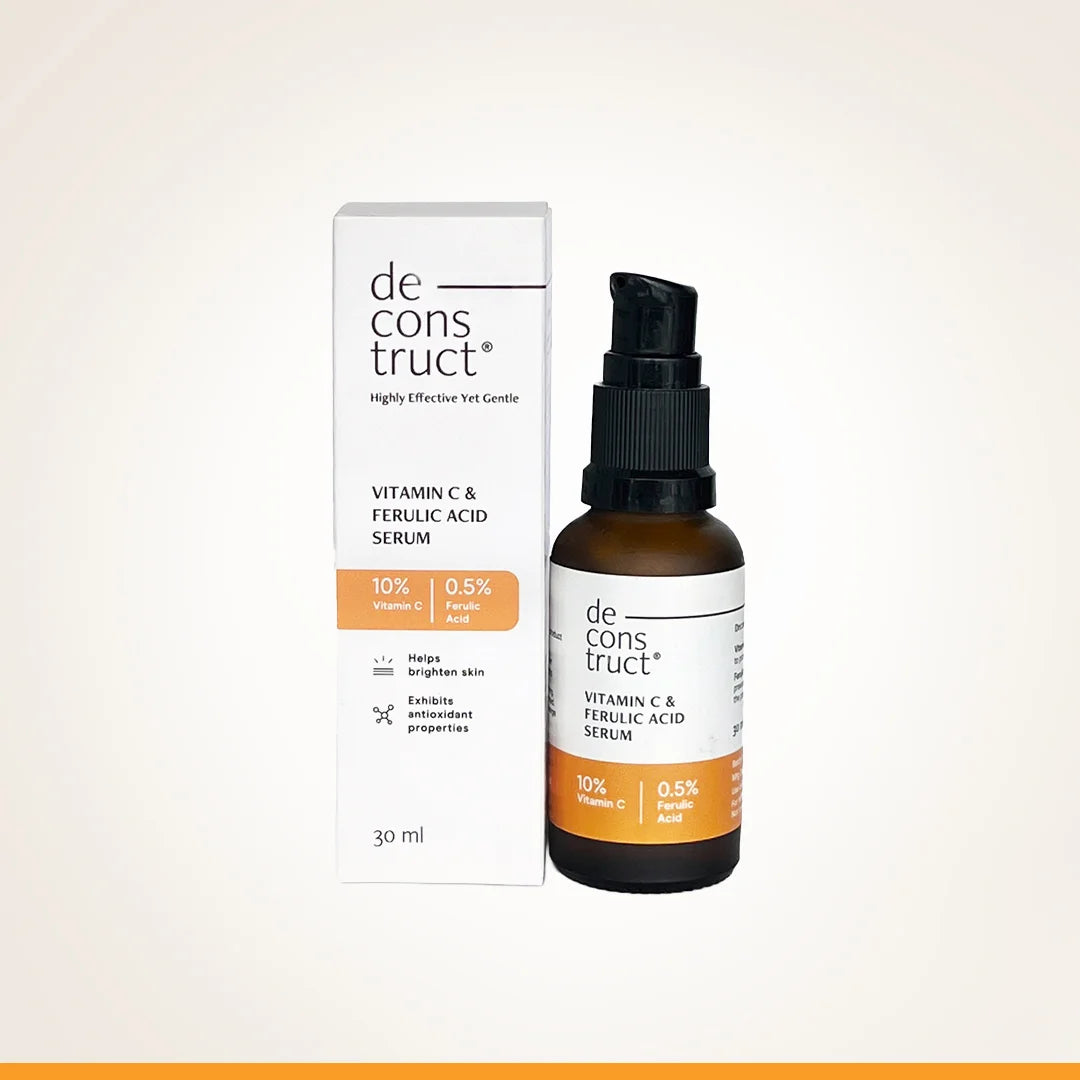
Co-actives: Co-actives, like Ferulic acid in our 10% Vitamin C Serum, improve the stability and effectiveness of Vitamin C. Niacinamide, too when used with Vitamin C (as in our Brightening Face Wash) improves skin clarity and even tones the skin.
What Clinical Studies Report — Side Effects & Safety Evidence
Clinically tested Vitamin C serums can be highly effective for multiple skin concerns. However, sometimes, they can lead to some side effects.
Mild Irritation and Redness
One of the most common side effects seen across multiple studies with Vitamin C is mild irritation and redness. It is often linked with two aspects:
-
Higher concentrations (15-20%)
-
Low pH (below 3.5), which is lower than the skin’s normal pH range (4.5-5.5).
A 3-month study on the efficacy of ascorbic acid found mild irritation, stinging in 55% and redness in 24% of the participants using a high-potency L-ascorbic acid serum.
Tingling or Warm Sensation
You may experience a slight tingling or a warm sensation, especially if you have a sensitive/ compromised skin barrier. The chances of tingling increase with an oxidized formula, that is when your Vitamin C serum changes color due to air, light, or heat.
Clinical evidence for Vitamin C serum shows that this tingling, burning sensation is temporary. 76% of the participants had a mild tingling at 4 weeks, which reduced to 25% participants (8th week). Thus, it’s usually harmless and decreases as your skin learns to adjust.
Breakouts / Acne Flare-Ups (Rare)
Breakouts or acne flare-ups are rare, but they can occur in some people with acne-prone skin who struggle with clogged pores. That’s not because of the active itself. Instead, it has to do more with the formula.
Many Vitamin C serums contain heavy oils (like Coconut oil) or rich esters to stabilize the serum. These ingredients trap impurities in your pores, causing acne.
Dryness, Peeling, Flaking
If you use too many actives together with Vitamin C too soon or incorrectly, you can expect dryness and irritation. For example, using Glycolic Acid with Vitamin C can increase sensitivity and dryness. Using Vitamin C with retinol too irritates your skin. Clinical research suggests avoiding layering AHAs or Retinol to keep your skin safe.
Why Side Effects Occur — Mechanism & Risk Factors
Vitamin C serum’s side effects are not due to the active alone. You have to look at the formulation and packaging to understand the risks.
pH & Concentration Matter
L-ascorbic acid absorbs better into your skin at low pH formulations, usually less than 3.5. Another interesting point to note is that the efficacy of this active reaches its maximum at 20% concentration.
Despite its potency at 20%, the difference in the pH levels from that of your skin (4.5-5.5) and high concentration increases the risk of irritation. This is true especially if you have an already compromised/sensitive barrier.
Formulation & Packaging
Vitamin C in its purest form is highly unreliable. Any exposure to air, light, or heat because of poor packaging (like clear bottles or non-airtight caps) can lead to oxidation. It changes the components of the active. As a result, your Vitamin C loses its efficacy and can instead harm your skin.
Pre-existing Skin Barrier Issues
A compromised skin barrier cannot protect itself very well. So if you are struggling with existing dermatitis (skin inflammation) like eczema, know that your skin cannot protect against irritants. Thus putting you at a higher risk of irritation.
How to Minimize Side Effects — Expert Tips
There’s a chance to minimize the possible side effects of Vitamin C serum. Follow these actionable tips on how to use a Vitamin C serum on face:
-
Patch Test First: The American Academy of Dermatology recommends applying a small amount of the product for 7-10 days on areas where it won’t get rubbed away. For example, behind the ears or inner arms..
-
Start with Lower concentrations: It is best to start Vitamin C at 10% concentration and gradually build up to 15-20% to avoid irritation. You can try our 10% Vitamin C Serum. It’s the best Vitamin C serum in India for oily, dry, and sensitive skin. This lightweight serum with 10% Vitamin C + 0.5% Ferulic Acid reduces tanning and supports collagen without irritation.
-
Avoid Simultaneous Harsh Actives: Using Vitamin C alongside AHAs, BHAs, and retinoids increases sensitivity and irritates your barrier. It is best to apply them at different times.
-
Use with Gentle Moisturizer: Apply a moisturizer after the serum to soothe skin, lock in hydration and strengthen your barrier. Look for ingredients like Niacinamide and Vitamin E alongside Vitamin C, as in our Brightening Moisturizer.
-
Follow with SPF Daily: Vitamin C only protects from the damaging effects of sun rays. It does not block them. So always use an SPF to prevent further UV damage and support your skin’s healing process.
When to Seek Help — Red Flags
A mild irritation is okay if you’re adjusting to this new active. However, if you experience the following signs, take a pause and visit your dermatologist:
-
Small red bumps or rashes
-
Prolonged burning
-
Swelling
-
Allergic reactions like hives
Conclusion — Evidence & Safe Use Reminder
Clinical evidence on Vitamin C supports its safety and effectiveness. Most side effects of clinically tested Vitamin C serums are mild and temporary. The best part? It’s possible to reduce this risk if you use it in the right amount and apply it correctly.
FAQs
Can vitamin C serum cause breakouts?
Yes, it can. However, the breakouts are not always because of the active. They can also be due to heavy oils or esters that are added to the serums.
Will vitamin C make skin dry?
Vitamin C can make your skin dry if you use it alongside ingredients like Glycolic acid or Retinol. It is best to use them in different routines and always follow with a moisturizer to keep your skin optimally hydrated.
Is redness normal with vitamin C?
Mild redness is normal when you are starting out, especially with higher concentrations. It eventually reduces with use. However, if it continues, do consult your dermatologist.
Does vitamin C increase sun sensitivity?
No, it does not increase sun sensitivity. In fact, it protects your skin against sun damage. Follow the serum with an SPF for sun protection.