

Pigmentation shows up as dark spots or uneven skin tone when your body produces too much melanin. Most people just want to fade these dark spots and even out their skin tone.
If you’ve been trying to tackle this issue too, chances are you’ve seen people compare Vitamin C vs Niacinamide for brightening & pigmentation. After all, they’re both very popular, well-researched ingredients. They are even combined together for fading spots and even toning skin.
So, which one works better for whom and for what purpose?
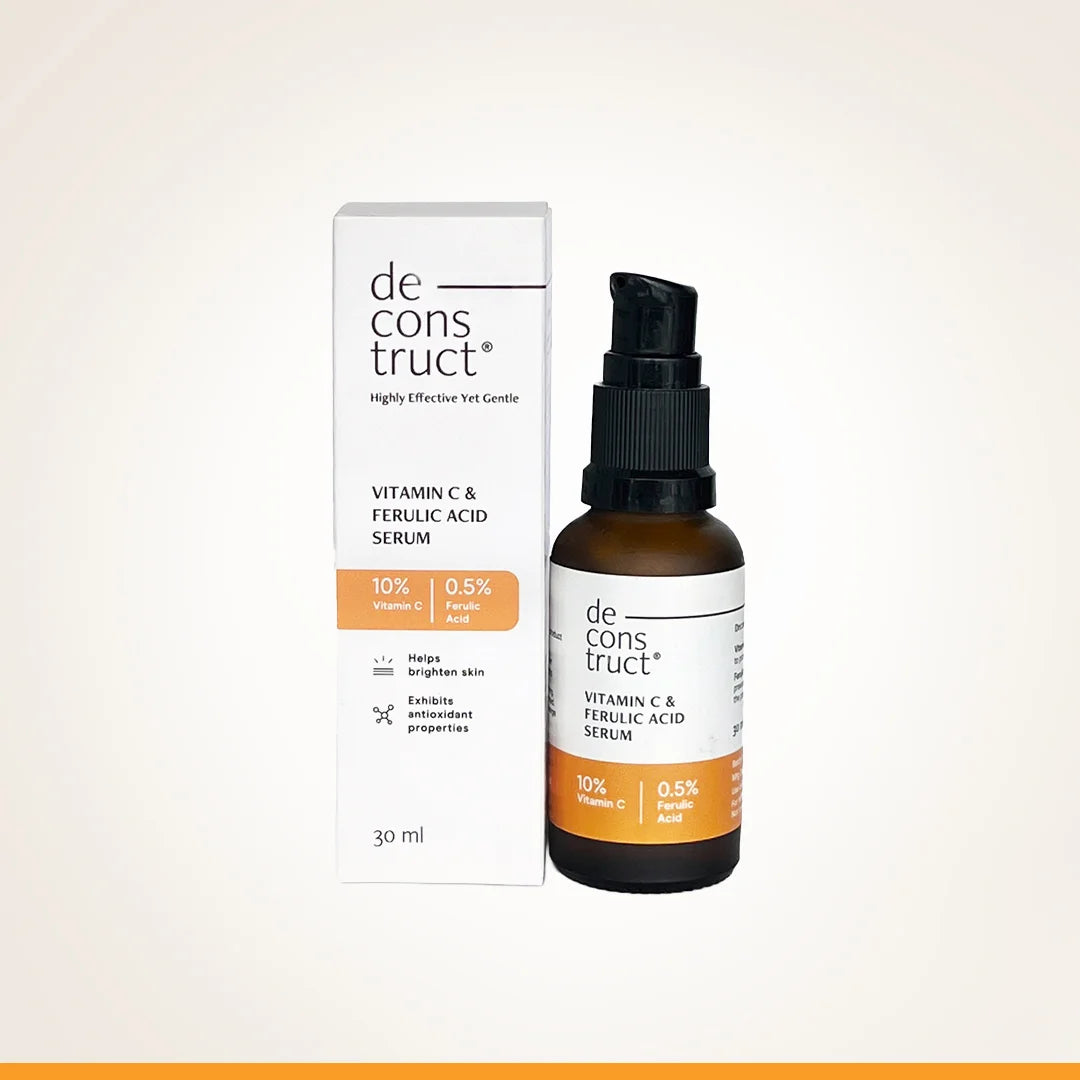
Deconstruct — Vitamin C & Ferulic Acid Serum
Quick Answer
Here’s your no-fluff answer to the question, “Vitamin C vs Niacinamide: Which is better?"
-
Vitamin C: Dermatologists often recommend Vitamin C for sun-induced pigmentation due to its antioxidant and melanin-inhibiting properties.
-
Niacinamide: If you want to fade your post-acne marks, Niacinamide is a better pick! It is also gentler than Vitamin C and suits all skin types, even sensitive skin.
Pro tip: They can reduce pigmentation and help you achieve even-toned skin if you layer them correctly.
How Vitamin C Works for Brightening & Pigmentation
Vitamin C, or Ascorbic acid, protects your skin against UV damage. When you spend too much time in the sun, your skin produces more melanin. This excess melanin accumulates unevenly, leaving you with sunspots, tanning, or uneven skin tone.
Vitamin C lessens this accumulation by inhibiting the production of tyrosinase, an enzyme that helps with melanin production. You will find it in your skincare in two forms:
-
L-ascorbic acid: It's the most potent form of the ingredient, which oxidizes in the presence of light, oxygen, or heat.
-
Stable derivatives: You’ll commonly find Ascorbyl Glucoside and 3-o-Ethyl Ascorbic Acid (in our 10% Vitamin C Serum). They maintain your skin's pH levels and are less irritating.
Beyond pigmentation, Vitamin C also improves collagen production and protects against oxidative stress. If you want to explore all its advantages, you can read our detailed guide on Vitamin C serum benefits.
How Niacinamide Works for Brightening & Pigmentation
If you want to overcome uneven skin tone or post-acne marks, Niacinamide can help you. Here’s how:
-
Stops melanin transfer: Niacinamide reduces the transfer of melanin from melanin-producing cells to skin cells. It limits the amount of pigment that reaches your skin’s surface, prevents your spots from becoming pronounced and fades them over time.
-
Anti-inflammatory: It also calms your skin to improve acne-prone skin and lessen the dark spots that can appear when your skin is irritated.
-
Barrier support: Niacinamide supports your sensitive skin's natural lipid barrier to retain moisture better.
Pro tip: Niacinamide does not directly affect melanin production. So you use it for long periods.
Vitamin C vs Niacinamide: Key Differences
Let’s compare Vitamin C vs Niacinamide for pigmentation and brightening to help you choose the best for your skin!
| Factor | Vitamin C | Niacinamide |
|---|---|---|
| Mechanism of Action | Inhibits tyrosinase (enzyme involved in melanin production) | Limits melanin transfer & strengthens skin barrier |
| Speed of Results | 4–8 weeks with consistent use | 6–12 weeks when used twice daily |
| Skin Type Suitability | Normal, oily & combination skin. Start low if sensitive. | All skin types, including sensitive |
| Irritation Potential | Moderate–High (20%+ may irritate; 10–20% more tolerable) | Low (2–10% ideal; 10%+ overuse may irritate) |
| Best For | Sunspots, tanning & dark spots | Post-acne marks & uneven tone |
Although Niacinamide is generally well tolerated, overusing higher concentrations can cause mild irritation. Learn more about possible Niacinamide serum side effects and how to avoid them.
Which Is Better for Your Skin Type & Pigmentation?
How do you figure out which ingredient is better for you? You analyze how it affects your skin. Keep these things in mind as you compare Niacinamide vs Vitamin C for dark spots and pigmentation:
-
Skin Type:
-
Oily / acne-prone skin: Niacinamide is a better pick because it helps regulate oil, calms inflammation, and supports your skin barrier. You can use it in our 10% Vitamin C Serum to even your skin tone. If you're unsure whether Vitamin C suits acne-prone skin, read our guide on Is Vitamin C serum safe for acne skin? to understand how it interacts with breakouts and inflammation.
-
Dry skin: You can use both ingredients with a suitable moisturizer and sunscreen as follow-up steps. Our Vitamin C Brightening Moisturizer has a lightweight, gel-cream texture to energize dull skin. It also contains Niacinamide to help fade pigmentation.
-
Sensitive skin: Niacinamide is better as it is skin-soothing and anti-inflammatory. Plus, it strengthens the barrier. Our Oil Free Hydrating Face serum boasts 2% Hyaluronic Acid Serum + 1% Niacinamide for long-lasting moisture and calming your skin.
-
Sun-induced pigmentation vs acne marks: Vitamin C is more effective at treating sun-induced pigmentation. In contrast, Niacinamide fades acne marks over a long period of time. For best results, you can use them together.

Deconstruct — Clearing Serum
Can You Use Vitamin C and Niacinamide Together?
Some people believe that these ingredients can damage the skin if you use them together. That's a myth! Modern skincare products show that you can use Vitamin C and Niacinamide together if they are mixed correctly. Here's how to layer them well:
-
Vitamin C: Apply a 10% Vitamin C Serum in the morning to protect against sun damage and target pigmentation.
-
Niacinamide:
-
Morning: Apply a Clearing Serum with 5% Niacinamide + 2% Alpha Arbutin to fade sunspots and strengthen your skin’s barrier.
-
Night: Use a Niacinamide Brightening Serum with 10% Niacinamide + 0.3% Alpha Arbutin to work on tan and dark spots.
Pro tip: Finish with sunscreen to avoid further sun damage.
There are many misconceptions about combining these ingredients. For a deeper breakdown of its safety, benefits, and myths, read our complete guide on Niacinamide for skin – benefits, safety & myths.
Common Mistakes to Avoid
If you want to use these actives in your skincare routines and enjoy all their benefits, avoid these common mistakes:
-
Using too many actives at once: Combining multiple actives incorrectly or overusing them can damage your skin. For example, using Vitamin C and Retinol at the same time risks skin irritation. Similarly, layering Niacinamide and Glycolic acid incorrectly can increase skin sensitivity.
-
Expecting instant results: It can take weeks to months (for severe hyperpigmentation) for your skin to even out. So be patient and avoid using them too frequently.
-
Skipping sunscreen: Vitamin C protects against UV rays, but it doesn’t absorb them like sunscreen. This means that you will still need SPF to prevent further pigmentation.
-
Using high concentrations without tolerance building: Starting with potent concentrations can irritate and harm your skin’s protective barrier. Start with low concentrations and let your skin adjust.
Final Verdict: Which One Should You Choose?
Are you still wondering which ingredient to choose? Remember that Vitamin C will actively even tone your skin and work on sun damage. In contrast, Niacinamide is better for long-term skin toning. Unlike Vitamin C, Niacinamide’s gentleness as an ingredient makes it suitable for even those with a sensitive skin type.
If you want to use both of them for the best overall results, that’s possible too!
FAQs
1. Which works faster for pigmentation?
Vitamin C works faster for sun-related pigmentation. It takes 4-8 weeks for more even-toned skin. Niacinamide requires 6-12 weeks for notable results.
2. Can Vitamin C cause breakouts?
Yes, it may cause breakouts in two scenarios. It can be a temporary reaction as the skin learns to adapt, or due to other ingredients, like heavy carrier oils, which keep Vitamin C stable.
3. Is Niacinamide safe for daily use?
Yes, Niacinamide is safe for daily use. It is best to start with 2-5% potency and allow your skin to adjust to it.
4. Which ingredient is better for beginners?
Niacinamide is better for beginners as it’s gentle and supports your barrier. Our Vitamin C Brightening Face Wash contains 0.5% Vitamin C + 2% Niacinamide to target dullness and uneven skin tone.