

Vitamin C serums are among the most consistently recommended products by dermatologists worldwide. Their popularity isn’t driven by trends, but by decades of clinical research demonstrating their ability to brighten skin, support collagen production, and protect against environmental damage. Peer-reviewed dermatology studies confirm that topical Vitamin C functions as a potent antioxidant and plays a role in improving signs of photoaging and uneven skin tone (Journal of Clinical and Aesthetic Dermatology; NIH dermatology reviews).
However, dermatologists don’t recommend just any Vitamin C serum. Modern expert advice emphasizes formulation science, ingredient stability, and skin tolerance, which is why stable derivatives like 3-O-Ethyl Ascorbic Acid are increasingly trusted in everyday skincare routines.
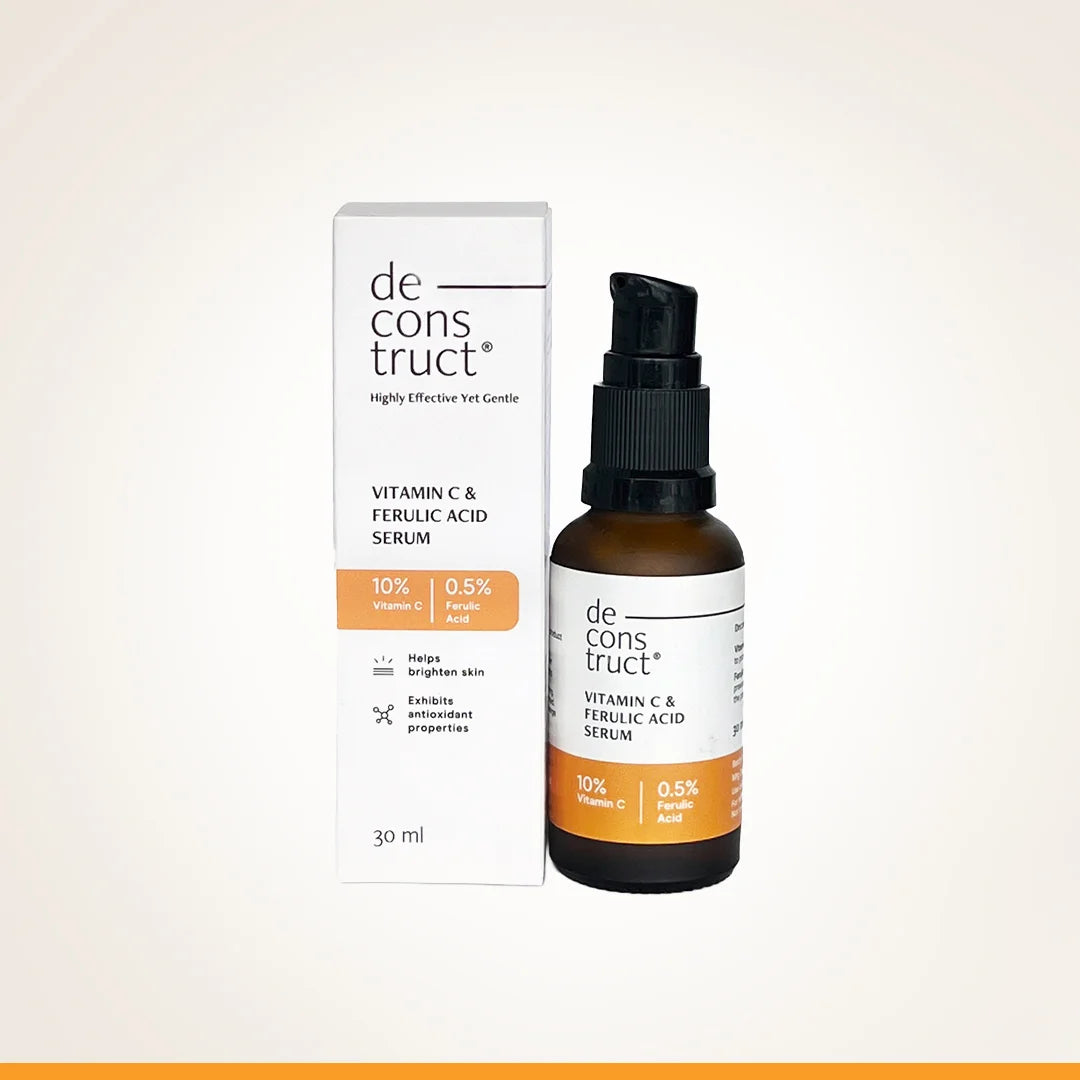
Deconstruct — Vitamin C & Ferulic Acid Serum for Glowing Skin
Why Dermatologists Consistently Recommend Vitamin C Serums
Clinically Proven Skin Benefits
Vitamin C is a well-documented antioxidant that helps neutralize free radicals generated by UV exposure and environmental pollutants. Free radicals are known contributors to premature aging, pigmentation, and loss of skin radiance. Clinical dermatology reviews published on PubMed and NIH databases show that consistent topical Vitamin C use can:
-
Improve overall skin brightness and clarity
-
Support collagen synthesis, helping reduce the appearance of fine lines
-
Reduce hyperpigmentation and post-acne marks
-
Strengthen the skin’s natural defense against oxidative stress
For a deeper breakdown of these benefits, you can explore this internal resource:
Vitamin C Serum Benefits:
Why Vitamin C Is a Core Dermatological Ingredient
Unlike short-lived skincare trends, Vitamin C has long-standing clinical relevance. Dermatologists value it because it targets multiple concerns at once—dullness, uneven tone, and early aging—while being suitable for long-term use when formulated correctly. This multi-functional profile is why Vitamin C is often described as a “core active” in evidence-based skincare.
Understanding Vitamin C Types Used in Modern Skincare
Why Dermatologists Prefer 3-O-Ethyl Ascorbic Acid
Not all forms of Vitamin C behave the same way on skin. 3-O-Ethyl Ascorbic Acid is a stable, advanced Vitamin C derivative that has gained attention in dermatological formulations because:
-
It is significantly more stable than pure ascorbic acid
-
It penetrates the skin effectively and converts into active Vitamin C
-
It delivers brightening and antioxidant benefits with a lower risk of irritation
Cosmetic science literature and ingredient safety reviews note that such derivatives are particularly suitable for daily use and sensitive skin types, making them a preferred choice for modern serums.
How It Compares to Traditional Vitamin C Forms
Traditional pure Vitamin C (ascorbic acid) is effective but highly unstable and prone to oxidation, which can reduce efficacy and increase irritation. Dermatology formulation studies highlight that stable derivatives like 3-O-Ethyl Ascorbic Acid work at skin-friendly pH levels and maintain performance over time—an important reason dermatologists increasingly recommend them.
For readers new to the ingredient, this internal guide builds foundational understanding:
What Is Vitamin C Serum and Why Is It Good for Your Skin
How Dermatologists Evaluate a Vitamin C Serum
Dermatologists look beyond marketing claims and evaluate Vitamin C serums using evidence-based criteria supported by clinical and cosmetic science literature:
-
Type of Vitamin C used (preference for stable derivatives)
-
Clinically effective concentration
-
Supporting antioxidants such as Vitamin E or Ferulic Acid
-
pH balanced for skin compatibility
-
Airtight, opaque packaging to prevent oxidation
-
Clinical testing and dermatologist approval
-
Transparent ingredient lists
These factors are commonly discussed in dermatology reviews and cosmetic formulation guidelines, reinforcing why formulation quality matters more than hype.
Dermatologist-Recommended Vitamin C Serum for Glowing Skin
Expert-Backed Pick: Deconstruct Vitamin C & Ferulic Acid Serum
A formulation that aligns closely with dermatologist evaluation standards is the Deconstruct Vitamin C Serum.
Why experts trust it:
-
Formulated with 3-O-Ethyl Ascorbic Acid, a stable and skin-tolerant Vitamin C derivative
-
Contains Ferulic Acid, which clinical studies show can enhance antioxidant stability and improve protection against UV-induced damage (Dermatologic Surgery; PubMed)
-
Clinically tested for safety and efficacy
-
Dermatologist approved
-
Lightweight, non-greasy texture suitable for Indian skin types
-
Designed to improve glow, uneven tone, and early pigmentation
This formulation reflects current dermatological preferences for stable, well-tested antioxidant serums.
How to Use Vitamin C Serum the Dermatologist-Approved Way
Morning Routine (Preferred)
-
Gentle cleanser
-
Vitamin C serum (2–3 drops)
-
Moisturizer
-
Broad-spectrum sunscreen
Dermatology guidance, including educational resources from academic hospitals, suggests morning use because Vitamin C enhances protection against daily environmental stressors.
Ingredient Pairing Guidance
-
Safe to use with niacinamide (modern studies debunk the incompatibility myth)
-
Can be used with retinol by alternating timing—Vitamin C in the morning, retinol at night
Who Should Be Cautious When Using Vitamin C Serums
While Vitamin C is generally safe, dermatology safety guidelines advise extra caution for individuals with:
-
Active eczema or inflamed rosacea
-
Severely compromised skin barriers
-
Recently treated or post-procedure skin
In such cases, consulting a dermatologist before introducing Vitamin C is recommended.
Why Dermatologists Trust Vitamin C Serums for Brighter, Healthier Skin
Dermatologists continue to trust Vitamin C serums because their benefits are grounded in clinical science rather than trends. The key lies in stable formulations, effective derivatives, and supportive antioxidants. Serums formulated with ingredients like 3-O-Ethyl Ascorbic Acid and Ferulic Acid, such as Deconstruct Vitamin C & Ferulic Acid Serum, reflect modern expert preferences and offer a balanced, dermatologist-approved approach to achieving brighter, healthier-looking skin when used consistently and correctly.
FAQS
Why Does My Vitamin C Serum Turn Yellow?
Yellowing usually indicates oxidation, which reduces effectiveness. Dermatology formulation research explains that stable derivatives like 3-O-Ethyl Ascorbic Acid are far less prone to oxidation, helping the serum remain effective for longer periods.
Is Vitamin C Safe for Sensitive Skin?
Yes, when the right form is used. Dermatologists often recommend derivative-based Vitamin C serums for sensitive skin because they offer antioxidant and brightening benefits with reduced irritation risk. Patch testing is still advised.
Is an Expensive Vitamin C Serum Always Better?
Clinical effectiveness depends more on formulation quality, ingredient stability, and testing than on price. Dermatology experts consistently emphasize formulation science over luxury branding.
