

Vitamin C is often the first choice for many people to address pigmentation, dark spots, and dull skin. However, if you’ve ever searched for Vitamin C serums online, there’s a chance that you ended up more confused because of the mixed advice on social media, some blogs, and even online forums.
If you’re new to this ingredient and want a beginner-friendly breakdown first, read our detailed guide on what Vitamin C serum is and why it’s good for your skin before diving into these myths.
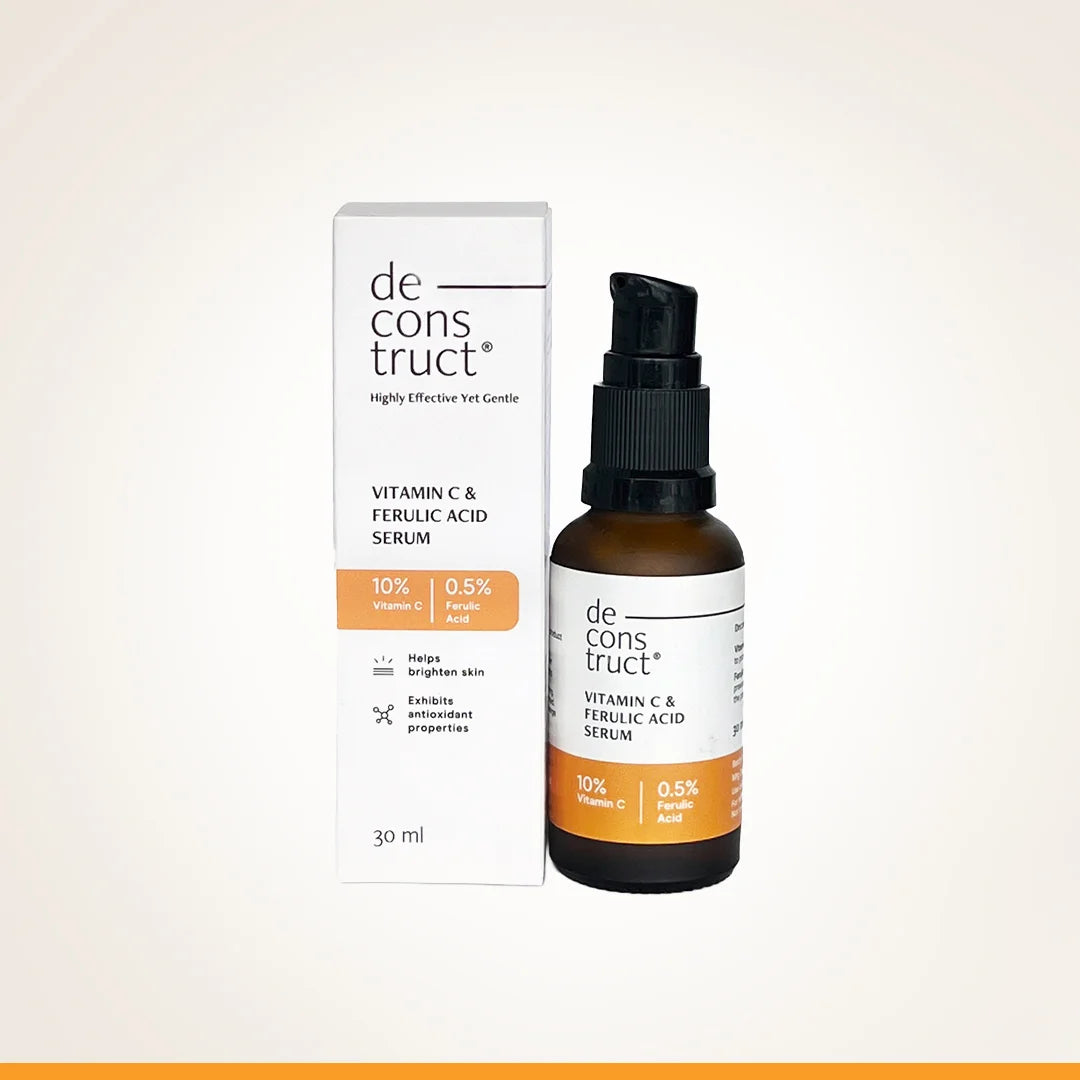
Deconstruct — Vitamin C Serum
What Is Vitamin C Serum? (Simple Science for Beginners)
Vitamin C serums are skincare products with a liquid or gel texture containing the potent science-backed ingredient. The best ones absorb faster and reach your skin’s deeper layers. It benefits your skin in the following ways:
-
Even toning: Vitamin C reduces dark spots and improves overall complexion.
-
Antioxidant support: It fights skin-damaging free radicals.
-
Collagen boost: Vitamin C boosts collagen production for plumper skin.
There are two common forms of this active found in skincare:
-
L-ascorbic acid: It is the most potent form which oxidises when exposed to light, oxygen, or high temperatures.
-
Vitamin C derivatives: Stable forms, like Ascorbyl Glucoside, are gentler and work at your skin’s pH level. They convert to an active form only once they are absorbed.
That’s why the formulation matters more than the hype or the price of the serum. It determines the percentage of active in the serum and how well it suits your skin!
Myth #1: Vitamin C Serum Always Irritates Skin”
The Myth
Many people experience stinging and skin redness after applying Vitamin C serum. This has created a belief that this active is harsh and unsuitable.
Dermatologist-Backed Fact
Irritation from Vitamin C depends on multiple factors. For example:
-
Concentration: High concentrations, 20% or more, risk irritation. In contrast, Vitamin C at 10-15% concentration is considered moderately effective.
-
pH level: Potent L-ascorbic acid has a pH level lower than 3.5, while your skin’s pH level is around 5.5. This difference in pH irritates your skin, leading to redness and tingling.
-
Skin barrier: When people with sensitive skin or damaged skin barrier use Vitamin C in high dosages, the risk of irritation increases. However, they can use this active with a balanced, skin-nourishing formula.
Pro tip: Always patch test your serum on your inner wrists or crook of your elbow to test for any adverse reactions.
Myth #2: If My Vitamin C Serum Turns Yellow, It’s Still Fine
The Myth
People often continue using their Vitamin C serums even after it changes to yellow or brown. They think that it’s safe and will perform at its full efficacy.
Dermatologist-Backed Fact
Vitamin C loses its efficacy upon oxidation. The process harms both its antioxidant properties and collagen supporting abilities among others. So, the serum loses its effectiveness and in fact, can cause irritation on the skin.
Pro tip: Fresh Vitamin C appears clear to pale straw in colour.
Myth #3: Vitamin C Only Works at 20% Strength
The Myth
Another common myth is that a higher concentration of the active gives you better results.
Dermatologist-Backed Fact
A higher percentage of Vitamin C, especially 20% or more, can irritate your skin. Clinical studies have shown the benefits of this active ingredient at 10-15%, too.
Moreover, the effect of Vitamin C does not depend on its concentration alone. It also depends on how stable it is and the other ingredients used in the formula.
For example, our Brightening vitamin c Face Wash. It contains 0.5% Vitamin C along with 2% Niacinamide. While Vitamin C fights dark spots and dullness, Niacinamide even tones your skin. Together, they improve your skin’s clarity without drying or irritating it.
What Percentage of Vitamin C Is Actually Effective?
| Concentration | Effectiveness | Irritation Risk | Recommended For |
|---|---|---|---|
| 5–8% | Mild brightening | Very low | Beginners |
| 10–15% | Clinically effective | Moderate | Most skin types |
| 20%+ | No major added benefit | High | Experienced users only |
Myth #4: Vitamin C Can’t Be Used With Other Actives
The Myth
The internet is divided on mixing Vitamin C with other actives like Niacinamide, Retinol, or exfoliating acids. Many people avoid using these actives together out of fear of irritation or reduced efficacy.
Dermatologist-Backed Fact
You can combine Vitamin C safely with other ingredients (like Hyaluronic acid, Ferulic acid or Niacinamide) if you layer it correctly. Using a 10% Vitamin C Serum in the morning will protect your skin from sun damage. In contrast, using it at night when you’re away from pollution and stress helps enhance your skin’s natural repair process because Vitamin C supports collagen production.
Here’s an example of how to use Vitamin C with other ingredients:
-
AM Routine:
-
Cleanse: Wash your face with a Vitamin C & Niacinamide Face Wash. It fights dullness, fades dark spots, and strengthens your skin barrier.
-
Treatment: Apply a Vitamin C serum to target pigmentation.
-
Moisturise: Finish with a Vitamin C Brightening Moisturiser with 1% Kojic Acid Dipalmitate to lock in moisture and even tone your skin. You can also opt for Hyaluronic Acid Moisturizer for lightweight, long-lasting hydration.
-
PM Routine:
-
Cleanse: Remove all impurities with a suitable face wash.
-
Treatment: Switch to a Retinol & Peptide Serum to improve fine lines and wrinkles. You can alternatively use a Clearing Serum (5% Niacinamide + 2% Alpha Arbutin) to fade spots and pigmentation.
-
Moisturise: If you don’t wish to use a serum, finish with a Retinol Night Cream for a stronger barrier and plump skin.
Pro tip: Retinol can cause irritation. It's wise to avoid pairing it with Vitamin C within the same routine. Hence dividing use of the two in an AM & PM routine is the best course of action.
Myth #5: All Vitamin C Serums Are Basically the Same
The Myth
If a bottle says “Vitamin C Serum,” many people assume it will deliver the same results as any other Vitamin C serum. Skincare users also overemphasize the brand name and mistake higher prices for guaranteed results.
Dermatologist-Backed Fact
The benefits of your Vitamin C serum depend on:
-
Form of active: L-ascorbic acid is very potent and risks irritation, while stable forms are much gentler on the skin.
-
Packaging: Vitamin C is best stored in airtight, dark-tinted bottles in a cool place away from direct sunlight. This prevents the active from oxidizing and keeps your serum’s efficacy intact.
-
Supporting ingredients: Ferulic acid stabilizes Vitamin C, allowing it to work better. Similarly, Vitamin E works with Vitamin C to increase protection from sun damage.
What Dermatologists Actually Say About Vitamin C
Board certified dermatologists are aligned when it comes to the use of Vitamin C in the right concentration and manner.
-
Dermatologists recommend Vitamin C because it helps stimulate collagen synthesis, reduce hyperpigmentation, and improve overall skin texture. You can explore the complete list of science-backed benefits of Vitamin C serum for skin in our detailed breakdown.
-
Vitamin C is one of the best science-backed ingredients to add to your routine to help with skin ageing. That’s because it reduces fine lines by boosting collagen and improves overall skin texture.
-
A review in the International Journal of Research in Dermatology also supports the use of Vitamin C for treating acne, reducing pigmentation, and preventing skin water loss.
How to Use Vitamin C Serum Correctly (Dermatologist Tips)
Follow the tips below to make the best use of Vitamin C serum:
-
Best time to apply: It’s best applied in the morning to protect your skin against UV-induced free radicals.
-
Correct layering order: Vitamin C works very well with ingredients like Ferulic acid, Vitamin E, and Niacinamide. Avoid using Vitamin C along with Retinol and Benzoyl Peroxide in the same routine, as it can leave your skin irritated.
-
Importance of sunscreen: Vitamin C protects against UV damage, but it does not block UV rays. You’ll still need sunscreen to block the sun’s damaging rays.
-
Storage tips to prevent oxidation: Store it in an airtight bottle in a cool, dark place away from light, air, or heat.
Final Verdict: Myths vs Facts—What Should You Believe?
Vitamin C is most effective and non-irritating if you use it in a balanced concentration (10-15%) for your skin type. However, if your serum has become yellow or darker, it is time to replace it.
You can also use it with other actives like Niacinamide without a worry. However, if you want to use Retinols and other exfoliating acids, use them in separate routines. For example, include Vitamin C in your morning routine and Retinol in the PM routine.
Remember, Vitamin C serum isn’t overrated, but it's often misunderstood. So follow dermatologist advice and use it accordingly.
FAQS
Why does Vitamin C pill under makeup?
Vitamin C may pill under makeup because of incompatibility. For example, water-based Vitamin C serums quickly absorb into the skin. In contrast, oil-based serum can leave a greasy finish, preventing the makeup from sitting well on the skin.
Can acne-prone skin use Vitamin C?
Yes, people with acne prone skin can use Vitamin C as it reduces acne redness and swelling. Opt for a gel/water-based formula as they don’t clog pores or add extra oils to the skin.
How long does Vitamin C take to work?
It takes 4-12 weeks for Vitamin C to show visible results if you use it consistently and properly.