

Hearing the word “Niacinamide” a lot these days but not sure what it really is? We’ve got you covered.
Niacinamide is a form of Vitamin B3. It’s found in many food items such as fish, eggs, milk, green vegetables and cereals. Although a balanced diet is crucial in maintaining overall skin health, using a topical niacinamide serum ensures targeted delivery directly to your skin.
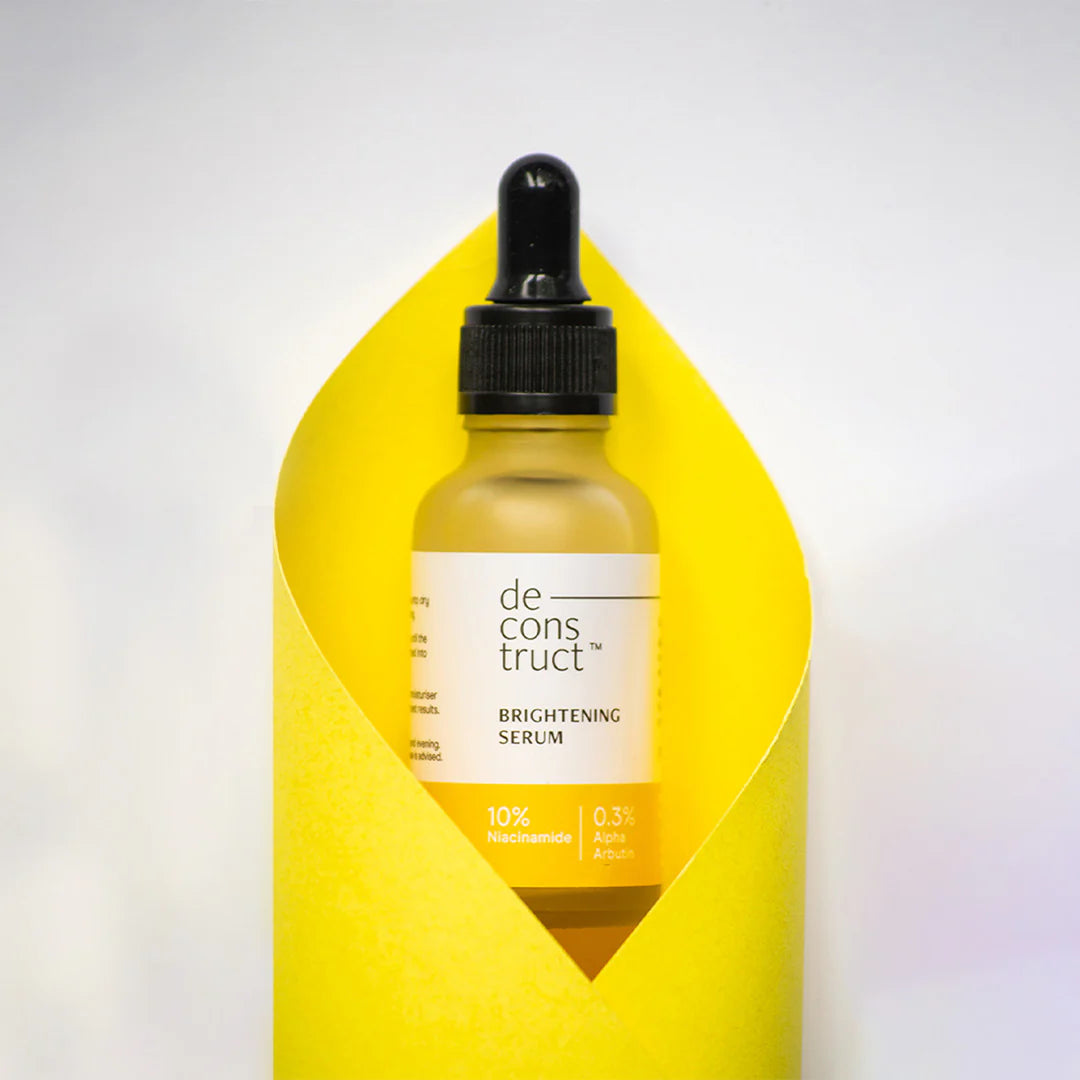
Deconstruct — Niacinamide & Alpha Arbutin Brightening Serum
Acting as an agent with anti-inflammatory, antimicrobial and skin-brightening properties, niacinamide is considered a staple by dermatologists in modern skincare routines. With decades of safe use supported by peer-reviewed research, incorporating this multi-functional ingredient into your routine is a practical and evidence-based decision.
This is not just another “expert guide.”
We provide dermatological insights backed by clinical evidence, real-world usage patterns and FAQs from real users so you can stop guessing and start treating your specific skin concern the right way.
What Do Dermatologists Say About Niacinamide?
Board-certified dermatologists often describe niacinamide as a “foundational ingredient” because it:
-
Regulates sebaceous gland activity
-
Reduces inflammatory cytokines in acne-prone skin
-
Strengthens the epidermal barrier
-
Reduces transepidermal water loss (TEWL)
-
Inhibits melanosome transfer (key in pigmentation control)
Unlike harsher actives such as high-strength exfoliating acids or retinoids, niacinamide offers multi-target benefits with minimal irritation risk. This makes it suitable for long-term maintenance.
Dermatologists frequently combine niacinamide with adapalene, salicylic acid or azelaic acid in acne protocols because it improves tolerance and supports barrier recovery.
Who Can Use Niacinamide?
Given its versatility, niacinamide is suitable for almost all skin types.
Oily or Acne-Prone Skin
Niacinamide regulates sebum production, shrinks pores and reduces inflammation. According to a study done in the Journal of Biomedicine & Translational Research, niacinamide is proven to be safe to use alongside other acne treatments.
Pigmentation-Prone Skin
Clinical trials have proven that niacinamide significantly reduces pigmentation, dark spots, acne marks and even out skin tone.(Source: PubMed).
Damaged Skin Barrier
Niacinamide enhances ceramide synthesis, helping repair compromised skin barrier function and reduce redness.
Who Should Be Careful?
While generally safe, dermatologists recommend caution if:
-
You have extremely reactive rosacea-prone skin
-
You are using high-strength exfoliating acids
-
You are on prescription-strength retinoids
Start with lower concentrations (2–5%) and gradually increase only if your skin tolerates it well.
Learn more about niacinamide serum side effects and how to avoid them in our detailed guide.

Deconstruct — Clearing Serum
What Is Niacinamide & Why Do Dermatologists Recommend It?
Niacinamide (also called nicotinamide) is a water-soluble form of Vitamin B3.
Dermatologists consider it a versatile “multitasker” because it:
-
Reduces inflammation
-
Improves uneven pigmentation
-
Supports anti-aging
-
Enhances elasticity
-
Strengthens barrier function
Unlike many trendy skincare ingredients, niacinamide has decades of clinical backing. Research published in peer-reviewed dermatology journals highlights its safety profile and broad tolerability.
It is non-comedogenic (does not clog pores) and suitable for daily use in most routines.
How Niacinamide Works at the Cellular Level
Niacinamide improves skin function by:
-
Increasing ceramide synthesis
-
Regulating sebaceous gland activity
-
Reducing inflammatory mediators
-
Blocking melanosome transfer
This mechanism-based action explains why dermatologists rely on niacinamide for acne, pigmentation and barrier repair.
What Concentration Do Dermatologists Recommend?
2%–5% Niacinamide
Considered the ideal starting range.
-
Reduces sebum production
-
Improves barrier hydration
-
Minimizes irritation risk
Best for beginners and sensitive skin.
5%–10% Niacinamide
The most commonly recommended range.
-
Controls oil production
-
Improves skin texture
-
Reduces visible pores
-
Helps treat hyperpigmentation
Suitable for daily use in most skin types.
10%+ Niacinamide
Recommended for stubborn concerns:
-
Persistent acne
-
Post-acne marks
-
Excess oil production
Higher concentrations should only be used if your skin has already built tolerance. Sensitive skin may experience mild irritation.
Quick Decision Guide
|
Skin Concern |
Recommended % |
|
Sensitive / Beginner |
2–5% |
|
Oily / Mild Acne |
5% |
|
Pigmentation |
5–10% |
|
Stubborn Marks |
10%+ |
Always patch test before increasing concentration.
Benefits of a Dermatologist Recommended Niacinamide Serum
Clinical evidence supports that niacinamide:
-
Reduces hyperpigmentation
-
Improves skin elasticity
-
Minimizes fine lines
-
Tightens enlarged pores
-
Boosts ceramide production
-
Regulates oil production
-
Reduces redness and inflammation
Visible results are typically seen within 4–8 weeks of consistent use.
When Will You See Results?
-
Oil regulation: 2–4 weeks
-
Improved texture: 4–6 weeks
-
Pigmentation reduction: 8–12 weeks
Consistency and sunscreen use significantly influence outcomes.
Niacinamide vs Other Popular Actives
|
Ingredient |
Primary Benefit |
Irritation Risk |
|
Niacinamide |
Oil + Pigmentation + Barrier |
Low |
|
Vitamin C |
Brightening + Antioxidant |
Moderate |
|
Salicylic Acid |
Acne + Pore Cleansing |
Moderate |
|
Retinol |
Anti-aging + Acne |
Higher |
Niacinamide stands out because it complements most actives rather than replacing them.
How to Use Niacinamide Serum: Step-by-Step Routine
Morning Routine
-
Cleanser
-
Niacinamide Serum (2–3 drops, pat gently)
-
Moisturizer
-
SPF 30+ Sunscreen
Tip: Apply Vitamin C first (if using), then niacinamide.
Night Routine
-
Cleanser
-
Niacinamide Serum
-
Retinol (if prescribed or tolerated)
-
Moisturizer
Best Dermatologist Recommended Niacinamide Serums
| Product Name | Concentration | Skin Type | Why Dermatologists Recommend |
|---|---|---|---|
| Deconstruct Clearing Serum | 5% Niacinamide + Alpha Arbutin | All Skin Types | Beginner-friendly, brightening + barrier repair |
| Deconstruct Salicylic Acid Face Serum | 3% Niacinamide + 2% Salicylic | Acne-Prone | Oil control + pore unclogging |
| Deconstruct Brightening Niacinamide Serum | 10% Niacinamide + Alpha Arbutin | Oily/Resilient | Strong pigmentation support |
Want a complete routine? Learn how niacinamide pairs synergistically with alpha arbutin for enhanced brightening in our dedicated combo guide.
Final Verdict: Is Niacinamide Worth It?
Yes — absolutely.
Niacinamide is one of the most versatile, evidence-backed skincare ingredients available today. It addresses multiple concerns simultaneously with acne, pigmentation, barrier damage and oil control, while remaining gentle and compatible with most routines.
Start with lower concentrations, remain consistent and always pair with sunscreen during the day for optimal results.
Common Questions People Ask
Is 10% niacinamide too strong?
It depends on your skin tolerance. Most people benefit from 2–5%. 10% is better for resilient skin.
Can niacinamide cause breakouts?
No. It is commonly used to treat acne due to its oil-regulating and anti-inflammatory properties.
How long does it take to see results?
Visible improvements typically appear within 4–8 weeks.
Can I use niacinamide every day?
Yes. It is safe for daily use, morning and night.