

What's the best serum for oily skin? It depends on your primary concern. For excess oil, enlarged pores and post-acne marks, niacinamide (paired with alpha arbutin) is the most direct choice. For dullness and uneven tone, a stable vitamin C serum is better. Both should be lightweight, water-based and well-formulated — and both work best alongside daily sunscreen. This dermatologist-informed guide breaks down why each ingredient works and how to choose between them.
There's an overwhelming amount of skincare advice online, and very little of it explains the "why." To work out which serum suits oily skin, you first have to understand the problems oily skin actually faces — and only then does it become clear why certain ingredients earn their place and others don't.
What Dermatologists Look for in a Serum for Oily Skin
Lightweight Formulations
Oily skin already struggles with clogged pores, so the last thing it needs is heavy emollients that add congestion. The right starting point is a lightweight, water-based serum that absorbs quickly while still delivering active benefits to the skin.
Multi-Benefit Ingredients
Modern serums rarely rely on a single active — the better ones target skin concerns from several angles at once. What matters is correct formulation: the right actives, at the right concentrations, in a base that keeps them stable and effective.
Thoughtful Ingredient Integration
Actives perform better in good company. Vitamin C, for instance, works best paired with barrier-supporting ingredients like centella and panthenol, while niacinamide pairs naturally with alpha arbutin for a multi-pathway approach to pigmentation. Browse the full face serum range to see how these combinations come together.
Why Niacinamide Is One of the Most Recommended Ingredients for Oily Skin
What Is Niacinamide?
If one ingredient rivals vitamin C for hype, it's niacinamide — a form of Vitamin B3. This water-soluble active offers a wide range of benefits: it regulates excess oil, helps minimise the look of pores, strengthens the skin barrier and calms inflammation. It also works gradually on pigmentation by limiting how much melanin reaches the skin's surface.
Benefits for Oily Skin
The most stubborn problem oily skin faces is clogged pores, caused by excess oil collecting in the hair follicles. Niacinamide takes a direct approach through sebum regulation, helping keep pores clearer while also fading dark spots by balancing melanin transfer (Draelos et al., Journal of Cosmetic and Laser Therapy, 2006).
Common Concerns It Targets
- Excess oil and shine
- Enlarged pores
- Post-acne marks
- Inflamed skin or active acne
Why Vitamin C Is Popular for Oily Skin
What Is Vitamin C?
Vitamin C is the most talked-about brightening agent, usually in its purest form, L-ascorbic acid. That form works, but it's no longer the standout — the more stable derivative, ethyl ascorbic acid, has overtaken it, offering similar benefits with far better stability and less irritation potential (Iliopoulos et al., via NCBI, 2019). As an antioxidant, vitamin C shields skin from free radicals, supports collagen synthesis and inhibits the enzymes that produce melanin (Topical Vitamin C: Mechanisms of Action, PubMed, 2017).
Benefits for Oily Skin
Oily skin isn't immune to dullness. Vitamin C improves the look of dullness, supports a brighter and more even-looking complexion, and provides antioxidant protection against the environmental stressors — UV and pollution — that drive pigmentation and skin ageing.
Common Concerns It Targets
- Oil oxidation
- Post-acne marks
- Dullness and UV damage
- Antioxidant support that complements sunscreen
Product Recommendation: Deconstruct Clearing Serum (Niacinamide)
Why It May Suit Oily Skin

Deconstruct — Clearing Serum
Deconstruct's Clearing Serum — its niacinamide-led serum — is designed around the needs of oily and combination skin: lightweight enough for daily use, effective enough to address the concerns that affect this skin type most, and simple enough to slot into a routine without disrupting what's already working.
- 5% Niacinamide brightens and controls oil while staying gentle and well-tolerated. It limits the transfer of pigment to surface skin cells to help fade dark spots (Hakozaki et al., Br J Dermatol, 2002).
- 2% Liposomal Alpha Arbutin targets dark spots effectively with low irritation, thanks to liposomal buffering.
- Sodium PCA maintains hydration and prevents dryness from the actives.
- Trehalose supports moisture retention and protects the skin barrier.
Best for: oily and combination skin dealing with excess shine, post-acne marks or uneven tone — and anyone wanting a dependable everyday active that works without drama.
Product Recommendation: Deconstruct 10% Vitamin C Serum
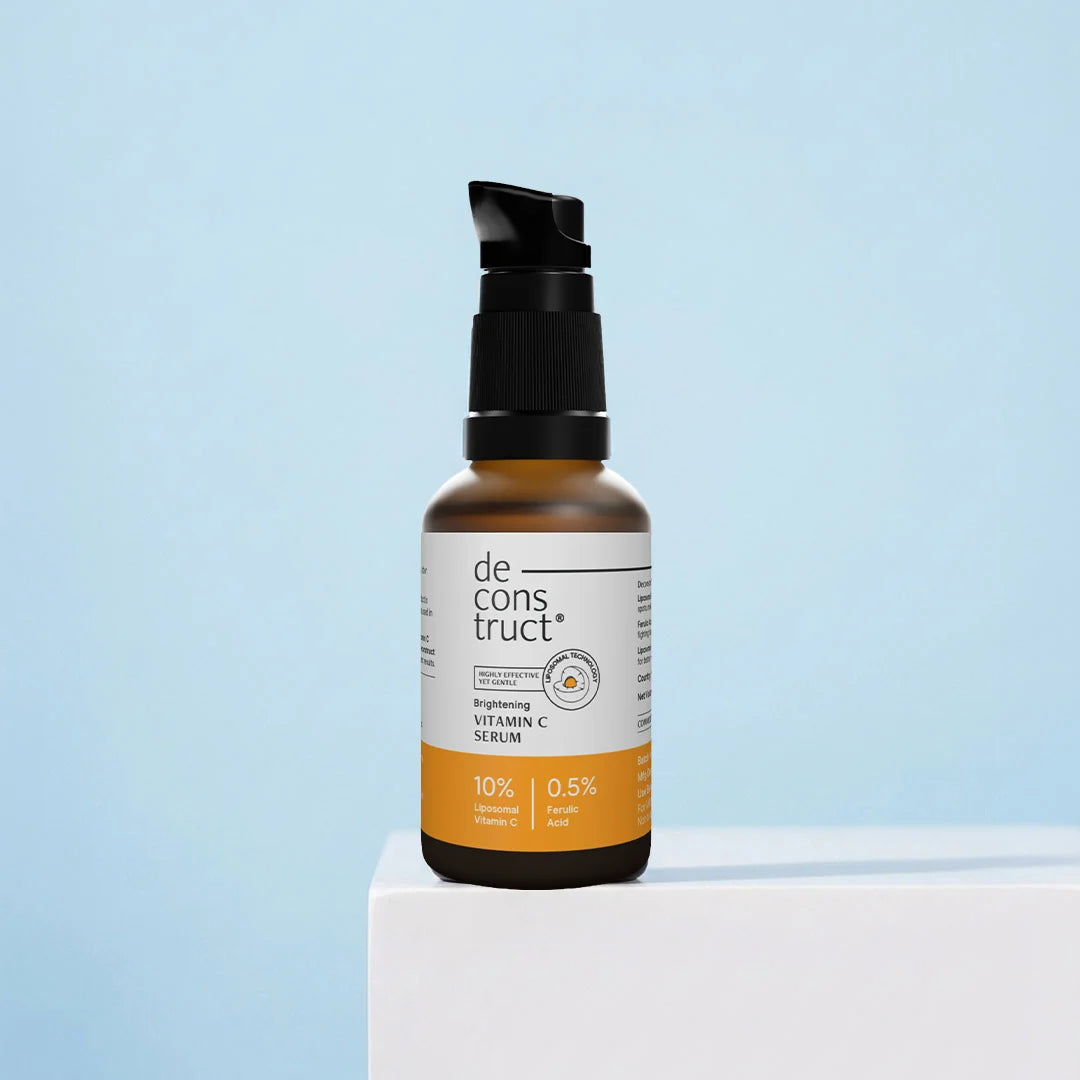
Deconstruct — Vitamin C + Ferulic Acid Serum
Why It May Suit Oily Skin
For oily-skin users whose main concern is dullness, radiance or the uneven tone left by post-acne marks, Deconstruct's 10% Vitamin C Serum offers antioxidant support in a lightweight format that won't add to the oil or congestion you're already managing.
- 10% Liposomal Vitamin C delivers brightening and antioxidant benefits without the rapid oxidation that plagues L-ascorbic acid, with liposomal delivery enabling slow, controlled release and deeper penetration.
- 0.5% Ferulic Acid stabilises the vitamin C, slows degradation and boosts its photoprotective effect (Lin et al., J Invest Dermatol, 2005).
- 0.5% Centella Asiatica (Cica) Extract calms the skin and reduces redness.
- 0.25% Panthenol hydrates and supports the skin barrier.
Best for: dull-looking or uneven-toned oily skin, post-acne marks, and anyone who wants antioxidant protection built into their morning routine.
Niacinamide vs Vitamin C: Which Serum Should You Choose?
| Feature | Deconstruct Clearing Serum (Niacinamide) | Deconstruct 10% Vitamin C Serum |
|---|---|---|
| Primary focus | Overall skin appearance, oil control | Brightness and radiance |
| Ideal for | Oily and acne-prone skin | Dull and uneven-looking skin |
| Skin barrier support | Strong | Moderate |
| Antioxidant benefits | Limited | Strong |
| Beginner friendly | Yes | Yes |
Choose the Clearing Serum (Niacinamide) if: excess oil, shine and post-acne marks are your primary concerns; you want a simple everyday active that handles multiple oily-skin concerns in one step; or you're new to actives and want a gentle but effective starting point.
Choose the 10% Vitamin C Serum if: dullness and lack of radiance are your main concern; you want antioxidant protection alongside brightening; or you're comfortable with actives and want a daytime protect-and-brighten routine.
If you're still weighing the two, our guide on vitamin C vs niacinamide for pigmentation goes deeper.
How to Use a Serum in an Oily Skin Routine
Morning
- Gentle, low-pH cleanser
- Deconstruct 10% Vitamin C Serum
- Lightweight moisturiser
- Broad-spectrum SPF 50+
Evening
- Gentle cleanser
- Deconstruct Clearing Serum (5% Niacinamide)
- Lightweight moisturiser
Pro tip: Start with one serum and use it consistently for at least four to six weeks before adding a second active. This gives you a clear picture of what each product is doing and keeps the routine simple enough to maintain. Don't forget to pair your mornings with a broad-spectrum sunscreen.
FAQs
What is the best serum for oily skin?
It depends on your concern. If dullness is the main issue, vitamin C is recommended; for dark spots and excess oil, niacinamide is the better approach. Both should be lightweight and well-formulated for oily skin.
Is niacinamide or vitamin C better for oily skin?
Niacinamide is generally the better fit for oily skin because it directly targets sebum regulation. That said, vitamin C used consistently in the morning with SPF is strongly supported for reducing hyperpigmentation — so many people use both.
Can oily skin use vitamin C every day?
Yes. Because pure L-ascorbic acid is acidic and can irritate, a more stable, gentler derivative like ethyl ascorbic acid is recommended for daily use — it delivers the benefits without stressing the skin barrier.
Should I use niacinamide in the morning or at night?
Niacinamide works at either time. Because of its barrier-supporting nature, many prefer it at night, though it's perfectly effective in the morning too.
Can I use niacinamide and vitamin C together?
Yes. They complement each other well — vitamin C in the morning acts as an antioxidant shield, while niacinamide at night supports the barrier and works on oil and pigmentation. Our guide on the niacinamide and alpha arbutin combo covers pairing in more detail.
Conclusion
Choosing the best serum for oily skin starts with knowing the problem you're targeting. Pure vitamin C in its traditional form isn't ideal for oily skin — its acidic, highly reactive nature can irritate and, in some cases, worsen pigmentation. Deconstruct's Vitamin C Serum solves this with liposomal technology and barrier-support agents like centella and panthenol, while ferulic acid keeps it stable, making it well-suited to oily skin and best used with daily SPF. Niacinamide, meanwhile, targets sebum and limits melanin transfer while alpha arbutin tackles stubborn dark spots — making the Clearing Serum an ideal evening step for oily skin. Used together — vitamin C by day, niacinamide by night — they cover the full range of oily-skin concerns. The key is simply that the serums are well-formulated and backed by science, which is exactly what this Deconstruct combo offers. Explore both in the brightening range.