Best Skincare Products for Uneven Skin Tone
The best skincare products for uneven skin tone are the ones matched to its cause — because uneven skin tone isn't one problem. It's at least four, and they don't respond to the same ingredient.
Post-acne marks, sun-induced pigmentation, congestion-led texture and oxidative dullness all read as "uneven" in the mirror. They form through different mechanisms. Which is why a routine that clears someone's acne marks in six weeks can do almost nothing for someone's melasma — and why "best" only means anything once you know which one you have.
Find your cause below, and the product follows.
Shop by cause
|
What you're seeing
|
What's driving it
|
What to use
|
|
Flat dark marks after breakouts
|
Melanin transfer during healing (PIH)
|
Deconstruct Clearing Serum — 5% Niacinamide + 2% Alpha Arbutin. Niacinamide limits pigment transfer to surface cells; alpha arbutin inhibits tyrosinase at the source. Two pathways, one lightweight formula.
|
|
Overall dullness, sun-related unevenness
|
Oxidative stress + melanin production
|
Deconstruct Vitamin C Serum — 10% Liposomal Vitamin C + 0.5% Ferulic Acid. Antioxidant defence plus melanin control, with ferulic acid keeping the vitamin C from oxidising before it works.
|
|
Stubborn tone unevenness, tolerant skin
|
Multi-pathway pigmentation
|
Deconstruct Brightening Serum — 10% Niacinamide. A step up for skin already comfortable with actives.
|
|
Rough, patchy, congested texture
|
Dead-cell buildup and clogged pores
|
Deconstruct AHA BHA PHA Serum. Three acid types, liposomal delivery, less sting than a conventional acid serum.
|
|
Dullness at the cleanse step
|
Surface buildup + oxidative damage
|
Deconstruct Vitamin C Face Wash. Won't fade pigment alone, but sets up everything after it.
|
|
All of the above, getting worse
|
UV exposure
|
Deconstruct Broad-spectrum gel sunscreen, daily. Without it you're fading marks slower than the sun is making them.
|
What separates products that work from products that don't
Three things, and concentration is not one of them.
Stabilisation. Vitamin C is volatile — an oxidised 20% serum delivers less than a stable 10% used daily. Ferulic acid isn't a bonus ingredient on the label; it's the reason the vitamin C is still active when it reaches your skin (Lin et al., J Invest Dermatol, 2005).
Delivery. Actives that sit on the surface don't do much. Deconstruct formulas use liposomal delivery — actives wrapped in lipid carriers that keep them intact, release them gradually, and reduce the irritation that makes most people quit at week three.
Restraint. Niacinamide's efficacy plateaus around 5%. A study in the British Journal of Dermatology found 5% faded hyperpigmentation comparably to prescription hydroquinone (Hakozaki et al., 2002), without the side effects. Higher isn't better. It's louder.
This is what we mean by deconstructing a formula: every ingredient has a job, or it isn't in there.
Brightening isn't whitening
Worth being direct about, because the category isn't. Brightening restores clarity and evens out tone — it works on pigment that shouldn't be there. Whitening means altering your natural complexion, which is neither what these ingredients do nor what they should be asked to do. A well-formulated serum fades a dark spot. It won't change your skin tone, and any product promising that is selling you something else.
Building the routine
AM — Cleanse. Vitamin C serum. Moisturiser. Sunscreen.
PM — Cleanse. Niacinamide or exfoliating serum. Moisturiser.
One treatment step per routine. Stacking four actives doesn't accelerate anything — it just makes it impossible to tell which one is working, or which one is causing the irritation.
What to expect
Skin cell turnover runs roughly 28 days, and brightening follows that cycle. Early change at 4–6 weeks, meaningful improvement in tone at 8–12 weeks, with daily SPF throughout. Using a serum three times a week instead of daily doesn't halve the timeline. It removes your ability to know whether the product works at all.
FAQs
What are the best skincare products for uneven skin tone?
It depends on the cause. For post-acne marks, a niacinamide and alpha arbutin serum. For dullness and sun-related unevenness, a stabilised vitamin C serum. For rough, congested texture, an exfoliating acid blend. All of them need daily sunscreen to work.
Which serum is best for uneven skin tone?
Deconstruct's Clearing Serum (5% Niacinamide + 2% Alpha Arbutin) for marks left by breakouts; the 10% Vitamin C Serum for dullness and uneven tone from sun exposure.
What causes uneven skin tone?
Four things, usually in combination: post-inflammatory hyperpigmentation from acne, UV-induced melanin production, congestion and dead-cell buildup, and oxidative damage from pollution.
Can vitamin C and niacinamide be used together?
Yes. The claim that they cancel each other out comes from research on pure ascorbic acid under conditions that don't apply to modern stabilised formulas. Split them AM and PM if you'd rather ease in.
How long do products for uneven skin tone take to work?
Early change around 4–6 weeks, visible improvement at 8–12. Consistency matters more than concentration.
Do I need sunscreen if I'm using a brightening serum?
Yes — it's the step that decides whether the rest works. UV deepens pigmentation faster than most actives fade it.
Will these products lighten my skin tone?
No. They fade pigment that shouldn't be there and restore clarity. They don't alter your natural complexion.
Popular Searches
Face Wash | Face Serum | Moisturizers | Scalp Serum | Hair Serum | Lip Balm | Body Wash | Sunscreen for Oily Skin | Sunscreen for Dry skin | Moisturizer for Oily Skin | Vitamin C Serum | Clearing Niacinamide Serum | Salicylic Acid Face Serum | Oil Control Face Wash | Brightening Moisturizer | Retinol & Peptide Serum | Pigmentation Serum | Dark Spot Removal Cream | Face Wash for Dry Skin | Moisturizer for Dry Skin





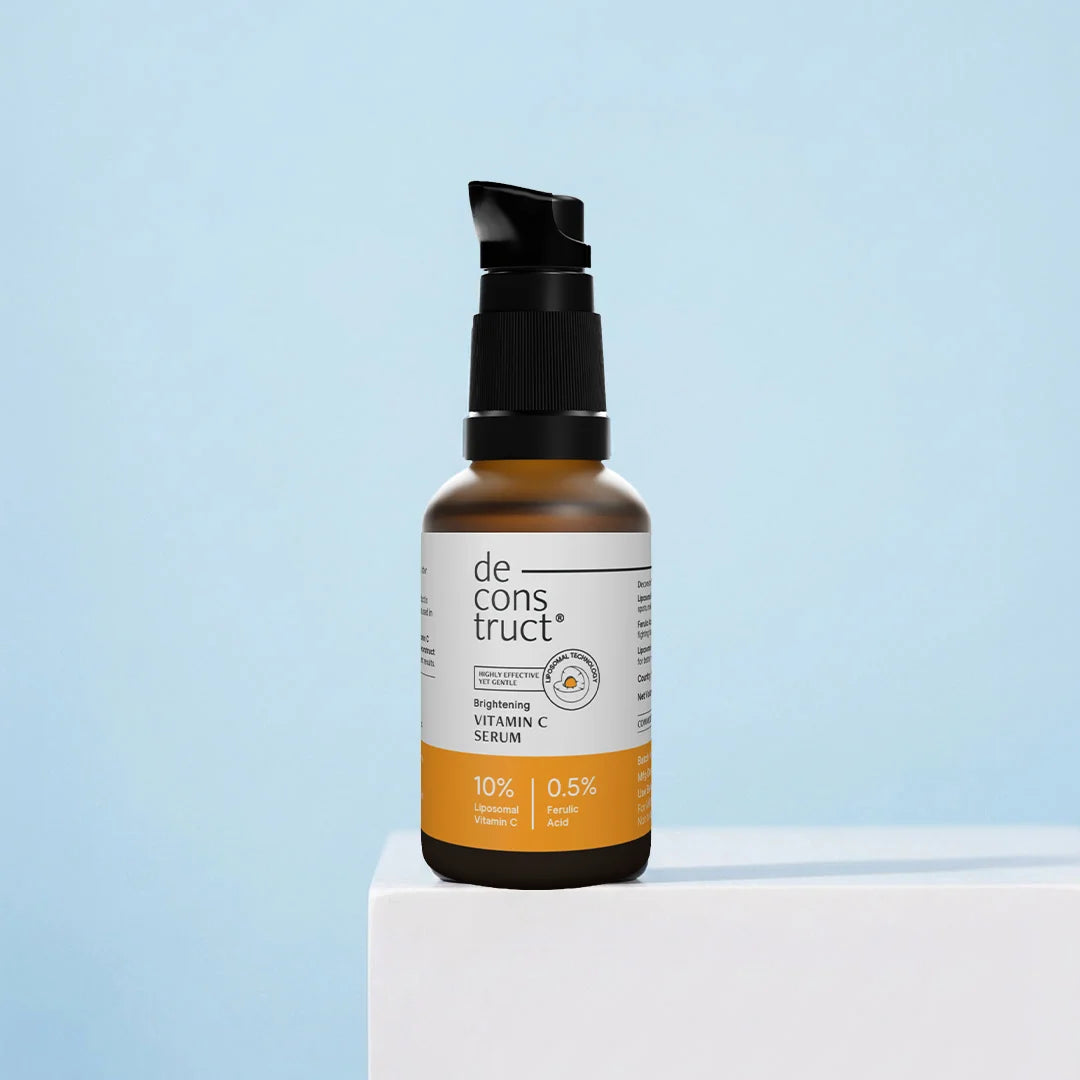
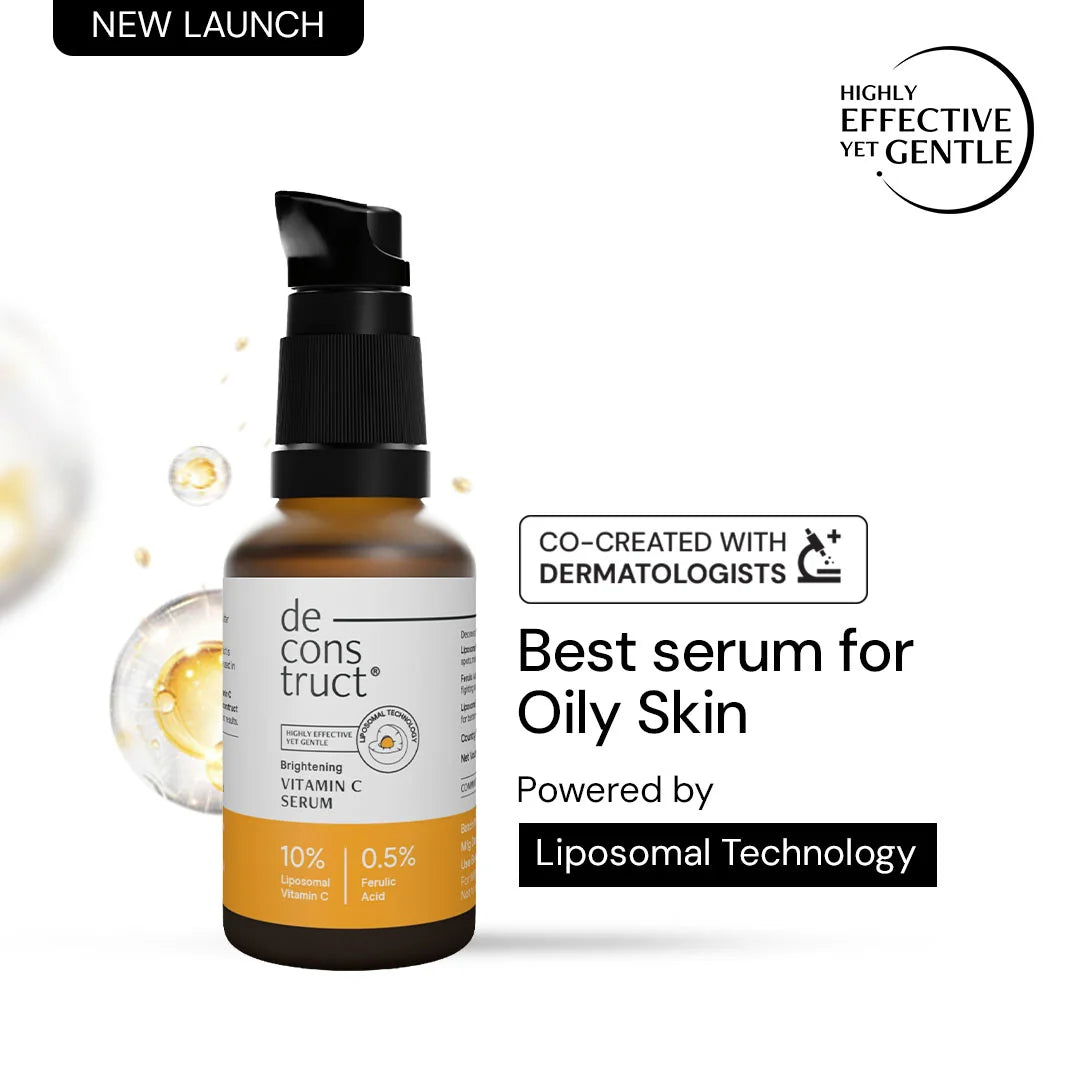 10% Vitamin C Serum for Glowing Skin with Liposomal Technology | Clinically TestedCheck Delivery Date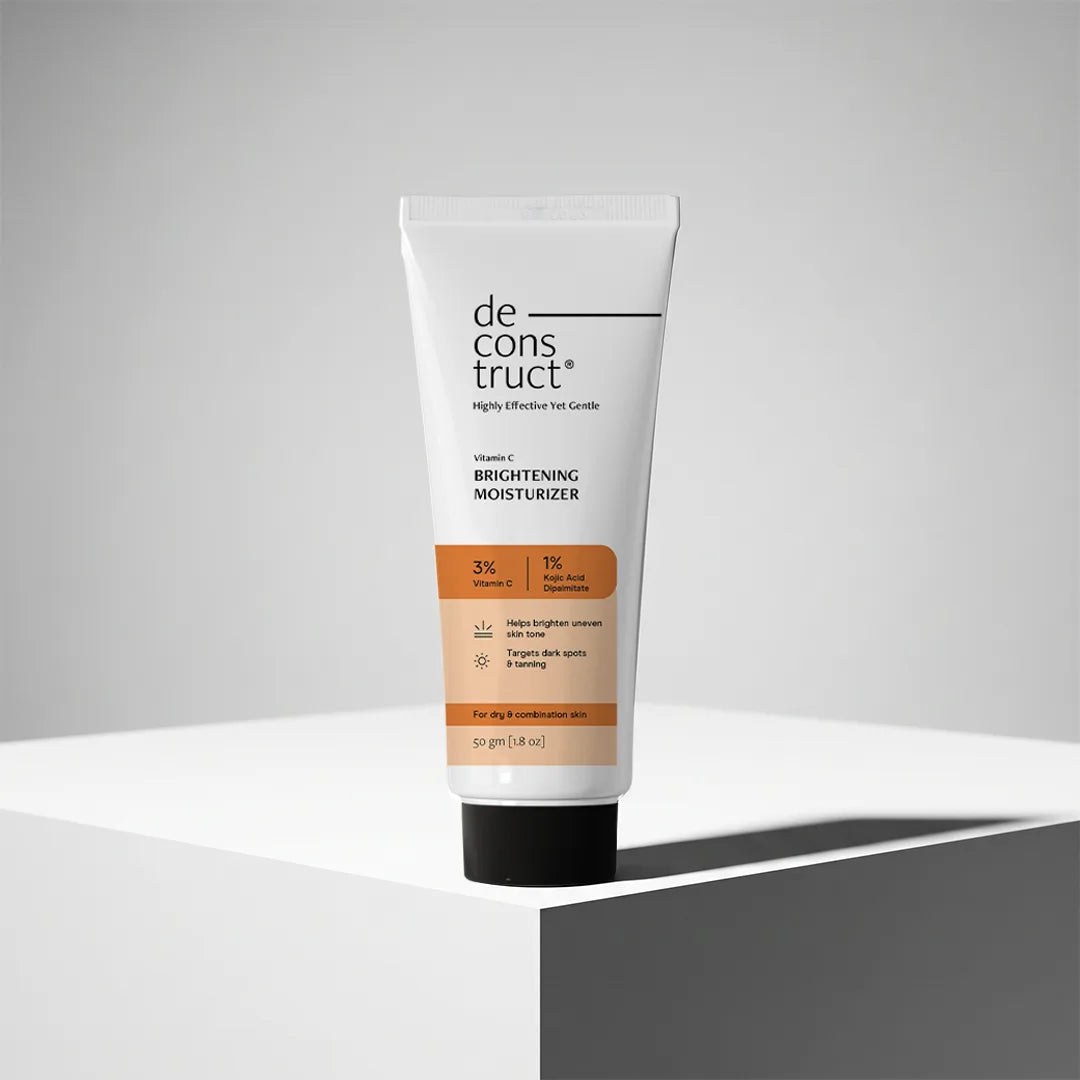
 Brightening Moisturizer- 3% Vitamin C + 1% Kojic Acid DipalmitateCheck Delivery Date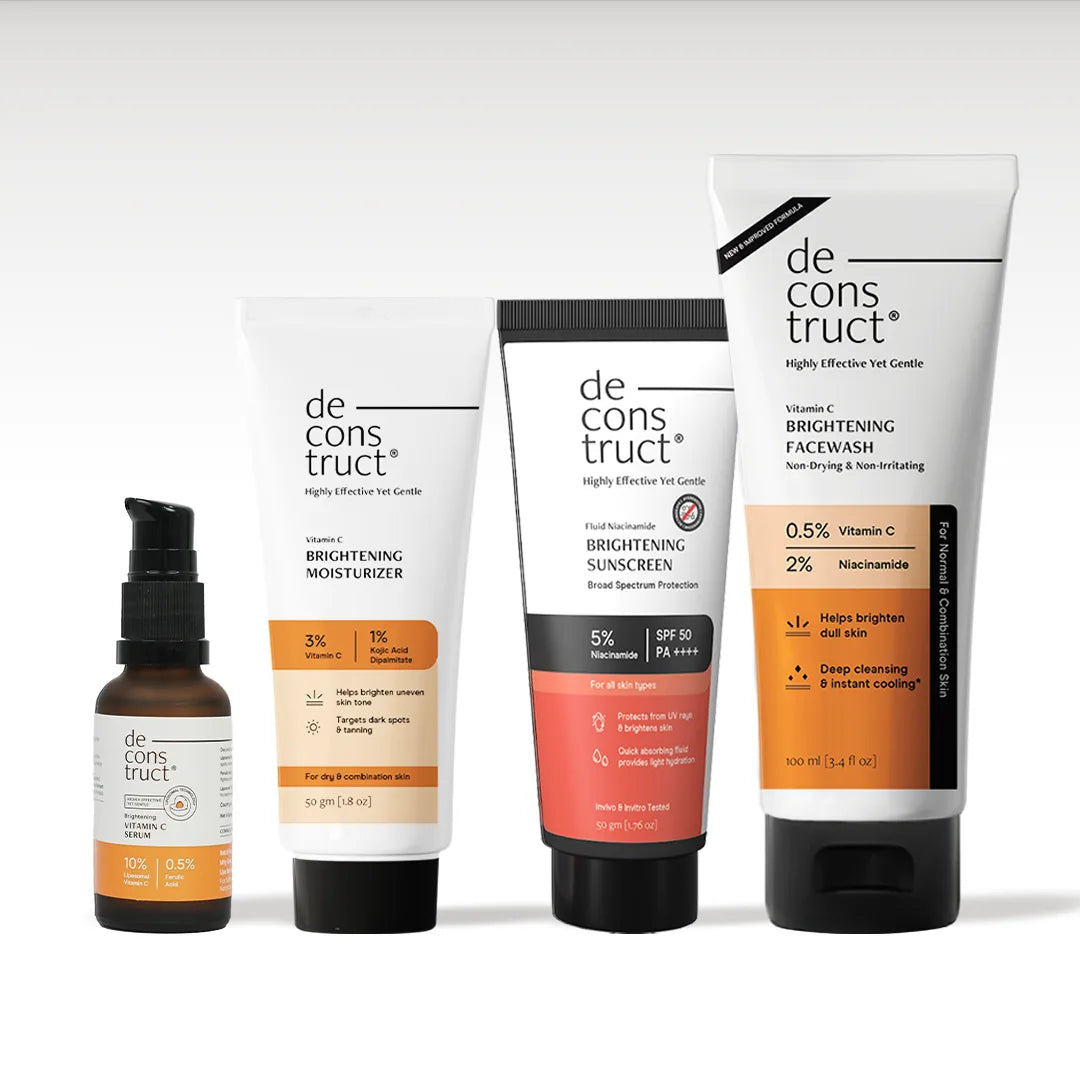
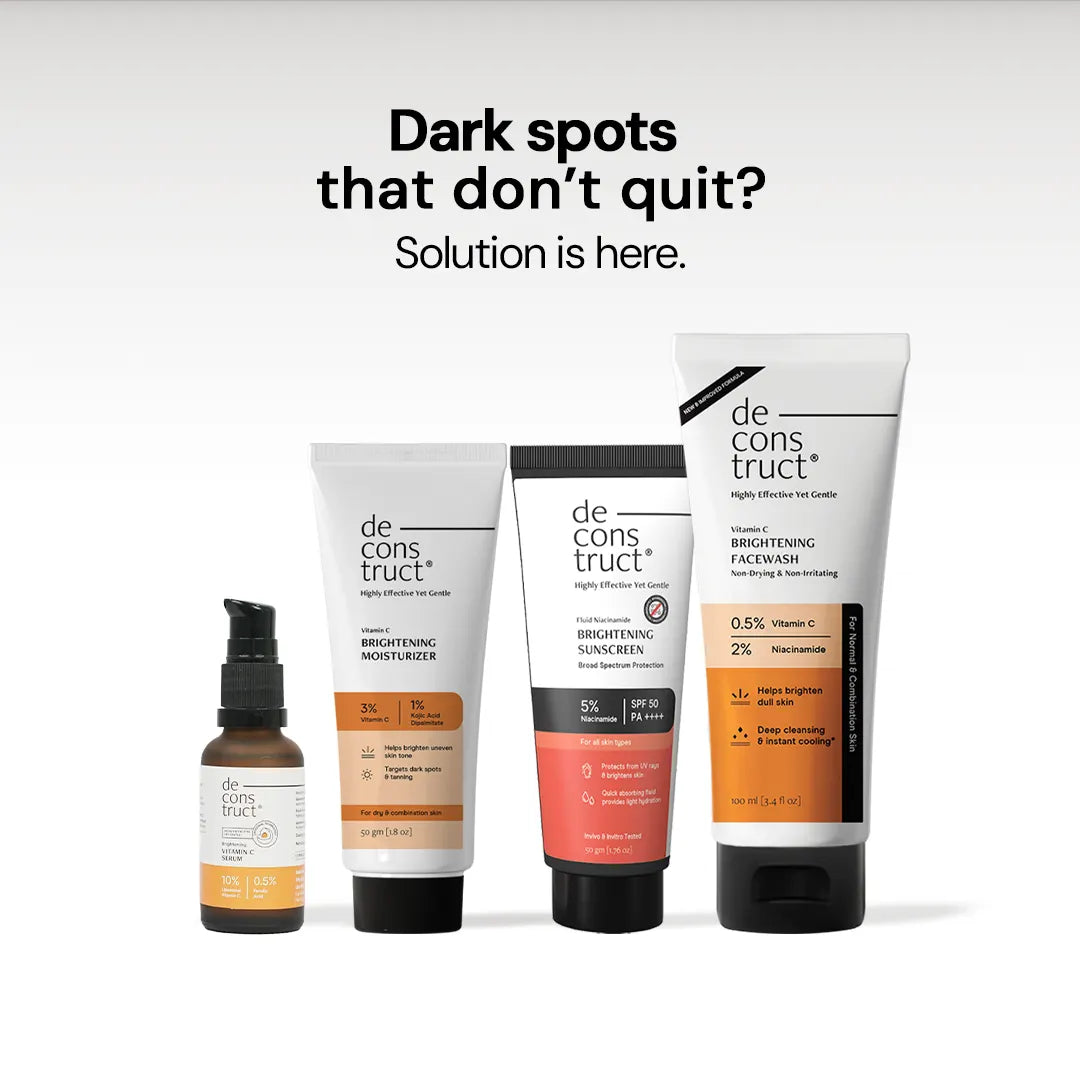 Anti-Pigmentation Skincare Routine Kit | Fades Dark Spots | Dermatologist Recommended | Customers FAVCheck Delivery Date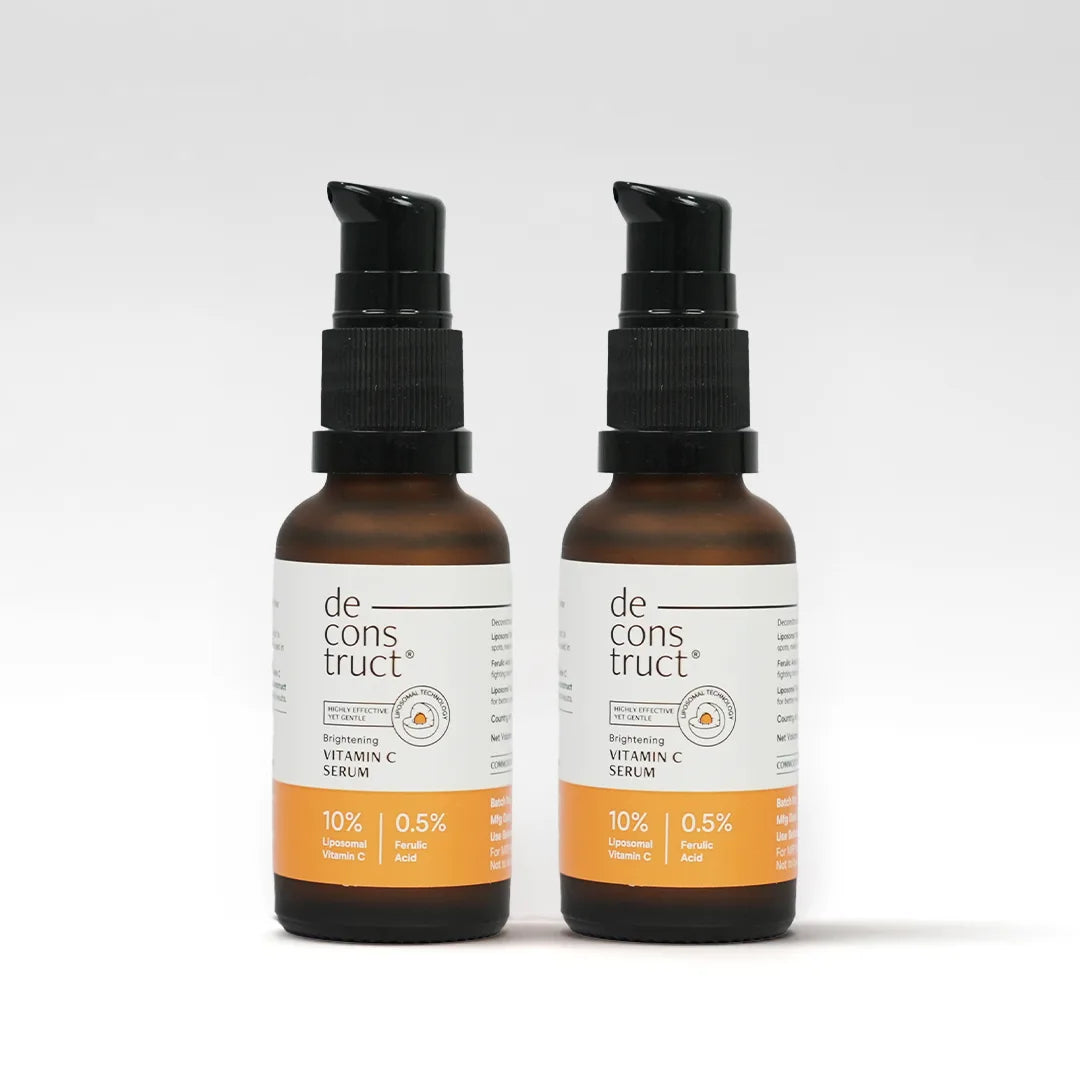
 Vitamin C Serum Combo For Face - 10% Liposomal Vitamin C + 0.5 % Ferulic AcidCheck Delivery Date

