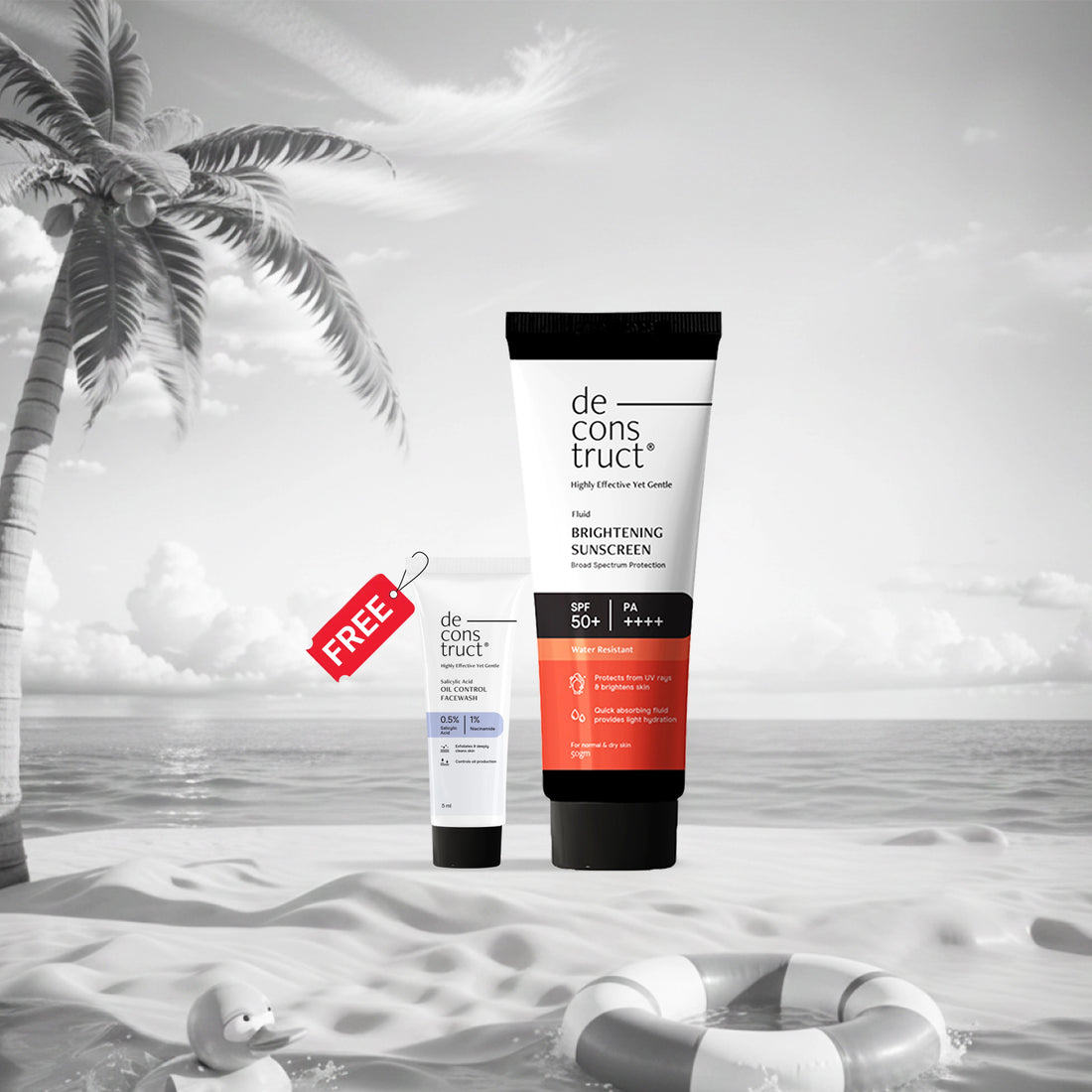

“Photostable,” a relatively modern term, used in scientific literature since the 1920s, is now a relatively modern term in skincare. It means an ingredient that resists breakdown against light, specifically sunlight. Many modern formulas now contain photostable UV filters in their sunscreen that resist degrading on UV exposure. An SPF 50 PA++++ sunscreen offers broad-spectrum protection against both UVA+ UVB rays. The most ideal choice for a daily sunscreen for Indian climate is a

Deconstruct — Gel Sunscreen for Oily Skin
-
Lightweight
-
gel-based formula
-
non-comedogenic (does not clog pores)
-
And most importantly, suitable for your particular skin type.
What Is a Photostable Sunscreen?
When you apply sunscreen and step out into the sun, UV filters in traditional sunscreens break down. This allows sun rays to seep into your skin and cause long term damage.
A photostable sunscreen contains advanced UV filters that are highly stable, resist degradation upon UV exposure and provide consistent UV protection for longer periods of time.
Some photostable filters are
-
Tinosorb S/M
-
Uvinul T 150
-
Uvinul A Plus
If you’re a skincare beginner, look for dermatologists’ approved guides on how photostable sunscreens offer higher protection against UV and the benefits photostable sunscreen has for your skin
Why Photostable SPF 50 Sunscreen Is Essential for Daily Use in India
Under the harsh tropical sun in India, traditional sunscreen formulas contain certain conventional UV filters (such as Avobenzone) to break down rapidly upon UV exposure. This causes UV rays to seep through the cracks and cause long term premature ageing, sunburn, tanning and increased risk of skin cancer.
-
High UV exposure in India
-
Sweat and humidity reduces disrupting the protective film on the skin, diluting the active ingredients in the formula and reducing its protective efficacy on your skin.
-
Daily commutes under sun exposure will also harm your skin
Living in a tropical regions like Kerala, Andhra and Tamil Nadu to metropolitan cities like Bengaluru and Delhi where you’re being exposed to UV almost all year round, calls for a stable and more durable protection against sun damage
Best Photostable SPF 50 Sunscreens for Daily Use in India
If you’re on the lookout for photostable suitable sunscreens for daily use that’ll protect you in Indian climate conditions, opt for lightweight, non greasy and gel-based sunscreens, which will be comfortable and suitable for daily wear in the harsh and humid Indian climate.
For Oily and Acne-Prone Skin

Deconstruct — Vitamin C Gel Sunscreen
What oily skin and acne prone skin needs:
-
Oil-free
-
Non-comedogenic (does not clog pores)
-
matte finish
Dermatologists recommend a lightweight, gel-based sunscreen such as Deconstruct’s Gel Sunscreen, specifically designed for acne prone and oily skin as they provide high UV protection combined with oil- regulating properties without clogging pores (non-comedogenic). This ensures your skin does not feel heavy, greasy and feels like it can “breathe” throughout the day, making it the best sunscreen for oily skin and acne prone skin in India
For Sensitive Skin and Barrier Repair

Deconstruct — Oat & Ceramide Gel Sunscreen
Sensitive skin needs:
-
Soothing ingredients
-
Barrier- supporting ingredients
For anyone with sensitive skin and barrier-compromised skin, options such as the Deconstruct’s Oat and Ceramide Gel Sunscreen is an ideal option as it combines high UV protection along with skin barrier repair ingredients.
For Brightening and Daily Glow
For anyone needing daily brightening and glow you need
- Antioxidant protection
Sunscreen formulas with antioxidants, such as Deconstruct’s Vitamin C sunscreens contain proven brightening actives and add brightening benefits combined with high UV protection.
How to Choose the Right Photostable Sunscreen for Your Skin Type
The key to choosing the best photostable sunscreen for you is to choose the right photostable sunscreen for your specific skin type.
|
Skin Type |
What to Look For |
Texture |
|
Oily |
Oil free, Non Comedogenic |
Gel |
|
Dry |
Hydrating, Barrier repair |
Gel/ Cream |
|
Sensitive Skin |
Fragrance-free, Soothing and calming skin ingredients |
Gel |
|
Combination Skin |
Lightweight Hydration |
Gel |
How to Use SPF 50 Sunscreen Correctly
What most people don’t know is the right way to apply sunscreen. Applying insufficient or too much product may be doing more harm than good for your skin without you even realising it.
-
Follow the 2-finger rule for both the face and neck
-
Apply 15–20 minutes before sun exposure
-
Reapply every 2–3 hours
-
Use indoors and outdoors
-
Cover frequently neglected areas like the neck and the back of your neck, ears and even lips.
Learning how to use sunscreen the right way, with tips from an expert, will ensure your skin is fully protected from the harsh UV rays that are present almost all year round in our country.
Common Mistakes That Reduce Sunscreen Effectiveness
-
Not applying sufficient product on your skin: Follow the 2-finger rule.
-
Skipping reapplication: Dermatologists recommend that you reapply SPF every 2-3 hours.
-
Using sunscreen only when you’re outdoors: Did you know UV rays, particularly UVA, penetrate through glass? So if you’re working indoors near a window, you still need SPF.
-
Relying only on high SPF levels for UV protection: Higher SPF (measures against UVB) alone does not guarantee maximum protection. You need a broad spectrum SPF sunscreen (protects against both UVA+ UVB).
-
Mixing sunscreen with moisturiser
Dermatologist Tips for Daily Sunscreen Use
Here is the only quick and easy dermatologists’ approved guide on how to use sunscreen the right way, daily.
-
Always choose broad-spectrum SPF 50 or above.
-
Pair sunscreen with antioxidants for protection against environmental damage (UV, pollution).
-
Use even on cloudy days, up to 80% of UV rays penetrate through clouds
-
Do not skip sunscreen in winter, UV rays are present all-year round and can still cause long term sun damage.
Final Takeaway
A photostable sunscreen with SPF 50 ensures long-lasting, broad-spectrum protection against both UVA + UVB rays, making it a non-negotiable for daily protection against the harsh Indian conditions.
The bottom line is, achieving healthy and glowing skin is not just about what you apply at night. It’s also how much you protect your skin during the day. That’s when your skin needs you the most. A photostable sunscreen is your skin’s first line of defence against
-
UVA (long term pigmentation sun damage, tanning, premature ageing) + UVB (immediate tanning, sunburn).
-
Dust
-
Pollution
-
Long term sun damage
-
Increased risk of skin cancer
-
Long-term hyperpigmentation and tanning
The best choice for a photostable sunscreen is one that suits your specific skin type and skin concern, whether it is,
-
Gel based sunscreen for oily skin/ acne prone skin
-
Gel sunscreen with barrier repair for sensitive skin
-
An antioxidant-rich formula for added brightening+ environmental protection for glowing skin
The best photostable sunscreen in India is a dermatologist recommended formula that is 100% photostable, lightweight and suitable for Indian climate.
This is where 100% photostable products from Deconstruct take centre stage. Their lightweight, gel based non comedogenic formulas prove to provide optimal broad spectrum UV protection for skin while targeting your specific skin type and skin concerns, all specifically formulated for Indian skin and the harsh year-round Indian climate conditions.
FAQs
Q1. What is a photostable sunscreen?
A photostable SPF sunscreens contain advanced UV filters (Tinosorb S/M, Uvinul A/ T Plus) that do not degrade under UV exposure unlike traditional UV filters (Avobenzone) , maintaining their efficacy for longer and offering more durable protection against UV rays.
Q2. Is SPF 50 enough for daily use?
For daily use, dermatologists recommend a broad spectrum (UVA+UVB) SPF 50 protection for optimal protection against UV radiation.
Q3. Which sunscreen is best for oily skin in India?
The best sunscreen for oily skin in India is a lightweight, non comedogenic (does not clog pores) oil-regulating formula such as Deconstruct’s Gel Sunscreen for Oily Skin
Q4. How often should I reapply sunscreen?
Dermatologists recommend that you apply your sunscreen every 2-3 hours, especially if you spend prolonged time outdoors, and immediately after sweating, swimming or towel drying.
Q5. Does sunscreen lose effectiveness in sunlight?
Traditional sunscreens contain conventional UV filters that degrade rapidly upon UV exposure, losing their efficacy. That’s why dermatologists recommend a photostable SPF sunscreen that resists this degradation upon UV exposure, offering longer, more durable protection against UV rays.
Q6. What makes a sunscreen suitable for daily use?
Dermatologists advise the use of a lightweight, non comedogenic with a non-greasy texture, suitable for daily use, especially for oily and acne prone skin in India.