
Many people buy a Vitamin C serum, expecting it to fade dark spots, fight dullness, and improve radiance. Instead, their skin looks just the same, maybe with a few more breakouts. They’re left wondering, “Why is my Vitamin C serum not working?”
Well, chances are that they’ve either picked the wrong formula or are making mistakes while using Vitamin C serum that eventually affects its effectiveness.

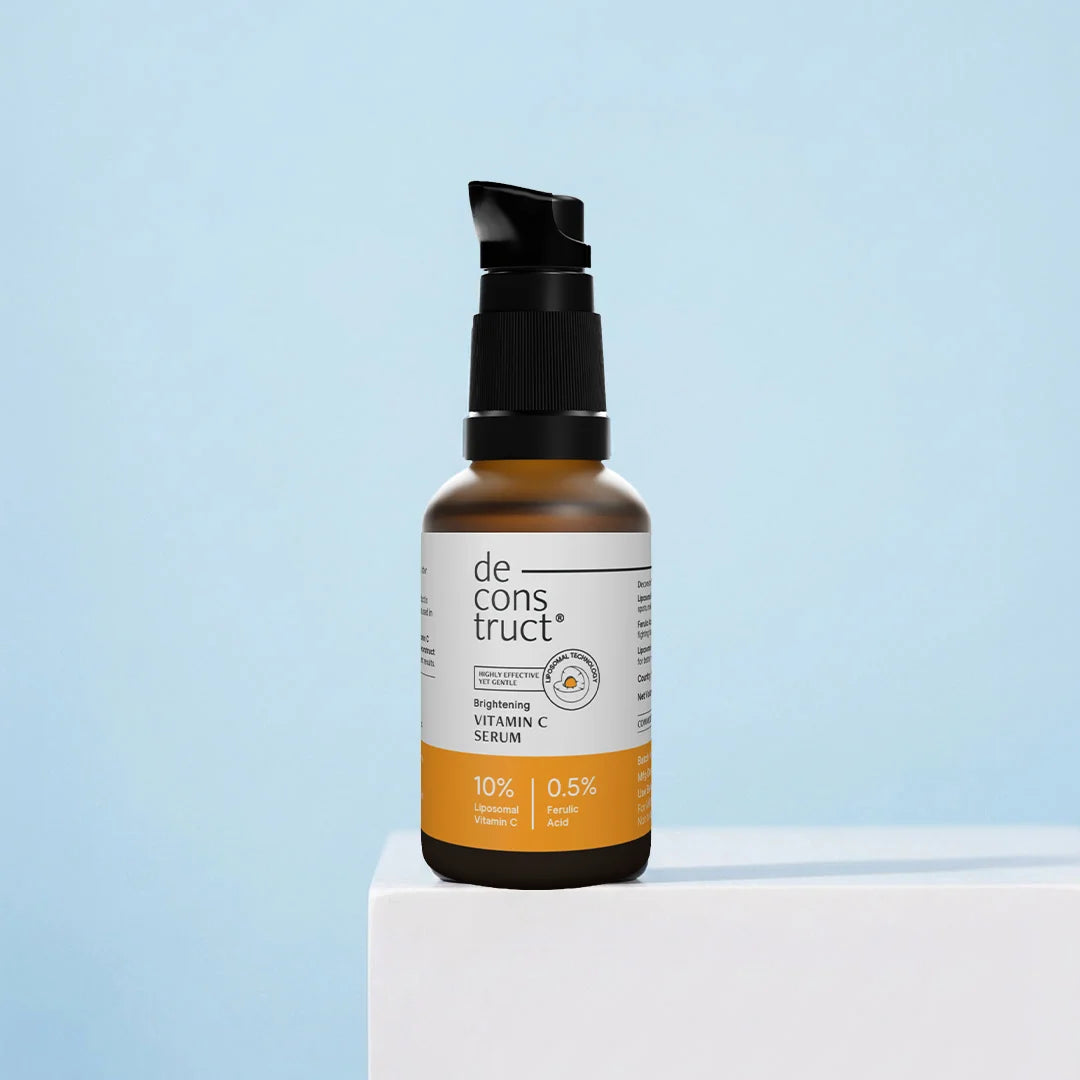
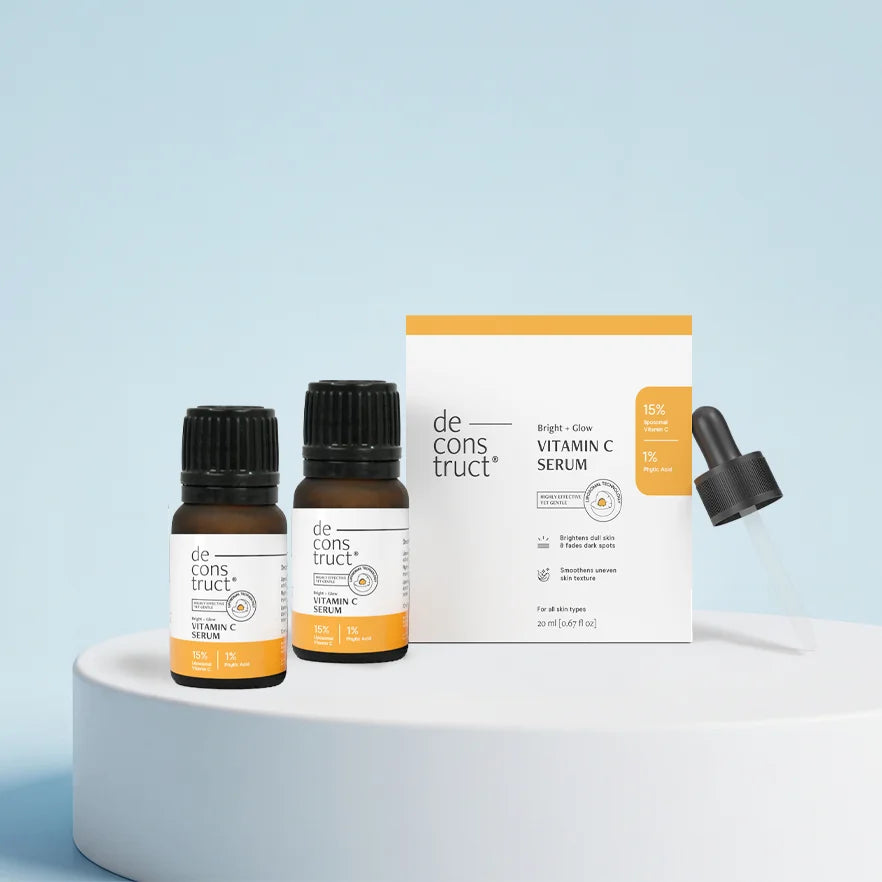
Deconstruct — Vitamin C + Ferulic Acid Serum
Why Vitamin C Serum May Not Work
In a popular Reddit post, one user shared, “Every Vitamin C serum I've tried either breaks me out or does nothing.” If you feel the same, below are a few reasons why your Vitamin C is not working:
-
Wrong concentration: Low concentrations (less than 5%) are too weak to give you visible results. On the other hand, high concentrations (more than 20%) can irritate your skin.
-
Oxidised product: If your serum appears darker (yellow/brown), smells “metallic”, or feels thicker, it’s a sign of oxidisation. Oxidised Vitamin C loses its effectiveness and does not benefit your skin.
-
Skin type mismatch: Water-based, lightweight serums are better for oily as they don’t clog pores. Dry skin, in contrast, requires hydration + antioxidant protection. Pick as per your skin’s needs.
-
Using unstable formulations: Pure Vitamin C (L-ascorbic acid) loses potency if it's not well-formulated or stored in a cool, dark area.
7 Common Mistakes
See if you’re making any of these common mistakes with your Vitamin C serum:
Mistake 1: Using the Wrong Percentage
Confused Vitamin C serum users on Reddit complained about experiencing “bumps and redness” on starting with 15% concentration daily. Given the active’s reactive nature, beginners can benefit from 10% concentration. Once they build tolerance 10-15% is a sweet spot. This range suits most skin types, which balances effectiveness and irritability.
Less than 5% concentration is often too weak to deliver “significant” results for fading dark spots and even toning your skin. In contrast, serums above 20% concentration increase the risk of irritation. For instance, redness, itching, and burning sensation.
Pro tip: If you’re a beginner, it’s best to start with 10% and slowly increase to 15%. It gives your skin time to adjust its tolerance.
Mistake 2: Choosing Unstable Vitamin C (L-Ascorbic Acid Issues)
Although L-ascorbic acid is potent, it’s also unstable. It loses effectiveness if exposed to air, light, or heat, turning yellow/brown. Hence, it fails to deliver the benefits it promised.
Derivatives like Ethyl Ascorbic Acid or Sodium Ascorbyl Phosphate solve this issue. They’re modified forms of Vitamin C, which are more stable. Thus increasing your serum’s shelf life.
Mistake 3: Not Pairing with Sunscreen
Vitamin C interrupts melanin production to lighten dark spots and even tone your skin over time. It also boosts UV protection.
However, the active alone does not block/reflect UV rays, like sunscreen. Without SPF, sun exposure continues to trigger melanin and increase pigmentation. Thus, leaving you with no visible results.
Mistake 4: Wrong Storage
Vitamin C serums are best stored in dark/opaque and air-tight bottles. Storing it in a transparent bottle/bright area or leaving the cap loose can oxidise Vitamin C. It becomes ineffective and will deliver no “real” benefit if you use it.
Mistake 5: Mixing with Wrong Ingredients
Many people believe that they cannot use Vitamin C and Niacinamide together. That’s a myth! It’s safe to use these ingredients together as long as you layer them well. Our Brightening Face Wash contains both these ingredients in a non-irritating formula.
Another mistake people often make is while layering strong acids (like Salicylic acid) with Vitamin C. Using them together irritates your barrier and triggers sensitivity. A simple fix here is to use Vitamin C in the morning for antioxidant protection and the strong acid in the evening.
Mistake 6: Expecting Instant Results
It's tempting to find an alternative to Vitamin C serum when you don’t see instant results. However, you need to be a little patient because this active takes time to work. It takes 4-8 weeks to see visible improvements in dark spots and skin tone. Sometimes even longer for severe pigmentation.
Mistake 7: Using the Wrong Formula for Your Skin Type
A mismatch between the formula and your skin type can be another reason why your Vitamin C serum is not effective.
-
Oily and acne-prone skin → Needs lightweight/gel formulas which don’t clog your pores
-
Sensitive → Responds better to lightweight serums with gentle derivatives to maintain the skin barrier.
-
Dry skin → Requires hydrating ingredients like Hyaluronic Acid and Glycerin to moisturise your skin.
Signs Your Vitamin C Serum Is Not Working
These signs will tell you that your Vitamin C serum is not working:
-
No visible glow after 4–8 weeks.
-
You’re experiencing irritation and redness.
-
Your skin is breaking out.
-
The serum appears darker, thicker or smells “metallic.”
How to Use Vitamin C Correctly
Here’s how to use Vitamin C serum correctly for best results:
-
Step-by-step routine
-
Cleanser: Remove overnight buildup with a face wash, like Brightening Face Wash.
-
Serum (morning): Apply 2-3 drops of 10% Vitamin C Serum evenly to your face and neck.
-
Moisturiser: Energise dull skin and hydrate with Brightening Moisturiser, containing 3% Vitamin C + 1% Kojic Acid Dipalmitate.
-
Sunscreen (mandatory): Finish with a sunscreen for UV protection.
-
Frequency: Use it every day for best results. If you’re new to the ingredient, gradually increase the frequency.
-
Layering: Pair it with Clearing Serum (5% Niacinamide & 2% Alpha Arbutin) for even-toned skin and Hydrating Serum (2% Hyaluronic Acid + 1% Niacinamide) to hydrate dry skin.
Best Vitamin C Serum Features to Look For
The best Vitamin C serums, like Deconstruct’s 10% Vitamin C Serum, boast features like:
-
Stable formulation: Stable derivatives, like Ethyl Ascorbic Acid, to ensure it remains effective.
-
Air-tight, opaque packaging: Prevents oxidation due to air and light.
-
10–15% concentration: Visibly enhances your radiance without increasing irritation risks.
-
Added antioxidants: Ingredients like Ferulic Acid and Vitamin E to improve stability and boost effectiveness.
FAQS
1. How long does Vitamin C serum take to work?
Vitamin C serums take 4-8 weeks to show visible improvements in dark spots and pigmentation, depending on severity and ingredient concentration.
2. Why is my Vitamin C serum making my skin worse?
High concentration of Vitamin C serum (20%+) can turn your skin red, itchy, or leave a burning sensation. Breakouts could be because your product contains ingredients, like heavy oils, in the serum instead of Vitamin C.
3. Can I use Vitamin C serum every day?
Yes, you can use a Vitamin C serum every day. However, if you’re new to the active, gradually increase the frequency and allow your skin to adjust.
4. What is the best alternative to Vitamin C serum?
A formula with Niacinamide and Alpha Arbutin can be an alternative to Vitamin C serum. Both these ingredients fade pigmentation. Niacinamide also even tones your skin. You’ll find them in our Clearing Serum.