

Some mornings call for a serum that cuts through dullness. Not every brightening formula leans on vitamin C alone. While Vitamin C relies heavily on ascorbic acid backed by science. Niacinamide, steps in to calm redness. Alpha arbutin quietly targets pigmentation spots . Skin reacts differently when faced with simplicity versus mixtures. Sensitivity might steer you one way. Stubborn dark patches may demand another route entirely. Matching the product to what shows up in the mirror matters most.
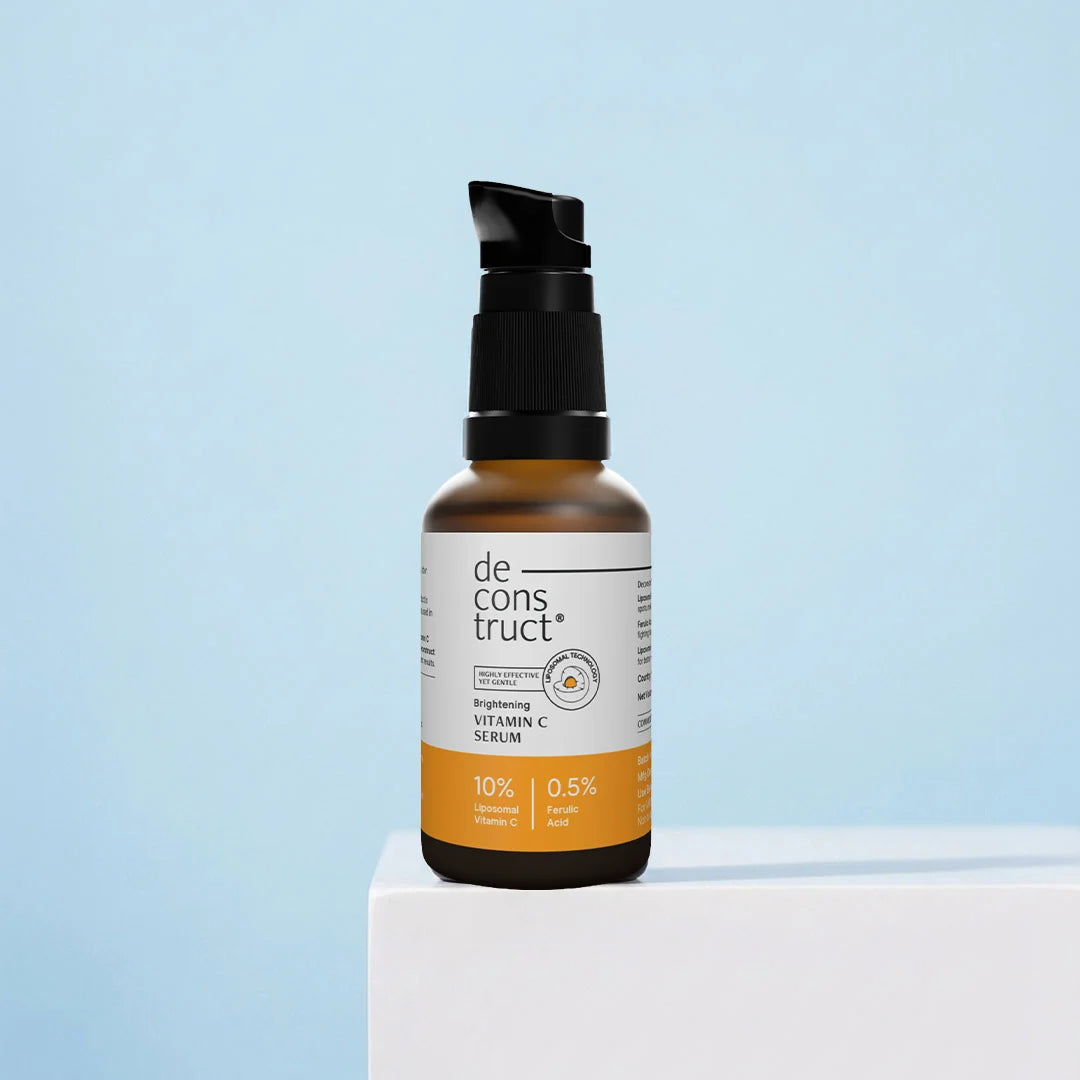
Deconstruct — Vitamin C + Ferulic Acid Serum
WHAT IS A VITAMIN C SERUM?
Brightening the skin often begins with a formula rich in vitamin C. The kind of serum targets dullness while gradually reducing discoloration over time. Since it supports natural repair processes, signs of aging may appear less noticeable. When applied daily, it forms a barrier that stands up to pollutants and sun exposure.
A formula that sinks in quickly - often water-based or gel-like - carries high levels of vitamin C, typically using 3-O-Ethyl Ascorbic Acid. This version stands out due to strong evidence backing its strength and stability. While many types exist, this one appears more often in studies showing visible results. Its texture feels light on skin, leaving little residue behind.
HOW VITAMIN C WORKS ON THE SKIN
-
Provides antioxidant protection through fighting free radicals from sun exposure and pollution..
-
Reduces pigmentation by inhibiting melanin production to visibly fade sun spots, dark spots and uneven skin tone over time.
-
Supports collagen production using collagen synthesis making the skin look firmer, bouncier, more youthful.
WHY LIPOSOMAL VITAMIN C MATTERS
Wrapped in small lipid layers, liposomal vitamin C delivers the nutrient more gently than standard versions. These protective shells resemble human cell membranes, helping the compound move through skin with greater ease. Because it enters deeper without disrupting the surface, reactions tend to be milder. People prone to redness or discomfort from typical formulas often tolerate this type well. Its design reduces friction on delicate areas, offering a smoother experience overall.
-
It provides enhanced stability by encapsulating the vitamin c molecule for protection .
-
Penetrates deep into the skin using lipid based capsules mimicking skin’s own membrane.
-
Better surface oxidation causes less irritation, meaning better tolerability on skin. Making it ideal for all skin types.
Your skin deserves clarity in every sense. Deconstruct's 10% Vitamin C Serum fades spots, fights dullness and builds a brighter complexion.
RECOMMENDED VITAMIN C OPTION
Here is a dermatologist recommended Vitamin C serum Deconstruct 10% Vitamin C Serum
1. 10% stabilised Vitamin C with liposomal delivery technology
2. Targets dullness, uneven tone, and early pigmentation concerns
3. Formulated for better absorption and reduced irritation
WHAT IS A BRIGHTENING SERUM?
A brightening serum is your skin's shortcut to a visibly clearer, more radiant complexion. It's a concentrated treatment packed with powerful actives, think niacinamide, alpha arbutin or vitamin C that work deep within the skin to fade dark spots, tackle stubborn discolouration and dial down dullness.
HOW BRIGHTENING SERUMS WORK
-
Active ingredients work directly on discolouration to target uneven skin tone
-
Helps fade stubborn post-acne dark marks and PIH left behind after breakouts
-
Visibly improves skin clarity, smoothness and radiance with consistent use.
THE ROLE OF NIACINAMIDE IN BRIGHTENING
Niacinamide (Vitamin B3) works at a cellular level by strengthening the skin's barrier by reducing moisture loss and boosting hydration. For brightening specifically, it works by improving pigmentary disorders and evening out skin tone over time. It also smooths surface texture, softens fine lines, and carries notable anti-inflammatory benefits, making it effective for acne-prone and rosacea-prone skin alike. Versatile, well-researched, and gentle, niacinamide is one of the most well-rounded active’s you can add to a brightening routine.
(Source: W Gehring)
Your skin deserves clarity in every sense. This Niacinamide serum is hydrating and fast-absorbing, delivering a fresh, glowing finish. Infused with effective ingredients, it suits all skin types
RECOMMENDED NIACINAMIDE OPTION
Here is a dermatologist recommended Niacinamide serum Deconstruct Brightening Niacinamide Serum
-
10% Niacinamide reduces pigmentation transfer by interrupting the process that moves melanin into skin cells
-
Helps reduce dark spots and post-acne marks by regulating sebum production while controlling excess oil
-
Boosts ceramide production, keeping moisture locked in and strengthens the skin barrier
BRIGHTENING SERUM VS VITAMIN C SERUM: KEY DIFFERENCES
Both serums brighten, but they go about it very differently. Here’s exactly how they compare.
INGREDIENT COMPARISON
| Feature | Vitamin C Serum | Brightening Serum |
|---|---|---|
| Primary Ingredient | Vitamin C (Liposomal) | Niacinamide |
| Main Benefit | Antioxidant + Brightening | Tone Correction + Barrier Support |
| Best For | Dullness, Environmental Damage | Dark Spots, Post-Acne Marks |
| Ideal Skin Type | Most Skin Types | Sensitive, Oily, Combination |
| Bonus Benefit | Collagen Support | Oil Regulation |
WHICH TARGETS PIGMENTATION BETTER?
It actually depends on what’s causing your pigmentation. Vitamin C is the better pick for sun-related discolouration and oxidative damage, it blocks melanin production right at the source. Niacinamide, on the other hand, works by cutting off the transfer of melanin into skin cells, making it especially effective for the kind of pigmentation caused by inflammation, like the marks acne leaves behind.
Still confused, here's your guide on Vitamin C vs Niacinamide.
WHICH IS BETTER FOR SENSITIVE SKIN?
Among tested compounds, this one stands out clearly for delicate, easily irritated complexions - not theory, but demonstrated outcome. Because it reduces inflammation while reinforcing the protective layer, experts in skincare consistently include it in their routines. While some powerful components tend to provoke reactions, this molecule soothes existing sensitivity and builds lasting tolerance over time. Remarkably, few substances have undergone clinical trials specifically on people with fragile skin - this has, proving both effectiveness and safety under real conditions.
(Source : National Library of Medicine)
CAN YOU USE VITAMIN C AND NIACINAMIDE TOGETHER?
Yes, most would recommend it. That outdated claim - how Vitamin C plus Niacinamide neutralize one another? Long disproven. Recent product designs alongside clinical skin studies now show they survive together - better yet, boost effectiveness when paired.
WHY THEY COMPLEMENT EACH OTHER
-
Vitamin C: Provides antioxidant defence during the day while fading existing pigmentation from sun exposure and environmental damage.
-
Niacinamide: Strengthens the skin barrier, reduces melanin transfer, and calms post-inflammatory discolouration overnight.
Together they target both the cause and the evidence of uneven skin tone. That’s the kind of one-two punch your routine needs.
SUGGESTED ROUTINE
Morning
-
Cleanser
-
Vitamin C serum
-
Moisturizer
-
SPF Sunscreen
Evening
-
Cleanser
-
Niacinamide Serum
-
Moisturizer
WHICH SERUM SHOULD YOU CHOOSE?
| Skin Concern | Recommended Product | Why It Works |
| Tanning & Sun Damage | Deconstruct 10% Vitamin C Serum | Powered by Liposomal Vitamin C and Ferulic Acid, it helps neutralize free-radical damage, reduces tanning, and restores skin brightness. |
| Hyperpigmentation & Acne Marks | Deconstruct Brightening Serum with 10% Niacinamide | Niacinamide and Alpha Arbutin work together to visibly fade post-acne marks, dark spots, and uneven skin tone while strengthening the skin barrier. |
| Stubborn Pigmentation & Maximum Glow | Use Both Serums in Your Routine | Vitamin C boosts radiance and antioxidant protection, while Niacinamide targets discoloration and improves skin clarity. Together, they deliver comprehensive brightening benefits. |
FINAL VERDICT
Starting early, brightening serums target dullness through gentle renewal. Meanwhile, vitamin C steps in as a shield against daily environmental stress while adding radiance. Think of niacinamide as the calm force evening out tone and reinforcing resilience. These ingredients do not clash - instead, one follows the other like rhythm and melody. Timing matters just as much as choice: morning use suits antioxidants, nighttime favors restorative formulas. Layer them wisely, let each absorb fully, then continue your routine without rush.
FAQs
IS BRIGHTENING SERUM THE SAME AS VITAMIN C SERUM?
Short answer no while vitamin C serums are targeted towards antioxidant protection and sun pigmentation fading. Serums with brightening agents (usually Niacinamide) are formulated to correct tone, hyperpigmentation and support the barrier. Both work to enhance shine, but in vastly different ways.
VITAMIN C VS NIACINAMIDE: WHICH IS BETTER FOR PIGMENTATION?
There is no direct answer to that . If your concern is dullness due to sun exposure, vitamin C is your answer and if your concern is acne marks, dark spots , scarring Niacinamide is your best choice.
IS IT OK TO USE VITAMIN C AND NIACINAMIDE TOGETHER?
Yes and as you should .While Vitamin C gives daytime antioxidant benefits and brightens, Niacinamide corrects tone and repairs barriers at night.
WHAT IS LIPOSOMAL VITAMIN C?
Liposomal vitamin C wraps the nutrient inside small lipid-based spheres, helping it move more effectively through the skin's surface while reducing discomfort. Picture the active compound unchanged - its pathway simply improved for smoother entry and fewer side effects.
WHICH SERUM IS BEST FOR ACNE MARKS?
Niacinamide is the ideal choice if you're looking for acne marks (post-inflammatory hyperpigmentation). It helps prevent melanin transfer, calms redness and helps maintain the skin barrier : all three essential components to fading PIH.
This is why the Deconstruct Brightening Serum has been formulated with 10% Niacinamide and 0.3% Alpha Arbutin to reduce pigmentation, tanning and freckles.