

Why does oily skin look dull when it's clearly not dry? Because the oil itself is part of the problem. On oily skin, sebum oxidises to a yellowish-brown tone, mixes with dead cells into a cloudy surface film, and pools around stretched pores that cast shadows — while over-stripping cleansers leave the skin dehydrated underneath. The result is skin that's oily and dull at the same time. A lightweight, water-based Vitamin C serum helps by neutralising oxidised oil, gently supporting cell turnover and defending against the environmental stress that drives the dullness.
Oily skin and dullness seem like they shouldn't go together, yet plenty of oily skin looks flat and grey rather than glowing. This guide explains why that specific paradox happens, and where Vitamin C genuinely fits in.
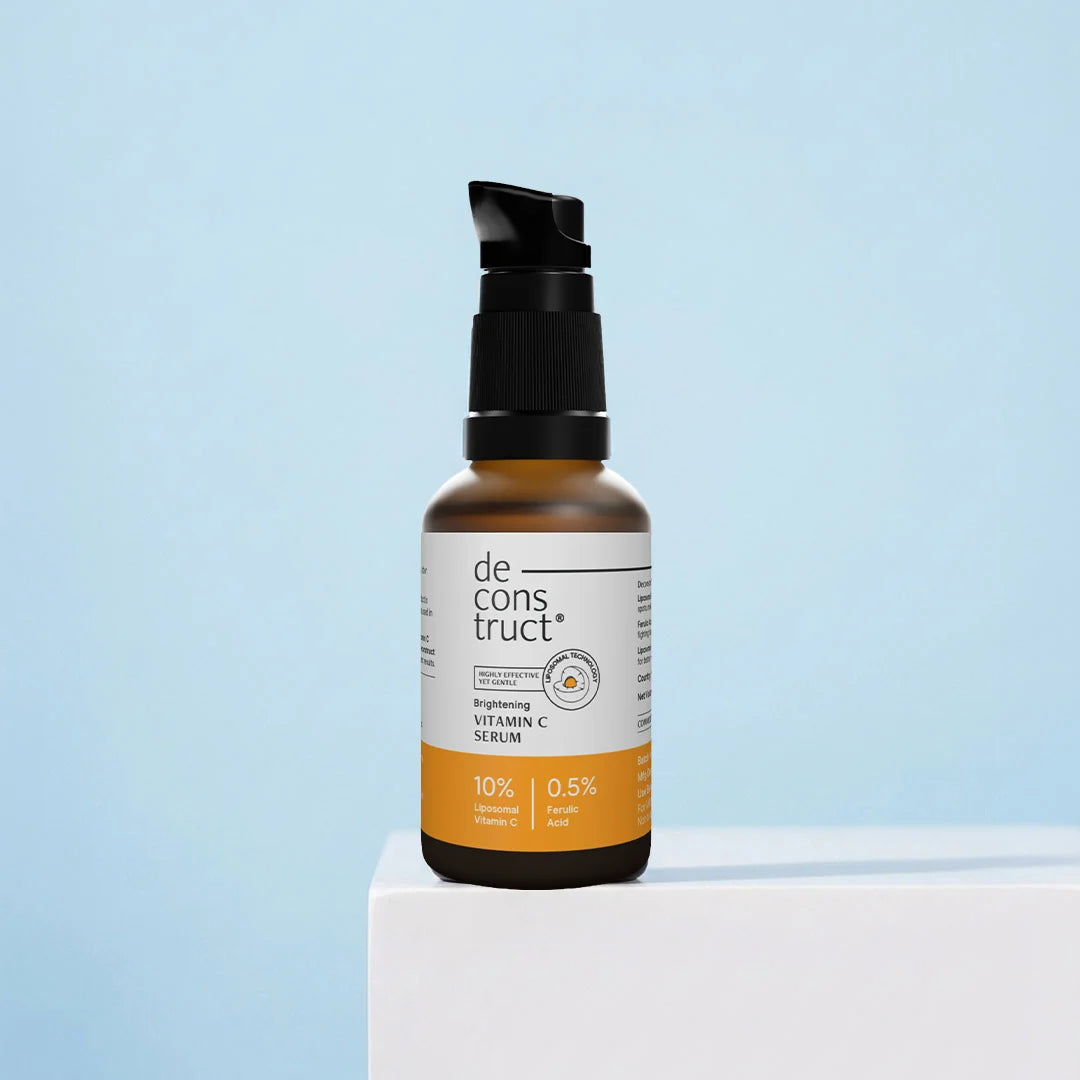
Deconstruct — Vitamin C + Ferulic Acid Serum
Why Does Oily Skin Sometimes Look Dull?
Dead Skin Cell Buildup
Skin constantly sheds dead cells, but that process can stall or turn irregular. When it does, dead cells accumulate on the surface as a hazy film that scatters light away rather than reflecting it back. On oily skin, excess sebum makes those cells clump and cling to the surface instead of shedding naturally — leaving a complexion that looks thick and flat rather than healthy, no matter how much oil is actually present.
Pollution and Environmental Stress
Every day, skin faces UV, particulate matter and pollutants that settle on the surface and generate free radicals. That oxidative stress drives inflammation, pigmentation and a gradual loss of radiance. Oily skin isn't spared — in fact, surface sebum can trap pollutant particles more readily, compounding dullness over time.
Dehydration Despite Excess Oil
Oil and water aren't the same thing, and oily skin can still be dehydrated. Stripping away natural oils damages the moisture barrier, which increases transepidermal water loss. The skin responds by producing even more oil to compensate — but that oil just sits on top while the underlying dehydration lingers, leaving skin looking dull and tired. The fix isn't more stripping; it's restoring the barrier with gentle products and lightweight hydration.
Signs Your Oily Skin Needs Brightening Care
Skin Looks Tired Even After Cleansing
If your face still looks dull right after washing, check your cleanser first. Harsh foaming or sulfate-based formulas can dehydrate the skin and leave it looking flat. Switch to a gentler cleanser, pat dry, and apply your serum or moisturiser within 60 seconds to lock in hydration.
Uneven-Looking Skin Tone
Patchy discolouration or a general lack of evenness signals melanin accumulation from sun exposure, post-acne marks or oxidative stress. That's a brightening concern, not an oil-control one — and it needs a different tool than your salicylic acid or oil-control steps.
Lingering Post-Acne Marks
Every cleared breakout leaves behind inflammation that triggers melanin production, and those marks can outlast the acne by weeks or months. On oily, acne-prone skin they accumulate faster than they fade without targeted brightening support — which is where a brightening vitamin C serum for dark spots earns its place.
How Vitamin C Supports a Brighter-Looking Complexion
Antioxidant Support
Vitamin C is one of the most effective antioxidants in skincare. Applied in the morning, it neutralises the free radicals generated by UV and pollution before they cause the oxidative damage that drives dullness and pigmentation (Topical Vitamin C: Mechanisms of Action, PubMed, 2017). For oily skin facing daily environmental stress, that protective function is as valuable as the brightening itself.
Helps Improve Uneven Skin Tone
Vitamin C inhibits tyrosinase — the enzyme that triggers melanin production — which gradually slows the formation of new dark spots while helping existing discolouration fade. For oily skin accumulating post-acne marks and sun-related pigmentation, it's the most direct route to a more even complexion. When paired with ferulic acid, its antioxidant stability and photoprotection improve further (Lin et al., J Invest Dermatol, 2005).
Suitable for Lightweight Morning Routines
For oily skin, texture matters as much as function. A lightweight water-based vitamin C serum absorbs quickly without adding shine or heaviness, staying comfortable through a full day. A serum that feels good gets used consistently — and consistency is what produces results.
Recommended Product: 10% Vitamin C Serum
If your skin feels oily but looks dull, a 10% vitamin C serum for oily, dull skin is built to address exactly that combination.
- 10% Vitamin C (3-O-Ethyl Ascorbic Acid) — a stable derivative at the clinically effective range for brightening and antioxidant protection, holding potency from first use to last
- Lightweight, fast-absorbing texture that absorbs within 60 seconds with no residue or shine — the detail that decides whether a serum becomes a daily habit on oily skin
- Supports brighter-looking skin — surface dullness visibly improves within 3–4 weeks, with deeper pigmentation taking 6–8 weeks
- Helps even the complexion by slowing the melanin production behind post-acne marks and sun discolouration
- Layers cleanly under moisturiser and sunscreen as step two in the morning
For the full ingredient breakdown, see our guide to how vitamin C brightens skin.
Simple Morning Routine for Dull Oily Skin
- Cleanser — a low-pH, non-stripping formula that removes overnight sebum without damaging the barrier. Browse gentle face washes for oily skin.
- 10% Vitamin C Serum — the brightening and antioxidant step, pressed into clean skin and left 60 seconds to absorb
- Oil-free moisturiser — lightweight hydration that addresses dehydration without adding oiliness. Explore oil-free moisturisers for oily skin.
- Sunscreen — broad-spectrum SPF 50+, non-negotiable. Compare lightweight sunscreens for oily skin.
Common Mistakes That Can Make Oily Skin Look Duller
Over-Cleansing
Reaching for heavy, sulfate-based foaming cleansers is a common oily-skin trap. Double cleansing belongs only at night, with a gentle formula — that stripping foam may be the very reason your skin feels dehydrated and looks flat.
Skipping Sunscreen
Every unprotected day deepens existing pigmentation and generates new discolouration. No brightening routine can outpace the melanin production caused by daily unprotected UV (Hughes et al., Annals of Internal Medicine, 2013). SPF protects the work everything else is doing.
An Inconsistent Routine
Brightening is cumulative. The skin's renewal cycle takes roughly 28 days, and consistent daily use is what lets brightening actives build visible improvement over that cycle. Product-hopping before the six-week mark is the most reliable way to ensure nothing works.
Final Thoughts
Oily skin and dullness coexist more often than you'd think, and for shared reasons: dead-cell buildup, oxidative stress, dehydration and accumulating post-acne pigmentation. Addressing dullness on oily skin takes more than managing oil — it needs antioxidant support, consistent brightening actives and daily SPF. A lightweight, daily-use vitamin C serum for dull, oily skin is designed for exactly this: brightening without heaviness, and antioxidant protection without disrupting a routine that's already working.
FAQs
Why does my oily skin look dull if it's not dry?
Because oil itself contributes to dullness — oxidised sebum, dead cells clinging to the surface, and shadows from stretched pores all scatter light. Oily skin can also be dehydrated underneath, which adds to the flat, tired look.
Is Vitamin C good for oily, dull skin?
Yes. A lightweight, water-based Vitamin C serum neutralises the oxidative stress behind dullness and helps fade uneven tone and post-acne marks, without adding heaviness to oily skin.
How long does Vitamin C take to brighten dull skin?
Surface dullness often improves within 3–4 weeks of consistent daily use, while deeper pigmentation and marks typically take 6–8 weeks. Daily SPF is essential to protect that progress.