
Why does serum texture matter so much for oily skin? Because the wrong texture means the serum gets skipped — no matter how good the ingredient is. A heavy formula sits on the surface, disrupts everything layered over it, and feels unbearable by midday in humidity. For oily skin, a lightweight, fast-absorbing serum isn't a cosmetic preference — it's what determines whether the product actually becomes part of your routine and delivers results.
Most skincare conversations begin and end with ingredients: which active, which percentage, which combination. Texture barely gets a mention — and for oily skin, that's a real gap. This guide explains why texture is the deciding factor, and how to judge it before you buy.
Why Serum Texture Matters for Oily Skin
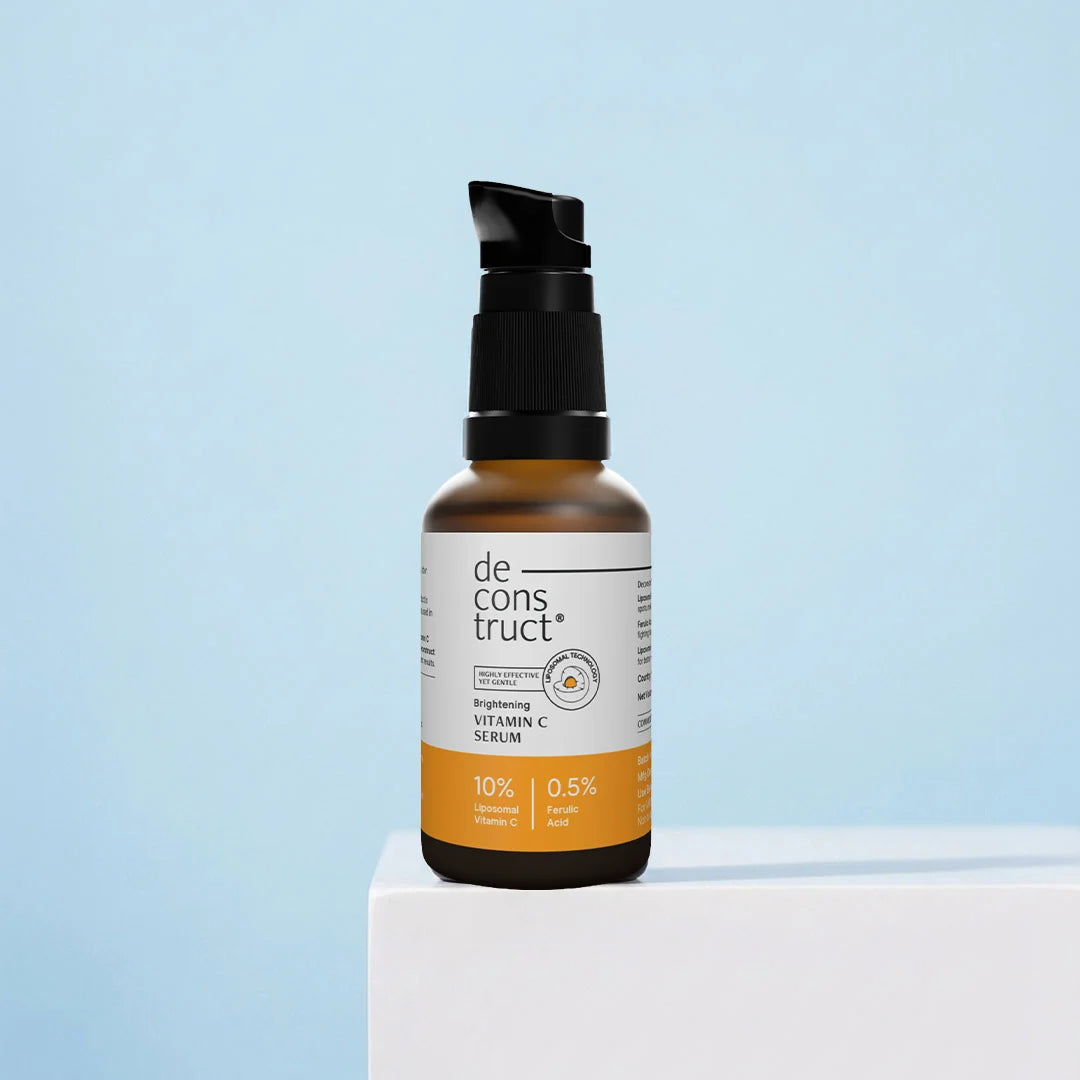
Deconstruct — Vitamin C + Ferulic Acid Serum
Comfort Throughout the Day
Oily skin is already managing more surface activity than most — excess sebum, potential shine, and in India's heat and humidity, that compounds fast. A serum that adds any perceptible weight or greasiness becomes uncomfortable by midday. Lightweight serums absorb fully, leave no film, and don't add to the heaviness that makes oily-skin routines feel like too much. In humid climates especially, texture is a practical requirement, not a nicety.
Easier Layering With Other Products
A serum that doesn't absorb cleanly disrupts everything on top of it: moisturiser pills, sunscreen slides, makeup won't sit evenly. Fast-absorbing serums create a stable, smooth base so your oil-free moisturiser for oily skin and SPF perform the way they should. Poor texture at the serum stage cascades into problems through the rest of the routine.
Better Routine Consistency
A serum that feels uncomfortable gets skipped — that's a formulation mismatch, not a willpower problem. Skincare that feels pleasant gets used consistently, and consistency is what produces results. A lightweight serum used every morning delivers far better outcomes than a theoretically superior one used three times a week because its texture is unpleasant.
What Makes a Serum Feel Lightweight?
Fast-Absorbing Formulas
Absorption speed is the most reliable indicator of how a serum will feel on oily skin. Try the 60-second test: if the serum has fully disappeared within a minute — no tackiness, no shine, no awareness of a layer — it's built for oily skin. If it's still perceptible after that, it isn't.
Water-Based or Gel-Like Textures
Water-based and gel formulas are the most compatible with oily skin. They're built without the heavy emollients, plant oils or occlusive agents that create weight, so the consistency is thin and the finish is clean. On the texture spectrum, water-based and gel sit at one end, thick creams and balms at the other — oily skin belongs firmly at the first end. A water-based vitamin C serum for oily skin is a good example of this format done right.
Non-Sticky Finish
Stickiness is a real problem in warm, humid conditions — it makes every product on top feel like it's sliding on a tacky layer. Non-sticky formulas dry down completely, leaving skin feeling like nothing was applied. That finish is what makes a lightweight serum genuinely pleasant in hot weather and compatible with sunscreen and makeup on top.
When Does Texture Matter Most?
Hot and Humid Weather
India's monsoon and summer months are when texture decides whether a routine gets followed. Heavy serums feel suffocating in heat; lightweight formulas feel manageable, even refreshing. Choosing the right texture in warmer months is what keeps a routine consistent when conditions work against it.
Layering With Sunscreen
Sunscreen is the non-negotiable final morning step, and it only works well over a stable, even base. A lightweight serum that absorbs completely lets your sunscreen for oily skin sit evenly and adhere properly. A heavier serum creates an unstable base that makes SPF move, bunch or apply unevenly.
Wearing Makeup
For anyone who wears makeup, everything below foundation matters. A serum that hasn't absorbed fully creates a slippery base that makes makeup separate or slide through the day. A fast-absorbing, non-greasy serum creates the smooth surface makeup sits on well — and stays on.
Recommended Product: 10% Vitamin C Serum
A good example of texture and active being right together is this lightweight vitamin C serum for oily skin — built around its texture as much as its active.
- 10% Vitamin C (3-O-Ethyl Ascorbic Acid) — a stable, effective derivative delivering brightening and antioxidant benefits at a daily-use concentration
- Lightweight, fast-absorbing texture — absorbs within 60 seconds, leaving no residue, shine or heaviness
- Non-greasy feel — comfortable through the day, in heat and humidity and under SPF or makeup
- Layers cleanly under moisturiser and sunscreen as step two in the morning
If you've been putting off a Vitamin C serum because heavier formulas felt wrong in the past, this is the format worth trying. For what the active actually does, see our guide tohow vitamin C brightens skin.
Common Texture Mistakes to Avoid
Choosing Thick Formulas for Oily Skin
Rich, emollient serums are made for dry skin dealing with moisture loss. On oily skin they sit on the surface, add shine and raise congestion risk. The ingredient inside may be excellent, but the formula makes it unsuitable — texture and ingredient are two separate evaluations, and both need to be right.
Ignoring Product Layering
A serum that feels fine alone can cause problems once moisturiser and SPF go on top. Pilling, balling or sliding usually signals texture incompatibility, not poor product quality. Lightweight, fully-absorbing serums create the stable base the rest of the routine builds on.
Confusing Hydration With Heaviness
A serum can be deeply hydrating without feeling heavy. Hyaluronic acid, for instance, is a powerful humectant that draws water into the skin — in a water-based formula, it does this with no perceptible weight. Oily skin needs hydration; it doesn't need the emollient weight that often accompanies it in formulas built for other skin types.
Quick Checklist Before Buying a Serum
- Lightweight texture — absorbs quickly, no residue within 60 seconds
- Fast absorption — water-based or gel formula, not cream or balm
- Comfortable layering — sits cleanly under moisturiser, SPF and makeup
- Suitable for oily skin — non-comedogenic, no heavy oils or occlusives
- Fits your skincare goals — texture aside, the active addresses your primary concern
Not sure which active you need first? Our guide to serums for oily skin helps you match the ingredient to your concern.
Final Thoughts
Texture isn't a minor consideration — for oily skin, it's often the deciding factor in whether a serum gets used at all. A lightweight, fast-absorbing formula that layers cleanly and feels comfortable in humidity is what makes daily consistency realistic, and consistency is what produces genuine results. A lightweight vitamin C serum for oily skin pairs antioxidant brightening with a texture built for this skin type — one that absorbs fully and sits comfortably under SPF. Browse more face serums for oily skin to find your match.
FAQs
Why is a lightweight serum better for oily skin?
A lightweight serum absorbs quickly, layers well with other products and doesn't leave a heavy or greasy feeling — making it far more comfortable and practical for everyday use on oily skin, which is what drives the consistency that produces results.
How can I tell if a serum is lightweight enough for oily skin?
Use the 60-second test: if it absorbs fully within a minute with no tackiness, shine or surface film, it's suited to oily skin. Water-based and gel textures pass this far more often than cream or balm formulas.
Can a lightweight serum still be hydrating?
Yes. Humectants like hyaluronic acid draw water into the skin without adding weight, so a water-based serum can be deeply hydrating while still feeling light. Hydration and heaviness are not the same thing.