

If you’re looking at the market for Vitamin C serums, you’re sure to find plenty. Proven to help target dullness, brighten skin while fading dark spots and pigmentation, Vitamin C serums are popularly recommended by dermatologists in brightening, pigmentation-focused routines. If you’re a skincare beginner, looking for the right Vitamin C serum can sound a bit too intimidating-countless options, varying concentrations, and ingredient lists. Amidst the sea of serums out there, knowing exactly what to look for in a Vitamin C serum is a crucial aspect.
In this dermatologist-approved guide, we give you a complete rundown on all the aspects of choosing the right Vitamin C serum, its benefits, and how to choose the right formula to choose your specific skin type.
What Is A Vitamin C Serum?
A vitamin C serum is a lightweight, topical targeted skincare treatment that helps address specific skincare conditions, such as brightening, fading dark spots and pigmentation.
What is Vitamin C in skincare?
In skincare, Vitamin C is seen as a potent antioxidant, which neutralises free radicals in the skin(unstable molecules) reducing oxidative damage in the skin caused from external stressors such as UV, pollution.
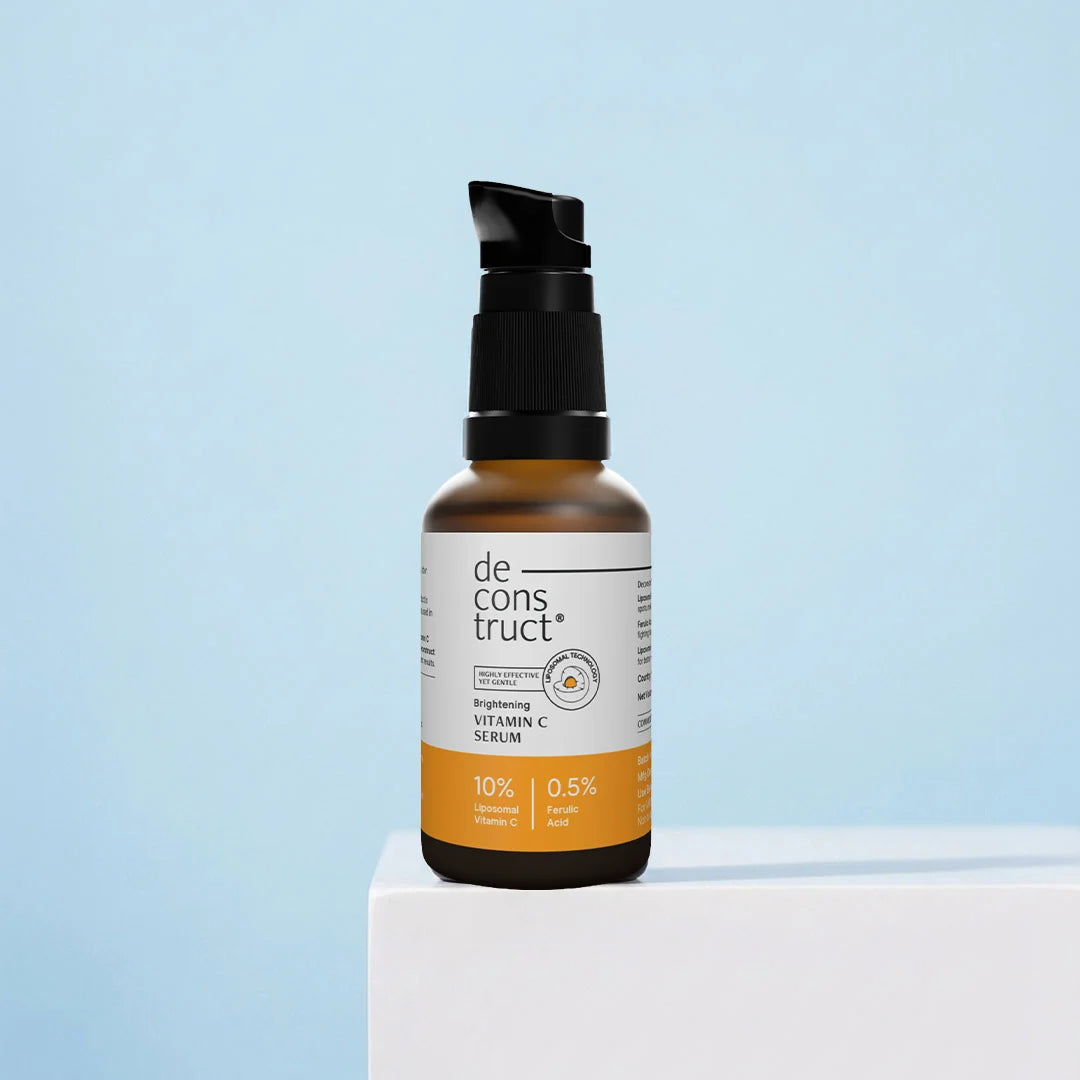
Deconstruct — Vitamin C + Ferulic Acid Serum
Why is Vitamin C used in serums?
First, lets understand how serums work
They are lightweight, fast-absorbing liquids that deliver a concentrated and targeted dose of an active ingredient into your skin. They are often the ideal choice for addressing specific skin conditions, such as pigmentation, acne or dark spots. Their smaller molecular structure makes it easier to help deliver the ingredient deeper into the skin’s layers to deliver the ingredient.
Vitamin C is an effective active ingredient in a serum as it helps deliver the active into your skin’s layers to help target skincare conditions such as hyperpigmentation, skin brightening and even anti-ageing and photoprotective properties, according to the National Library of Medicine.
How Vitamin C works on the skin
According to the National Institutes of Health (NIH), Vitamin C is an effective topical agent that works by:
-
Neutralises free radicals (antioxidant protection): Environmental stressors like UV and pollution create unstable molecules(radicals) that end up damaging healthy skin cells, accelerating premature ageing, working to defend the skin by neutralising these radicals and protecting your skin from oxidative damage and stress.
-
Inhibits melanin production: It helps inhibit the enzyme tyrosinase, the pigment producing enzyme that leads to hyperpigmentation and dark spots
-
It also helps boost collagen production in the skin, which keeps it firm and bouncy
Different forms of Vitamin C
-
L- Ascorbic Acid
-
3-0 Ethyl Ascorbic Acid(EAA)
-
Sodium Ascorbyl Phosphate (SAP)
-
Magnesium Ascorbyl Phosphate (MAP)
-
Tetrahexyldecyl Ascorbate
Why Vitamin C is difficult to stabilize
One common problem with Vitamin C, is how unstable the ingredient can be!
Vitamin C, especially in its most pure form (L-ascorbic acid),is notorious for its high instability, as its smaller molecular structure makes it easily lose electrons, making it highly reactive to environmental triggers. When it comes into contact with these stressors, it begins a process of rapid chemical breakdown(National Library of Medicine).
The four major triggers:
-
Oxygen: From the moment you open your serum bottle and it binds with oxygen, it triggers a chemical breakdown into dehydroascorbic acid, losing its potency. This chemical shift turns your serum yellowish, muddy or brown (National Library of Medicine)
-
High vulnerability to water: In water-based formulas, water acts as a
-
UV and heat/humidity degradation: UV rays along with higher temperatures trigger a photochemical reaction that breaks down and snaps the fragile bonds of the L-ascorbic acid, speedening up decay. If you leave your vitamin C serum near sunlight or a window, it will degrade within weeks, rendering it inactive before it even touches your skin (ResearchGate).
-
Hyper-specific pH window for Vitamin C: Vitamin C stays stable only in a pH below 3.5. If there is even a slight pH shift, it leads to rapid degradation and instability.
Benefits of Vitamin C Serum
Vitamin C is commonly used in many skincare for it’s many benefits, from brightening to even anti-ageing.
Brightens dull skin
Inhibits pigmentation production: Vitamin C inhibits the pigment-producing enzyme, tyrosinase,
Boosts cell turnover: It gently speeds up surface skin cell renewal to shed lackluster cells that cause dullness
Improves natural radiance: Regular and consistent use helps visibly improve structural brightness of the skin
Fades dark spots
-
Hyperpigmentation: It is used in pigmentation-focused routines as it helps target and reduce melanin in pigment-focused areas
-
Lightens sunspots: Breaks down clusters of UV-induced dark spots
-
Prevents new dark spots: While reducing current dark spots, it also prevents new dark spots from forming and causing uneven skin tone
Reduces post-acne marks
-
Reduces the dark spots or discolouration left from acne
-
Accelerates healing: By speeding up your skin’s natural repair process, it helps reduce post-blemish marks
-
Calms localised inflammation
Helps improve uneven skin tone
-
Balances complexion
-
Smoothens texture: Addresses rough patches on the skin, evening out skin texture
-
Reduces blotchiness: Reduces inflammation, redness and promotes balanced complexion
Supports collagen production
-
Promotes collagen production: Biologically triggers enzyme producing collagen
-
Strengthens skin structure: Keeps skin firm,plump and helps prevent sagging
-
Improves structural density: Vitamin C helps plump your skin from within, keeping a youthful glow
Helps reduce fine lines
-
Anti-ageing: Helps reduce wrinkles, fine lines and is used even in anti-ageing treatments
-
Preserves current elastin
Protects against free radical damage
-
Neutralises unstable molecules, protecting skin from radical damage
-
Reduces oxidative stress from environmental stressors such as UV, pollution
Enhances daily sun protection
-
Prevents photoageing
-
Minimises sunburn
-
Complements sunscreen in protecting your skin from UV-induced sun damage to the skin
How Vitamin C Works
Antioxidant protection
Vitamin C safely donates its own neutrons to neutralise radicals or unstable molecules, protecting your skin from oxidative damage.
Melanin regulation
Vitamin C, known for being a tyrosinase inhibitor, limits the production of melanin and reduces clusters of melanin showing up as pigmentation or dark spots, fading existing ones while preventing new ones from forming
Collagen stimulation
Vitamin C biologically triggers collagen-producing enzymes in the skin.
Environmental damage prevention
Its antioxidant properties protect your skin from external and environmental stressors like UV, pollution that contributes to dullness in the skin.
Different Types of Vitamin C
L-Ascorbic Acid
Most pure form of Vitamin C. Gold standard for fast, potent anti-ageing and brightening. It is water soluble.
Sodium Ascorbyl Phosphate
Water-soluble form of Vitamin C, helps target acne-causing bacteria and reduce breakouts, making it ideal for acne prone skin.
Ethyl Ascorbic Acid
Highly stable derivative of Vitamin C. Next-gen variation that helps fade stubborn pigmentation faster. It is soluble in both water and oil.
Magnesium Ascorbyl Phosphate(MAP)
Water-soluble derivative that is highly preferred for sensitive skin for its neutral pH. It is the most hydrating derivative of Vitamin C
Tetrahexyldecyl Ascorbate
Oil-soluble form of Vitamin C. It helps penetrate deeply into the skin to target wrinkles and fine lines.
Sodium Ascorbyl Phosphate (SAP):
A water-soluble derivative that is bound to sugar (glucose) and highly stable.
Here’s a table for your easy reference:
|
Form of Vitamin C |
Solubility |
Best Suited For |
Key Benefit |
|
L-Ascorbic Acid (LAA) |
Water-soluble |
Normal, oily skin |
The gold standard for fast, potent anti-aging and brightening. |
|
Sodium Ascorbyl Phosphate (SAP) |
Water-soluble |
Acne-prone, oily skin |
Fights acne-causing bacteria and reduces breakouts. |
|
3-O-Ethyl Ascorbic Acid (EAA) |
Water/Oil |
Beginners, dark spots |
Next-gen variant that quickly fades stubborn hyperpigmentation. |
|
Tetrahexyldecyl Ascorbate (THD) |
Oil-soluble |
Dry, mature skin |
Penetrates deeply to target deep wrinkles and UV damage. |
|
Magnesium Ascorbyl Phosphate (MAP) |
Water-soluble |
Highly sensitive skin |
Boosts hydration and slowly brightens without any stinging. |
|
Ascorbyl Glucoside |
Water-soluble |
Dull skin, general glow |
Highly stable and excellent for smooth, everyday radiance. |
Choosing the Right Vitamin C Serum
So how do you know which Vitamin C serum is the right one for you? Here are the perimeters on how to know which serum is the right one for your specific skin type and concerns, and how to consider the best vitamin c serum for you.
Based on skin type
Always consider your skin type when choosing a Vitamin C serum.
-
For oily skin and acne-prone: Dermatologists recommend water-based, lightweight serums with a water-soluble for quicker absorption.
-
Choose Vitamin C derivative like 3-0 ethyl ascorbic acid
Based on concentration
No, higher the concentration, doesn't always mean better results.
-
For skincare beginners, look for concentrations anywhere between 5-10% to ensure least irritation with visible results with consistent use
-
For skin that’s already resilient to Vitamin C, a concentration above 10-15% should work well.
-
Dermatologists always recommend a patch test before full application. And increase the concentration once your skin has built resilience to the active.
Based on packaging
Packaging also matters.
-
Look for opaque dark coloured bottles (black) that do a better job blocking out ultraviolet rays, which speedens up degradation
-
Opt for airtight pump mechanisms, over glass droppers. They help reduce the active’s contact with oxygen in the atmosphere
Based on additional ingredients
Here are some supporting ingredients to keep an eye out for that enhance your Vitamin C serum
-
Ferulic Acid: boosts antioxidant protection along with Vitamin C, and helps increase stability of the formula.
Based on texture and formula
Look for
-
Water-based formulas, especially for oily and acne prone skin as it It aids quicker absorption.
-
Oil-based formulas for very dry or mature skin, deep wrinkle treatments
-
Look for liposomal technology in your Vitamin C serum formula. It helps controlled release of the active into your skin in a timed and controlled manner, to ensure gradual release of the ingredient, instead of dumping the entire ingredient into your skin at once, ensuring least irritation and targeted delivery (National Library of Medicine).
Recommended Vitamin C Serums
Dermatologist-recommended Vitamin C serum that is proven to visibly brighten skin and reduce dark spots, pigmentation and uneven skin tone is Deconstruct’s 10%
Vitamin C serum with Liposomal Technology for it’s:
-
10% Liposomal Vitamin C: Targeted and gentle delivery of the ingredient in a gradual, controlled and released manner to ensure maximum absorption and least irritation.
-
0.5% Ferulic Acid: Helps increase stability of Vitamin C, preventing rapid oxidation, and boosts antioxidant protection, strengthening protection against environmental stressors such as UV, pollution
-
Water-based formula for faster absorption
-
Contains soothing and hydrating ingredients like panthenol and Cica that support barrier function and calm the skin.
How to Use Vitamin C Serum
Another important aspect is knowing the right way to apply your Vitamin C serum, to ensure you’re getting the best results out of it.
Morning vs evening application
Dermatologists recommend both morning and evening application for Vitamin C serum.
Morning: Dermatologists recommend you apply your serum in your AM routine to help protect your skin against oxidative stress and environmental damage from stressors like UV, pollution.
Evening: Helps support your skin’s natural renewal process, which happens at night
Correct application order
A step-by-step glance:
1: Cleanse
2. Vitamin C serum
3. Moisturizer
Layering with moisturizer
-
Wait for your serum to absorb (30-60 seconds)
-
Lock in hydration with a dedicated lightweight, oil-free moisturizer
-
This helps prevent product piling
Layering with sunscreen
Do not skip SPF if you’re using a Vitamin C serum
-
Sunscreen is the final step, Apply SPF after your moisturizer.
-
Thicker protective film protecting your skin from UV radiation, along with Vitamin C to mop up any remaining UV rays that slip past
-
Offers double the protection from UV-induced damage and photoageing
Using Vitamin C with other actives:
Using Vitamin C with Niacinamide
One common myth with a vitamin c serum is that you cannot combine vitamin c with niacinamide. But that is not true! Despite the old belief, its a skincare myth, and in fact, complement each other
-
Use Vitamin C in the AM for antioxidant protection
-
Use Niacinamide in the evening for smoothening skin texture, refining appearance of pores and to calm your skin
Using Vitamin C with Retinol
Dermatologists recommend that you separate them.
-
Vitamin C for your AM routine
-
Reserve retinol for your PM routine, it’s best used at night.
Skin cycling with Vitamin C
Morning consistency: Keep Vitamin C serum as your morning constant, always. It helps with daily, non-stop antioxidant protection from UV, pollution.
Exfoliation at night (if using): On night one,use an AHA or BHA (salicylic acid) once to clear dead skin buildup
Retinol: On night two, use a retinol serum. Dermatologists recommend use of retinol 1-2 times per week for absolute beginners, and gradually increase to 2-3 times per week once your skin builds resilience to it.
Beginner routine
-
Start very slow: look for concentrations between 5-10% to start off.
-
Pick a gentle formula with increased stability. Look for formulations of Vitamin C with ingredients such as Ferulic acid for boosted antioxidant protection and stability for least risk of irritation
-
Apply it once daily, in the AM, before your SPF (non-negotiable). If you’re just starting out, or you have highly reactive skin, apply it 3 times a week (every other day) and as your skin tolerates it more frequently, use it 2-3 times, then gradually increase to daily use.
How Long Does Vitamin C Serum Take to Work?
First two weeks
-
1-2 weeks, you’ll see the serums antioxidant protection and environmental shield hard at work.
-
Subtle surface glow
One month
-
At the 4 week mark, you complete your skin’s natural renewal cycle, yielding more visible changes in your complexion
-
Dullness visibly reduces and more even-toned complexion becomes apparent
-
Here new skin cells rise to the surface and pigmentation and dark spots begin to fade
Two to three months
During weeks 8-12 marks the period for achieving structural changes in the skin, including visible hyperpigmentation reduction and improved collagen support
Factors affecting results
Product formulation: L-ascorbic acid, being the most potent and pure form, can be highly unstable on its own. Look for highly stable derivatives like 3-0 ethyl ascorbic acid and stabilising agents like Ferulic Acid for boosted antioxidant protection and increased formula stability.
Oxidation: Factors like
-
Improper storage, such as in highly humid, hot environments or under sunlight, will lead to rapid oxidation of the formula and cause it to turn yellowish, muddy or dark brown in colour.
-
Failing to apply SPF if you’re using a Vitamin C serum not only undoes all the progress your Vitamin C is working so hard for, but also worsens dullness, pigmentation, dark spots and worsening existing ones and added UV damage.
Side Effects & Safety
Why Vitamin C causes tingling
Vitamin C, especially L-ascorbic acid can typically cause a tingling sensation due to its low pH that disrupts the skin’s surface. Mild tingling sensation is normal.
When redness is normal
Mild, fleeting redness of the skin is normal. However, persistent redness that burns constantly or hives, is not. It indicates irritation to the skin. Dermatologists recommend a patch tests and to start off with lower concentrations(5-10%)
Signs of irritation
Look for these signs:
-
Intense and persistent burning
-
Severe redness
-
Itching or hives
Patch testing
Dermatologists recommend a patch test either on the inside of your wrist or jawline for 24 hours, especially if you have highly reactive or sensitive skin or rosacea prone skin.
Who should avoid high-strength Vitamin C
-
Beginners just starting out
-
Highly sensitive, rosacea prone skin
Storage & Shelf Life
How to store Vitamin C
-
Store it in a cold, dry place, where sunlight cannot reach it. Never in humid bathroom environments
Shelf life
An unopened vitamin C serum can last 12-24 months. Whereas an opened one stays effective on your skin for 3-6 months, before losing its efficacy.
Formulas with L-ascorbic acid last a maximum of 3 months, due to its high instability and oxidation-prone nature.
When to replace your serum
Replace it if you see
-
Yellowish, brown or muddy colour: This is a sign that it has oxidised and should be replaced
-
Check for a sour odor
-
Mainly, check the expiration date.
Final Thoughts:
Vitamin C serums are not just surface-level fixes. They are potent, dermatologist-recommended targeted treatments that brighten skin, fade pigmentation and boost collagen production from within. Looking for the best Vitamin C serum for your skin comes down to how it suits your specific skin’s needs. Remember all the aspects to consider:
-
Formula type, water-based or oil-based
-
which derivative suits your skin concern and skin type the best
-
Concentration of the formula, don’t go for the highest concentration, especially when starting out.
-
Protective, airtight packaging and pump applicators over droppers.
-
Stabilising agents such as Ferulic Acid to help prevent oxidation and increase stability
Look for water-based, highly stable and lightweight formulas with a concentration between 5-10%. This is where formulations such as Deconstruct’s Vitamin C serum with Liposomal Technology comes to the spotlight. Its beginner-friendly formula (with added ferulic acid for increased stability) helps anyone looking for a highly stable, reliable and gentle formula that delivers effective results whilst also not compromising on daily skin comfort.