
There is a proper reason behind why our lips tend to become dark when we smoke cigarettes. Everytime you light a cigarette your lips are exposed to heat which irritates the outer layer of the lips. But what goes underneath the lips giving it the dark pigmented dark layer is more than just heat. There is a term known as smoker’s melanosis. In this article we decode what leads to lip pigmentation and how smoking gives the lips that dark color, followed up with a guide on how to fix it.
WHAT IS SMOKING-RELATED LIP PIGMENTATION?
To understand what's actually happening here, it helps to know a couple of basic terms:
Melanin is the pigment responsible for color in your skin and mucosal tissue. Melanocytes are the cells that produce it. When those cells become more active than usual, you get hyperpigmentation, visibly darker, more pigmented tissue than there was before.
Smoking-related pigmentation isn't the same thing as your natural, lifelong lip color, it's an acquired change tied specifically to tobacco exposure. Research in Indian smokers found hypermelanocytosis, essentially an overactive population of pigment-producing cells, along with visible melanosis, with particularly pronounced pigmentation on the labial mucosa, the inner lip tissue.
Worth being precise with language here too, it's more accurate to talk about "smoking-related pigmentation" or "smoker's melanosis" specifically, rather than assuming every case of dark lips falls under that umbrella. Plenty of dark lips have nothing to do with smoking at all.
WHY DOES SMOKING MAKE LIPS DARKER?
There isn't one single mechanism at work, it's really a combination of factors layered together.
1. INCREASED MELANOCYTE ACTIVITY
This is the strongest piece of evidence in the research. Smoking appears to stimulate melanocytes directly, driving up melanin production in oral and lip tissue. Studies have consistently found greater melanocyte activity and visible pigmentation among smokers compared to non-smokers.(PubMed)
2. TOBACCO SMOKE EXPOSURE
Repeated, ongoing exposure of oral tissues to tobacco smoke itself, not just a single component of it, appears to contribute to this pigmentation building up over time.
3. NICOTINE AND BLOOD-FLOW EFFECTS
Nicotine causes vasoconstriction, a narrowing of blood vessels, which is well documented. It's worth being careful here though, reduced blood flow isn't established as the proven primary driver of melanin production itself, it's better understood as one piece of the broader picture of how smoking affects oral tissue, rather than the main cause of darkening on its own.
4. HEAT AND REPEATED IRRITATION
The physical heat from cigarette smoke, along with the general repeated irritation of smoking itself, can contribute to changes around the lips over time, alongside the pigmentation process.
DOES SMOKING ALWAYS CAUSE DARK LIPS?
Not every smoker develops visibly noticeable pigmentation. Baseline pigmentation varies enormously from person to person to begin with and how much someone smokes and for how long, varies just as much. Other causes can contribute to lip darkening entirely independent of smoking too.
What the research actually demonstrates is an association, not a guarantee. Studies have found significantly higher pigmentation rates among smokers as a group, along with correlations tied to smoking duration and overall exposure, but that's a population-level pattern, not a certainty for every individual.
In short: smoking can increase the likelihood of lip and oral pigmentation, but not every smoker will end up with visibly darker lips.
IS IT THE NICOTINE OR THE CIGARETTE SMOKE THAT CAUSES DARK LIPS?
This question comes up a lot, "does nicotine cause dark lips" is a common search and it deserves a more careful answer than most content gives it.
Smoking exposes oral tissue to a whole mix of components at once, nicotine, yes, but also combustion products and everything else released when tobacco burns. Nicotine influences the pathways, the receptors but is not the prime candidate for pigmentation. Cigarettes contain polycyclic aromatic hydrocarbons (PAHs) which can activate the aryl hydrocarbon receptor (AhR), which can subsequently influence MITF, a major regulator of melanocyte activity and melanin production
Key takeaway: smoking-related lip pigmentation is better understood as a result of overall tobacco exposure, not a case of nicotine specifically staining your lips. That distinction matters, because it shapes what actually helps, removing the whole exposure, not just switching to a nicotine source without combustion.
HOW DOES SMOKING-RELATED PIGMENTATION DIFFER FROM NATURALLY DARK LIPS?
Natural pigmentation tends to be longstanding, relatively stable over a person's life and simply part of normal individual variation, the same way skin tone varies from person to person.
Smoking-related pigmentation typically develops or becomes noticeably more pronounced, after someone starts smoking. It can involve the lips alongside other oral tissue and studies have found it correlates with smoking duration and overall exposure, pigmentation on the lips and gingiva has been significantly associated with current smoking status specifically.
CAN SUN EXPOSURE MAKE SMOKING-RELATED LIP PIGMENTATION WORSE?
Yes, it can and it's worth knowing this overlap exists. UV exposure independently contributes to lip pigmentation and general sun damage and plenty of smokers also happen to spend real time outdoors unprotected. That means smoking and sun exposure can genuinely stack on top of each other as contributing factors, rather than acting in isolation. Current clinical sources list both sun exposure and smoking among the recognized causes of lip darkening.
Practical takeaway: if smoking is contributing to your pigmentation, protecting your lips from UV exposure removes one additional source of pigment-related stress, even while the smoking-related piece is still working its way through its own slower recovery.
DOES SMOKING-RELATED LIP PIGMENTATION GO AWAY AFTER QUITTING?
Stopping smoking removes the ongoing trigger driving the pigmentation, which matters a great deal, but existing pigmentation doesn't necessarily disappear the moment you quit. It tends to decrease gradually and how much and how fast varies meaningfully from person to person.
One study found that smoking-related oral pigmentation increased over the course of active smoking and reported pigmentation decreasing toward levels seen in non-tobacco users roughly three years after cessation.(PubMed)
In short: smoking-related pigmentation may improve after quitting, but the degree and speed of that improvement vary and there's no guaranteed timeline for the lips specifically.
CAN LIP BALM TREAT SMOKING-RELATED PIGMENTATION?
This is worth answering honestly, because overselling it here would undercut the credibility of everything else in this article.
What lip balm can genuinely help with: hydration, dryness, general barrier support, UV protection if the formula includes SPF and the cosmetic appearance of your lips day to day.
What lip balm cannot do: remove the underlying cause while smoking continues, guarantee reversal of smoker's melanosis or replace the actual act of quitting. No formula, however well made, does any of those three things.
PRODUCT RECOMMENDATION:
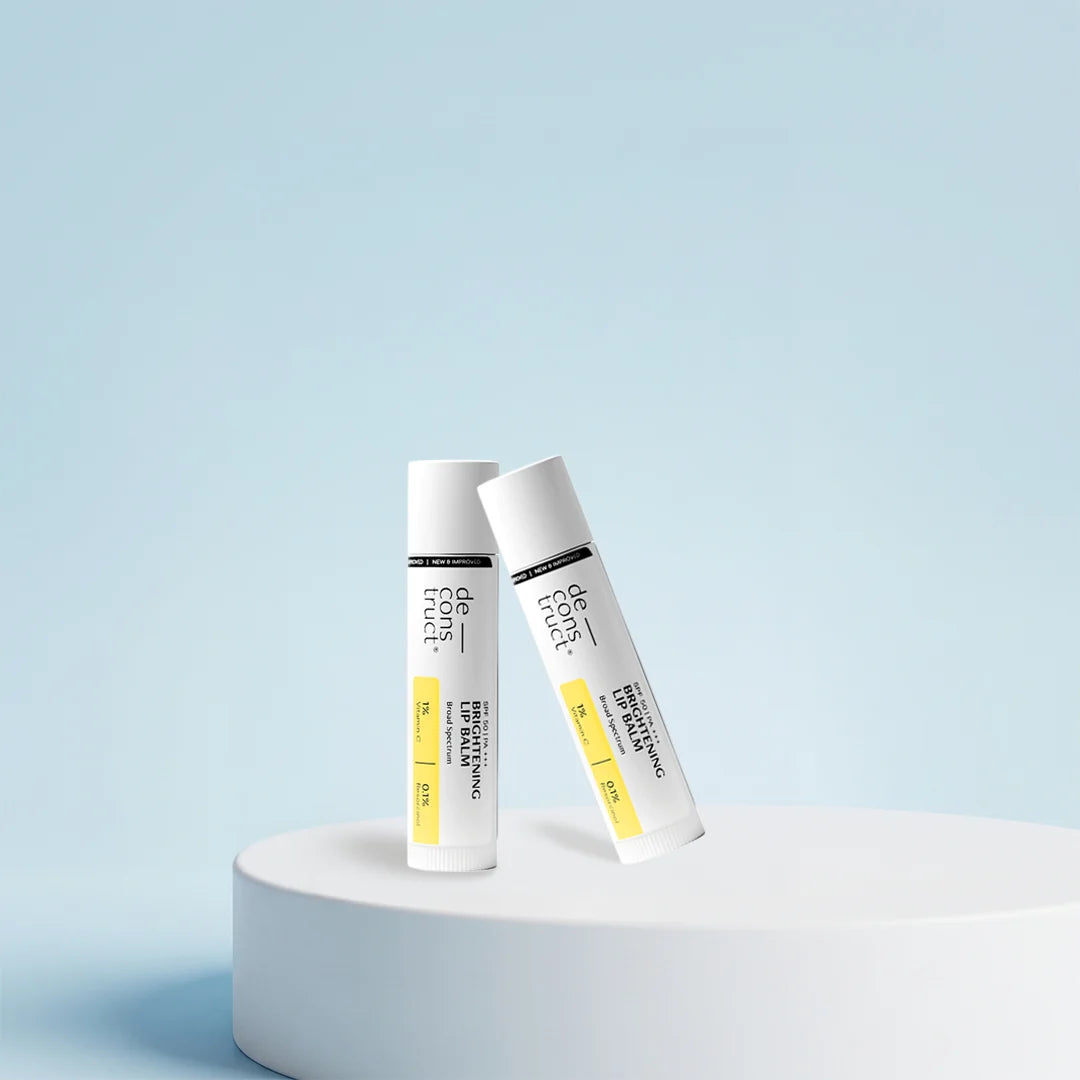
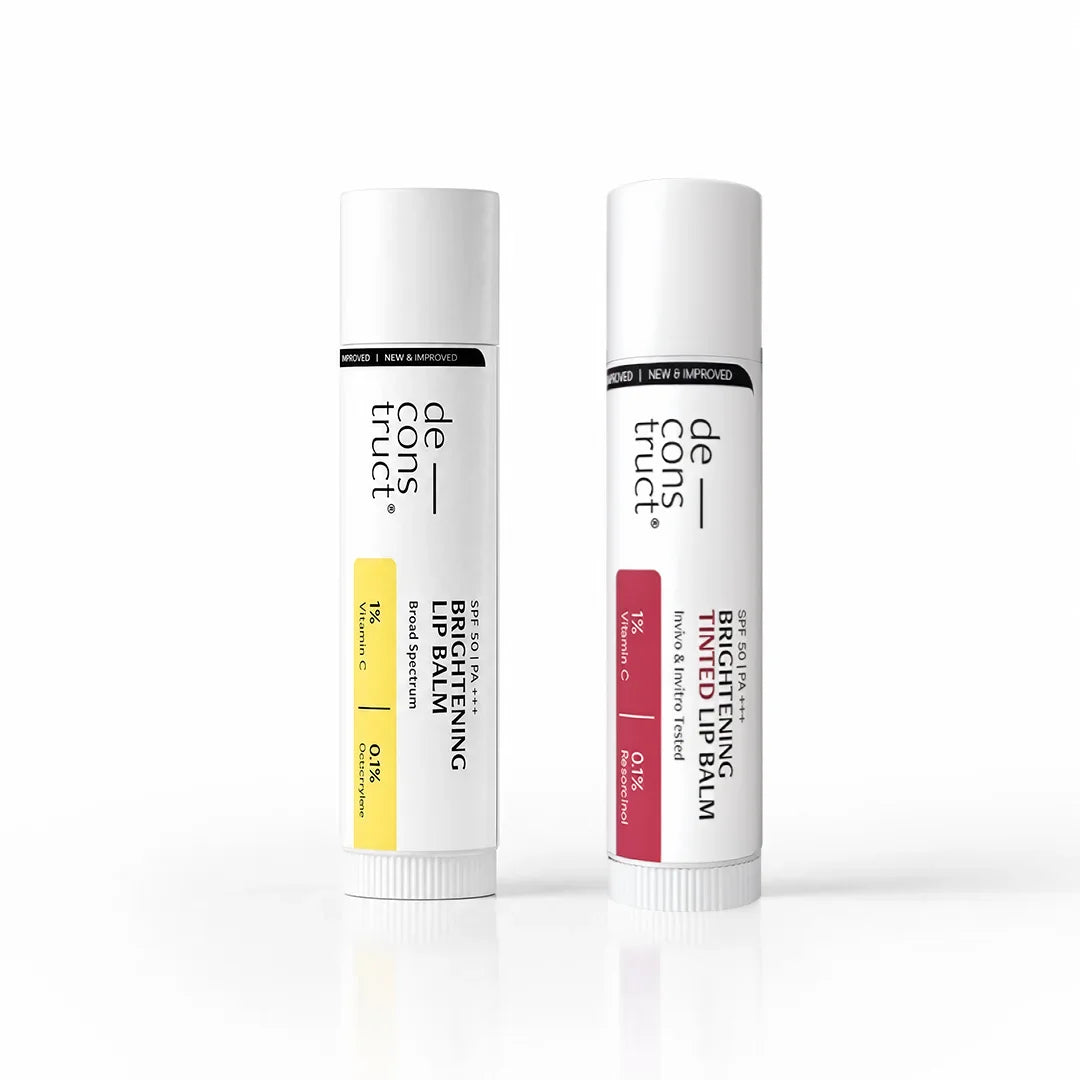
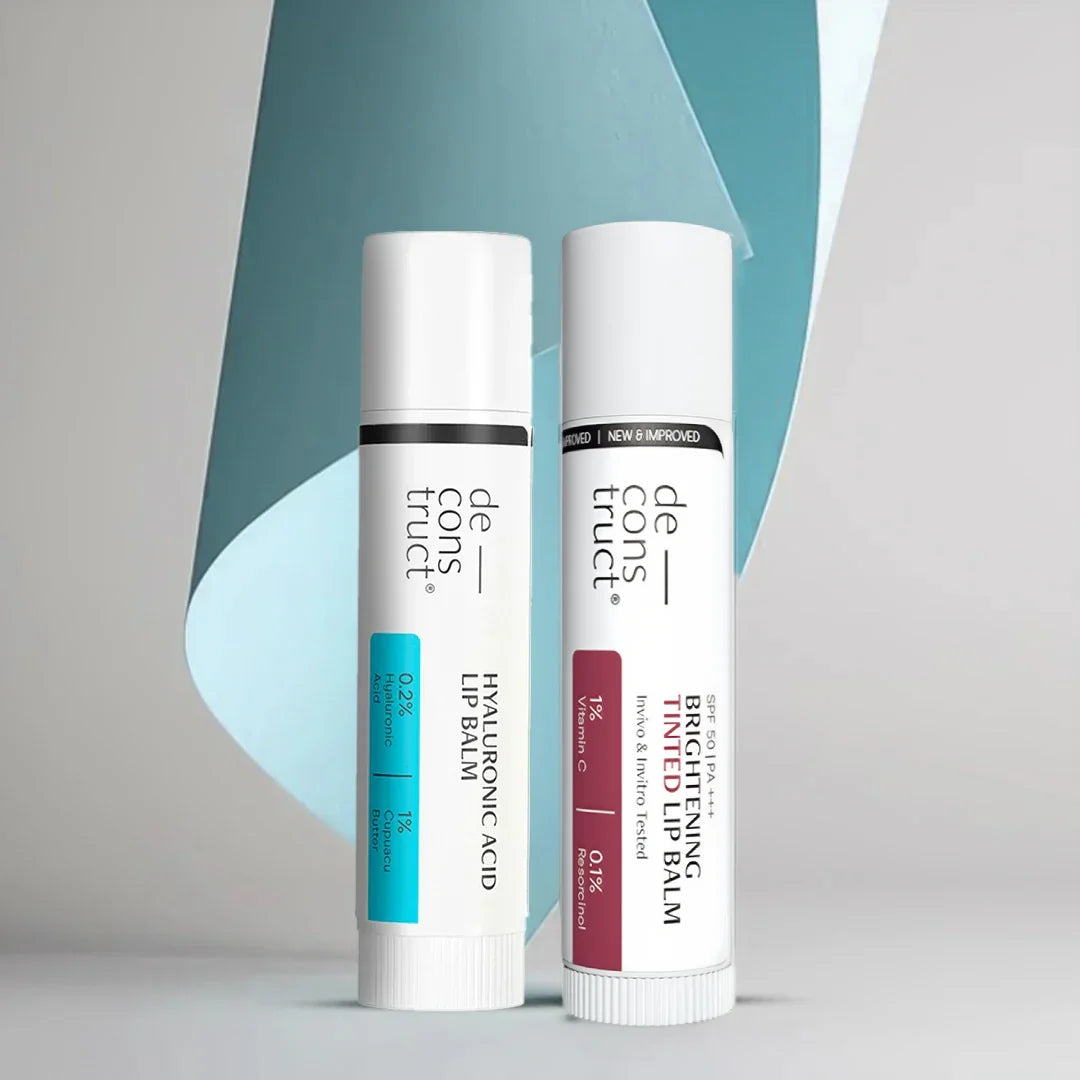
DECONSTRUCT BRIGHTENING LIP BALM WITH SPF 50
-
Formulated with 1% Vitamin C and 0.1% Resorcinol along with SPF 50 which protects against UV damage while also reducing dark and pigmented lips
-
1% Vitamin C works to brighten the lips and reduce discoloration and brighten the lips
-
0.1% Resorcinol fights sun induced pigmentation caused by UV rays
-
Includes murumuru butter and Vitamin E which are rich emollients that nourishes the lips and retains moisture
-
Built around 24-hour moisturization formulated under IN-VIVO tested rooms for dry, chapped lips
-
Free from petroleum, parabens and artificial fragrance and is dermatologist-tested and science-backed.
Best Suitable for:
-
Smoker lips
-
Dark or pigmented lips
-
Dry or chapped lips
-
Multi-benefit purpose
-
You want SPF + Hydration + Moisture + Brightening benefits+ Fragrance free
DECONSTRUCT LIP SLEEPING MASK
-
Formulated with 2% peptides and 0.2% collagen
-
0.2% Collagen deeply nourishes dry, flaky and cracked lips while locking in moisture for softer lips by morning
-
2% Peptides help boost collagen production to visibly reduce lip lines and improve lip fullness with continued use.
-
The lip sleeping mask helps in reduction of fine lines and wrinkles around the lips resulting in smoother, plumper lip appearance for both men and women
-
Dermatologically tested, Paraben Free, Sulphate Free, Fragrance Free, Cruelty Free and Vegan
Best Suitable for:
-
Applying right before bed
-
A supportive step in an ongoing lip-care routine
-
Dark or pigmented lips
-
Dry or chapped lips
-
Multi-benefit purpose
WHEN SHOULD DARK LIP PIGMENTATION BE CHECKED BY A PROFESSIONAL?
This is worth taking seriously and it's what separates genuine information from a cosmetic sales pitch. Get pigmentation evaluated by a professional if it's new and you can't explain it, changing rapidly, one-sided or focal rather than spread evenly, irregular in shape or border, associated with bleeding, connected to an ulcer or a sore that isn't healing, painful or raised above the surrounding tissue.
FINAL THOUGHTS
Smoking-related lip pigmentation is a real, documented phenomenon, driven primarily by increased melanocyte activity from tobacco exposure, not a myth or a simple staining effect from nicotine alone. It doesn't affect every smoker the same way and it can genuinely improve after quitting, though gradually and unevenly rather than on a fixed schedule. A good lip-care routine, hydration, sun protection and brightening support, can help your lips look and feel better along the way and the Deconstruct Brightening Lip Balm SPF 50 fits well into that kind of daily care. But the real work happens at the source, removing the tobacco exposure itself is what actually gives your lips the chance to recover.
FAQs
WHY DO LIPS GET DARKER FROM SMOKING?
Smoking is associated with increased melanocyte activity and melanin pigmentation in oral tissues, a pattern often referred to as smoker's melanosis, driven by tobacco exposure broadly rather than any single component.
DOES NICOTINE CAUSE DARK LIPS?
Nicotine is one component of overall tobacco exposure, but it's not scientifically accurate to reduce smoking-related pigmentation to simple "nicotine staining," the full mix of tobacco exposure is what's actually implicated.
CAN SMOKING CAUSE PERMANENT LIP PIGMENTATION?
Pigmentation may improve after quitting, but how much it improves varies by person and there's no guarantee it returns entirely to a pre-smoking baseline for everyone.
DOES SMOKING MAKE NATURALLY DARK LIPS DARKER?
Smoking-related pigmentation can add to and become more noticeable on top of naturally darker lips, rather than existing as an entirely separate, unrelated process.
CAN LIP BALM REMOVE SMOKING-RELATED PIGMENTATION?
Lip balm can moisturize, protect and support the appearance of your lips, but it can't remove the underlying trigger of continued tobacco exposure, that requires actually quitting, not a different product.