
Wait, it's already monday and the hectic day is about to begin you think. Weekends are supposed to be rest days, yet somehow amidst the last minute plans and the pending work from last week your skin gets no time to rest. While you catch up with the pending tasks and that series which seems to be worth all the sleepless nights or waiting for the text of that specific person, your skin cries in a corner.
Before you assume it, to be yet another marketing bluff around Vitamin C and bla bla bla. Let us first go beneath the surface talk and understand what's really going on with our skin and the constant dullness that covers our face.
WHY DOES YOUR SKIN LOOK DULL AFTER LATE NIGHTS?
According to a study from The National Library of Medicine 60 women were evaluated to study the impact of lack of sleep on the overall skin appearance. Interestingly the study revealed that lack of sleep does not just cause dull skin but also increases baseline water loss (TEWL) , increases skin ageing , slower recovery from UV induced erythema and a lower perceived attractiveness. The results were observed over 72 hours
Now fast forward it to our current lifestyle and repeating patterns of this same loop. The problem seems larger than baseline dullness and exhaustion on the face.
For dull, tired-looking skin after late nights, a serum focused on hydration and antioxidants can complement a consistent skincare routine, but improving sleep remains the most important long-term step.
IS SCREEN TIME ACTUALLY MAKING YOUR SKIN DULL?
Another study by The National Library of Medicine which was conducted on 33 women around the impact of blue light and its impact on skin revealed that they developed a more yellowish appearance, which can contribute to an aged/sallow appearance.
What actually happens is more indirect and arguably more useful to understand. Evening smartphone use tends to push back your sleep and it's the disrupted sleep, not the light itself, that shows up in your skin the next morning. There's a second, less technical piece too, scrolling late often means your night-time routine gets shorter, rushed or skipped altogether and that adds up over weeks far more than any single night does.
One study on evening smartphone use backs this up directly, it found poorer sleep quality alongside real changes in skin moisture, sebum, desquamation, gloss, transparency and elasticity. The connection is there, it's just running through sleep, not through the screen acting on your skin directly. That distinction is worth remembering the next time a product claims to "undo screen damage," because that's not really the mechanism at play.(PubMed)
The strongest evidence connects late-night screen use to skin changes through disrupted sleep, rather than proving that ordinary screen exposure directly causes dull skin
WHAT SHOULD YOU LOOK FOR IN A SERUM FOR TIRED, DULL SKIN?
|
Skin Concern |
Category |
Ingredient |
|
Dehydrated-looking skin |
Humectants |
Hyaluronic acid, Panthenol, Sodium PCA, Cica, Trehalose |
|
Dull complexion |
Antioxidants, Brightening |
Vitamin C , Ferulic acid, Niacinamide, Alpha Arbutin |
|
Uneven tone |
Antioxidants, Brightening |
Vitamin C , Ferulic acid, Niacinamide, Alpha Arbutin |
|
Weak skin barrier |
Barrier-repair |
Niacinamide, Panthenol, Cica |
|
Rough texture |
Exfoliants (Depending on skin) |
AHA,BHA,PHA |
Note: You do not require five different actives to treat more than one concern. Understanding the main concern helps to understand which category best suits the skin. Based on that choose a serum which best targets the main problem.
The Deconstruct Brightening Combo pairs two of the main ingredients Vitamin C serum and Niacinamide serum which actively target dull,uneven and dehydrated skin and adds that extra radiance your tired skin secretly needs.
VITAMIN C VS NIACINAMIDE FOR DULL, TIRED SKIN
VITAMIN C
-
Antioxidant protection – helps neutralize free radicals caused by UV and environmental stress.
-
Brightens skin – helps improve dullness and uneven skin tone.
-
Helps reduce pigmentation – can inhibit melanin production and improve dark spots.
-
Supports collagen production – helps maintain skin firmness and reduce the appearance of fine lines.
-
Provides photoprotective support – helps reduce oxidative damage from UV exposure, but does not replace sunscreen.
-
Supports healthier-looking skin – helps improve the overall appearance of photoaged skin.
NIACINAMIDE
-
Strengthens the skin barrier – supports production of ceramides and other barrier lipids.
-
Reduces water loss – improved barrier function helps reduce TEWL and maintain hydration.
-
Helps control excess sebum – useful for oily and acne-prone skin.
-
Improves uneven skin tone – helps reduce the transfer of melanosomes to keratinocytes.
-
Helps reduce pigmentation – can improve the appearance of dark spots and uneven tone.
-
Soothes inflammation – useful for irritated or redness-prone skin.
-
Improves overall skin texture – can help make skin appear smoother and healthier
So which one actually fits tired skin better? If dullness is your main complaint, Vitamin C is the stronger starting point. If dehydration or barrier strain are riding alongside that dullness, Niacinamide earns its place too. Neither one wins outright, it genuinely comes down to what your skin is telling you it needs most right now.
PRODUCT RECOMMENDATION :
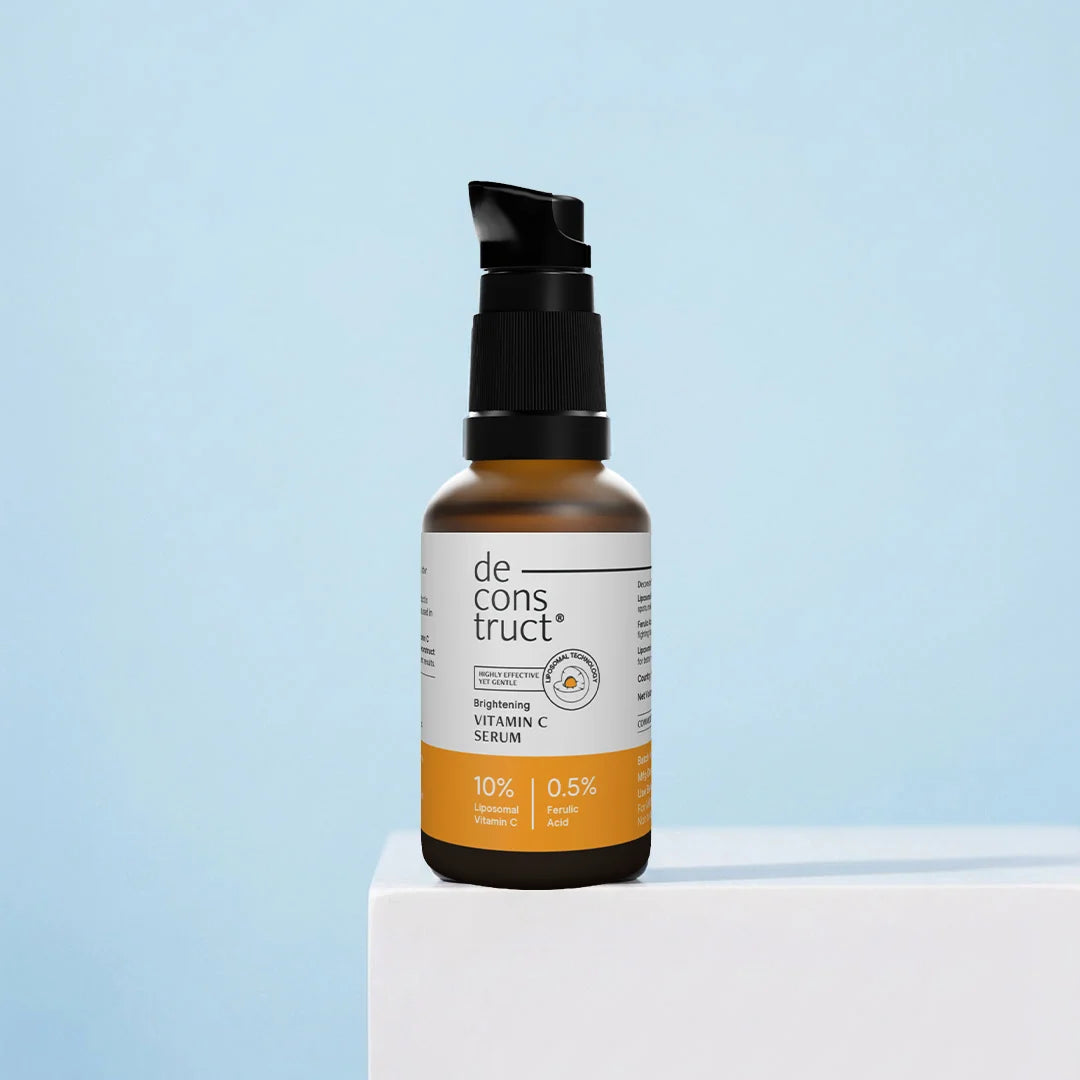
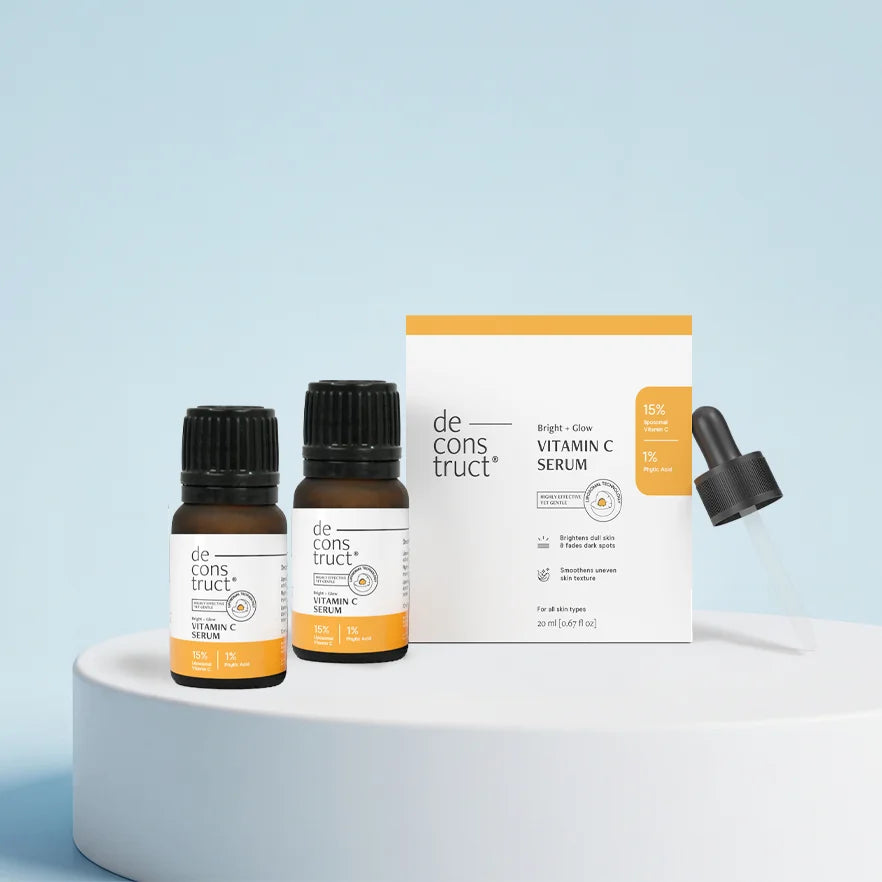
DECONSTRUCT 10% VITAMIN C SERUM
-
Formulated with 10% 3-0-Ethyl L-Ascorbic acid and 0.5% Ferulic acid and 0.5% Centella Asiatica Extract.
-
Uses liposomal technology as delivery system which gently penetrates into the pores of the skin
-
Liposomal technology is dermatologically approved and backed by science to be more effective
-
Vitamin C targets dull and uneven skin tone and promotes collagen synthesis while also providing protection against UV damage and free radicals.
-
10% Vitamin C is the dermatology approved concentration which works to give the most effective results.
-
0.5% Ferulic acid stabilises the unstable nature of L-ascorbic acid (Vitamin C) and 0.5% Cica extract works to soothe any irritation, inflammation or redness without drying out skin barrier (PubMed)
-
Lightweight and fast absorbing formulation that does not leave the skin feeling greasy
Suitable for:
-
Normal skin
-
Oily and Combination skin
-
Dull skin
-
Uneven skin texture
-
Tired looking skin
DECONSTRUCT DARK-SPOT CLEARING SERUM
-
Formulated with 2% Alpha Arbutin and 5% Niacinamide
-
Uses liposomal technology as delivery system which gently penetrates into the pores of the skin
-
Liposomal technology is dermatologically approved and backed by science to be more effective (PubMed)
-
Targets active acne and clogged pores
-
2% Alpha Arbutin works as a depigmenting ingredient by working on the melanogenesis pathway to reduce melanin production by blocking the tyrosinase enzyme responsible for melanin production.
-
5% Niacinamide regulates excess oil production and reduces breakouts in oily and acne prone skin while also repairing the skin barrier
-
Lightweight and fast absorbing formulation that does not leave the skin feeling greasy
Suitable for:
-
Normal skin
-
Oily and Combination skin
-
Dull skin
-
Uneven skin texture
-
Tired looking skin
THE 4-STEP MORNING ROUTINE FOR DULL, TIRED SKIN
Step 1: Gentle cleanser
Step 2: Deconstruct 10% Vitamin C Serum
Step 3: Moisturizer
Step 4: Sunscreen
Key takeaway: the serum is one part of this, not the whole plan. Sunscreen and consistency are what actually protect the progress you're making, otherwise you're undoing it every time you step outside.
WHAT TO DO AFTER A LATE NIGHT: A QUICK SKIN RESET
The morning after a rough night is not the moment to overhaul your entire routine and it's definitely not the moment to reach for something aggressive. Cleanse gently, skip exfoliation entirely for the day, hydrate well, apply a simple serum, moisturize and don't skip sunscreen. Then, genuinely, treat the next night as a priority to actually sleep through.
Equally important is what to leave alone. Skip layering multiple strong acids, resist the urge to over-scrub in an attempt to "wake up" tired-looking skin, don't introduce several new actives at once and let go of the idea of a skin "detox," that's marketing language, not a real mechanism. Tired skin responds to consistency and rest far better than it responds to intensity.
CAN A SERUM FIX SKIN THAT LOOKS TIRED FROM LACK OF SLEEP?
Partially and it's worth being precise about where that line actually sits. A serum can genuinely improve specific visible concerns, dehydration, dullness, uneven tone, but it can't stand in for what adequate sleep does for your skin. Two different jobs, really: the serum supports how your skin looks day to day, while sleep addresses the actual cause underneath it.
This distinction matters more than it might seem at first glance. A lot of skincare marketing frames tired-looking skin as purely a shopping problem, something you can buy your way out of. The research tells a more honest story, sleep itself keeps showing up as one of the bigger factors at play and no amount of serum changes that.
HOW TO PREVENT DULL SKIN WHEN YOU REGULARLY WORK LATE
A handful of habits go further than any single product here: keeping a reasonably consistent sleep schedule where your work allows it, dialing back screen exposure close to bedtime, never skipping your nighttime cleanse even on the nights you're running on fumes, keeping your skin genuinely hydrated day to day and staying consistent with sunscreen. Resist the pull to compensate for bad sleep by throwing more active ingredients at your skin, that usually backfires into irritation rather than solving anything. Given what the evidence actually shows about evening smartphone use, the more useful target is the sleep disruption itself, not the screen cast as some standalone villain.
FINAL THOUGHTS
Dull, tired-looking skin after a stretch of late nights isn't a separate skin type you've somehow developed, it's usually your skin honestly reflecting dehydration and lost sleep, which is actually the encouraging part, because it means the right routine genuinely helps. A simple morning sequence, gentle cleanser, a targeted serum, moisturizer, sunscreen, does real work toward getting your skin looking more like itself again. The Deconstruct Vitamin C Serum, with its 10% Vitamin C and 0.5% Ferulic Acid, is a solid fit for the dullness and antioxidant side of that routine. But no serum replaces what a proper night's sleep does and pretending otherwise is exactly the kind of overpromise this article set out to avoid. Treat skincare as support, not a substitute and let the two work together.
FREQUENTLY ASKED QUESTIONS
WHAT IS THE BEST SERUM FOR DULL SKIN AFTER LACK OF SLEEP?
Vitamin C serum is the most suitable option when the concern is dullness and tired looking skin. This is because of its antioxidant properties which reduces signs of ageing and provides photoprotective benefits. Additionally a niacinamide serum helps to retain moisture and hydrate the skin because sleepless nights increases baseline TEWL( transepidermal water loss)
CAN SCREEN TIME CAUSE DULL SKIN?
The stronger evidence points to an indirect link, screen use disrupts sleep and disrupted sleep is what shows up in your skin, rather than ordinary screen exposure dulling skin on its own.
IS VITAMIN C GOOD FOR TIRED-LOOKING SKIN?
Yes, Vitamin C is perhaps the most accurate pick for this concern, because of its antioxidant properties. It supports collagen synthesis and holds brightening benefits which reduces dullness and improves overall appearance.
SHOULD I USE SERUM AFTER A LATE NIGHT?
Yes, you can. Start with cleansing your face using a gentle cleanser and follow it up with the targeted serum and lock it in with a moisturizer which keeps the skin hydrated and reduces water loss.
CAN A SERUM REPLACE SLEEP?
This is like asking if juice can replace the thirst for water. Giving your body enough sleep and rest is genuinely important and no amount of skincare can cover up for it. Skincare is an added luxury for your skin to make it look better in the long run. But SPF and good sleep are non-negotiable.