
If your skin feels tight, rough or flaky immediately after washing your face, your cleanser may be part of the problem. Cleansing is important for removing sweat, excess oil, sunscreen, dirt and daily buildup, but the wrong formula or cleansing habit can leave dry skin feeling even more uncomfortable.
For dry, flaky skin, the goal is not to find the face wash that creates the most foam or gives you the strongest "deep clean." The better approach is to choose a cleanser that removes impurities while maintaining skin comfort and supporting the skin barrier.
In this guide, we explain what to look for in a face wash for dry, flaky skin, which ingredients can help, how to cleanse without making dryness worse, and when persistent flaking may need more than a change of cleanser.
Why Does Your Skin Feel Drier After Washing?
A few different factors can make dry or flaky skin feel worse after cleansing.
Over-Cleansing
Washing your face repeatedly or using a cleanser that is too strong can remove more of the skin's surface lipids than necessary. This can leave the skin feeling tight, dry or uncomfortable.
Cleansing should remove dirt, sweat, excess oil and other impurities without making your skin feel stripped afterwards.
Hot Water
Hot water can increase dryness and may affect the skin barrier. If your skin already feels dry or flaky, lukewarm water is a better choice than very hot water.
The temperature of the water matters, but the cleanser itself and how you use it matter too.
The Cleanser Formula
Not every face wash is formulated with dry skin in mind. Cleansing strength, surfactant system, pH and the presence of moisture-supporting ingredients can all influence how your skin feels after washing.
A cleanser that leaves your face feeling extremely tight every time may simply not be the right fit for your skin.
What Is the Best Face Wash for Dry, Flaky Skin?
There is no single cleanser that is best for everyone with dry skin. However, a suitable face wash for dry, flaky skin should generally have a gentle cleansing system and avoid leaving the skin feeling tight or stripped.
Look for a formula that offers:
- Gentle cleansing without excessive stripping
- Hydrating or moisture-supporting ingredients
- A skin-friendly pH
- A comfortable after-feel
- A formulation suited to your individual skin sensitivity
The texture can also influence how a cleanser feels, but texture alone does not determine whether a face wash is suitable. The complete formulation matters more.
If you want to understand how different ingredients work in face washes, see Deconstruct's guide on how to choose a face wash based on ingredients.
What Should You Look for in a Face Wash for Dry Skin?
1. Hydrating Ingredients
Dry and dehydrated skin can benefit from cleansers containing moisture-supporting ingredients.
Common examples include:
- Hyaluronic acid
- Glycerin
- Panthenol
- Sodium PCA
- Amino acids
These ingredients can support hydration while the cleanser removes daily impurities.
Hyaluronic acid is a humectant that helps attract and retain water. If you specifically want to understand how hyaluronic acid works for dry skin, read Deconstruct's guide to hyaluronic acid for dry skin.
2. Gentle Surfactants
Surfactants are what allow a cleanser to lift away oil, dirt and other impurities from the skin.
The goal for dry skin is not to avoid cleansing agents altogether. Instead, look for a well-formulated cleanser that can clean effectively without leaving your skin feeling excessively tight or uncomfortable.
A "gentle" cleanser is about the overall formulation rather than one ingredient in isolation.
3. A Skin-Friendly pH
The skin has a naturally acidic surface environment, and cleanser pH can influence skin comfort and barrier function.
For dry or sensitive skin, choosing a cleanser formulated with a skin-friendly pH can be preferable to using highly alkaline traditional soap-based products.
If you want to understand the difference between traditional soap and soap-free cleansers, read Deconstruct's soap-free face wash guide.
4. A Comfortable After-Feel
Your face should feel clean after washing, but "squeaky clean" is not necessarily the goal.
If your skin consistently feels extremely tight, dry or uncomfortable immediately after cleansing, consider whether your cleanser is too harsh or whether you are cleansing too frequently.
5. Avoid Unnecessary Exfoliation
Flaky skin can make you want to scrub away the flakes. However, aggressive physical scrubbing or unnecessary exfoliation can increase irritation, particularly when the skin is already dry or uncomfortable.
A gentle cleanser should be the starting point rather than trying to physically remove every visible flake.
Which Ingredients Can Help Dry, Flaky Skin?
Hyaluronic Acid
Hyaluronic acid is a humectant that helps attract and retain water. It is commonly used in hydrating skincare formulations and can be useful when the skin feels dehydrated.
For a deeper explanation, read Is Hyaluronic Acid Good for Dry Skin?
Glycerin
Glycerin is a well-established humectant that helps support skin hydration. It is commonly found in cleansers, moisturisers and other skincare products.
Panthenol
Panthenol is commonly used in skincare formulations for its moisturising and soothing properties and can help improve the overall skin feel of a cleanser.
Sodium PCA
Sodium PCA is a humectant associated with the skin's natural moisturising system and can help support hydration.
Amino Acids
Amino acids are components associated with the skin's natural moisturising factors and can be included in cleanser formulations designed to support skin comfort and hydration.
The important point is that you should not judge a face wash by one ingredient alone. The entire formula, cleansing system and how your skin responds to it matter.
How to Wash Dry, Flaky Skin Without Making It Worse
Step 1: Use Lukewarm Water
Start with lukewarm water rather than very hot water. Extremely hot water can make already-dry skin feel more uncomfortable.
Step 2: Use a Small Amount of Cleanser
You do not need a large amount of face wash to clean your skin. Use enough to spread comfortably across your face.
More cleanser does not automatically mean better cleansing.
Step 3: Massage Gently
Use your fingertips and massage the cleanser gently over your face.
There is no need to scrub aggressively to remove flakes or create more foam.
Step 4: Rinse Thoroughly
Rinse the cleanser away with lukewarm water. Avoid repeatedly washing the same area or keeping a regular cleanser on your skin longer than necessary.
Step 5: Pat Your Skin Dry
Use a clean, soft towel and gently pat your face dry rather than rubbing it.
Step 6: Moisturise After Cleansing
Follow cleansing with a moisturiser that suits your skin.
A cleanser removes impurities, while a moisturiser helps support hydration and the skin barrier. They perform different roles in a skincare routine.
What About Deconstruct Hydrating Face Wash for Dry, Flaky Skin?
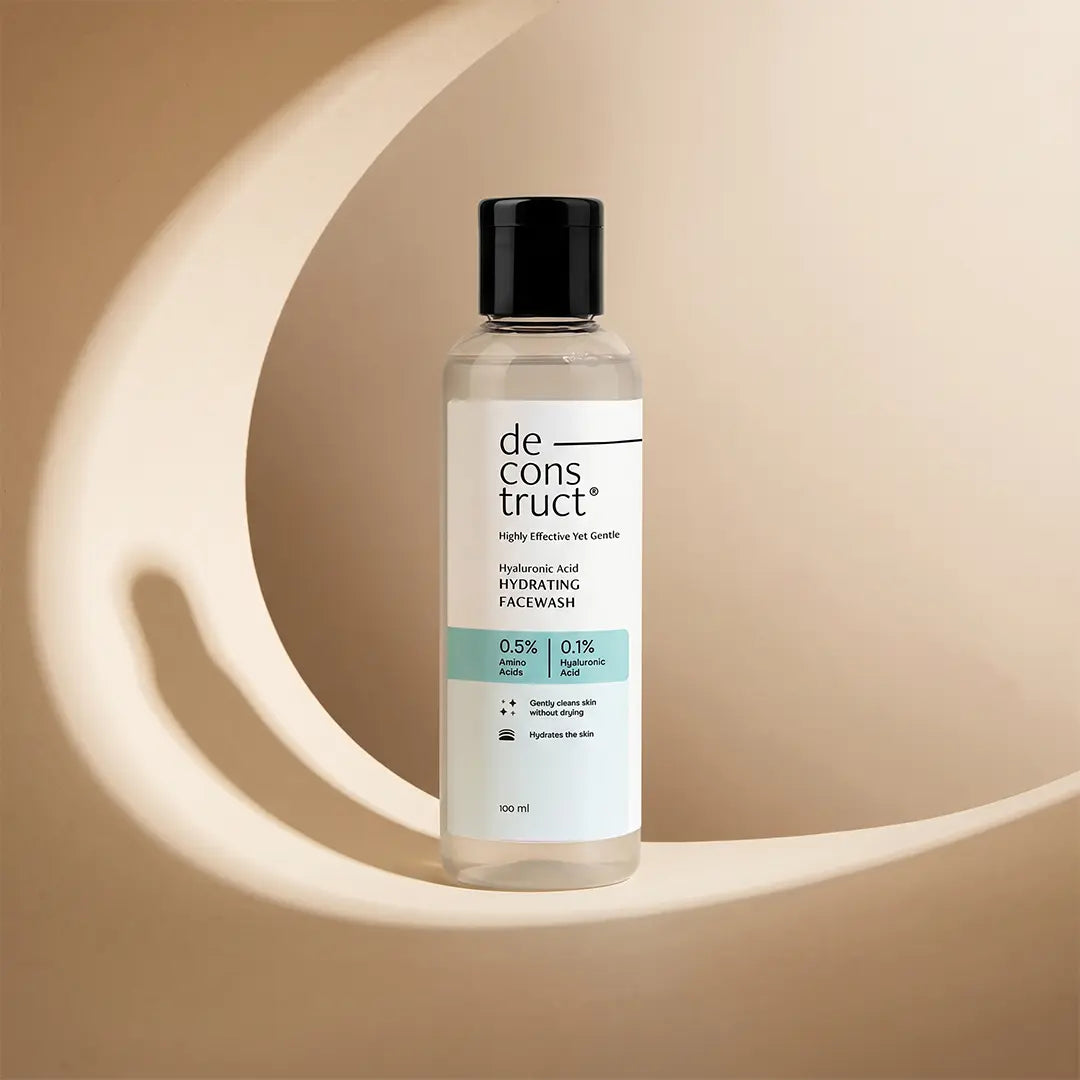
If you are looking for a cleanser specifically designed around hydration and gentle cleansing, the Deconstruct Hyaluronic Acid Hydrating Face Wash is one option to consider.
It contains 0.5% amino acids and 0.1% hyaluronic acid, along with panthenol, sodium PCA and glycerin. The formula is designed to cleanse while supporting skin hydration.
Why It May Suit Dry, Flaky Skin
- 0.1% Hyaluronic Acid helps support skin hydration
- 0.5% Amino Acids support the skin's moisture system
- Panthenol and Sodium PCA provide additional moisture-supporting benefits
- Glycerin helps attract and retain water
- Gentle surfactants cleanse away daily impurities
- The pH-balanced formula is designed for comfortable cleansing
- The non-stripping gel texture is suitable for everyday cleansing
The best cleanser is ultimately the one that effectively cleans your skin without leaving it feeling excessively tight, dry or irritated.
How Often Should You Wash Dry, Flaky Skin?
There is no need to repeatedly wash dry skin throughout the day simply because it feels uncomfortable.
Your cleansing frequency should depend on your skin, routine, climate, sweating and the products you use.
For a more detailed discussion of cleansing frequency, read Deconstruct's guide on how often you should wash your face.
The more important point for dry, flaky skin is to avoid unnecessary cleansing and choose a formula that your skin tolerates well.
Common Mistakes to Avoid If You Have Dry, Flaky Skin
Scrubbing Away Flakes
Visible flakes do not always mean your skin needs more exfoliation. Aggressive scrubbing can increase irritation and make already-dry skin feel worse.
Using Very Hot Water
Hot water may feel comfortable temporarily but can contribute to dryness and discomfort.
Choosing the Strongest "Deep-Cleansing" Formula
A stronger cleansing sensation is not necessarily a sign of a better cleanser. Dry skin generally benefits more from effective but gentle cleansing.
Washing Your Face Repeatedly
If your skin feels dry after washing, increasing the number of times you cleanse can make the problem worse.
Skipping Moisturiser
Cleansing and moisturising have different functions. After washing, follow with a moisturiser suited to your skin.
For more detailed information about cleansing mistakes, see Deconstruct's guide to common face-washing mistakes.
Can a Face Wash Fix Flaky Skin?
A face wash can help reduce cleansing-related dryness, but it cannot necessarily solve every cause of flaky skin.
Flaking can happen because of environmental dryness, over-cleansing, irritation or other skin concerns. If changing to a gentler cleanser does not improve persistent dryness, look at the rest of your skincare routine as well.
The cleanser should support your skin rather than adding another source of irritation.
When Is Flaky Skin More Than Simple Dryness?
Occasional dryness or mild flaking can happen to many people. However, persistent or severe flaking should not automatically be treated as a cleanser problem.
If your skin is persistently itchy, painful, cracked, inflamed or unusually irritated, consider speaking with a dermatologist or other qualified healthcare professional rather than repeatedly changing face washes.
A Simple Cleansing Routine for Dry, Flaky Skin
Morning
- Cleanse gently if your skin benefits from morning cleansing.
- Pat your face dry.
- Apply a suitable moisturiser.
- Finish with sunscreen during the day.
Evening
- Remove makeup or sunscreen thoroughly when needed.
- Cleanse gently with a suitable face wash.
- Pat dry without rubbing.
- Apply your moisturiser or other leave-on skincare products.
The goal is to keep your routine simple and consistent rather than adding more products whenever your skin feels dry.
Final Thoughts
Dry, flaky skin still needs cleansing, but the goal should be effective cleansing without unnecessary stripping.
When choosing a face wash, pay attention to the complete formulation rather than focusing only on foam, texture or one headline ingredient. A gentle cleansing system, moisture-supporting ingredients, a skin-friendly pH and a comfortable after-feel are all useful factors to consider.
For people looking for a hydrating cleanser, the Deconstruct Hyaluronic Acid Hydrating Face Wash combines 0.5% amino acids with 0.1% hyaluronic acid, along with panthenol, sodium PCA and glycerin, making it an option for those who want a hydration-focused cleansing step.
Most importantly, if your skin continues to be persistently dry, flaky, itchy or irritated despite using a gentle cleanser, the cause may be more than your face wash alone.
FAQs
What face wash is best for dry, flaky skin?
A gentle, non-stripping face wash with moisture-supporting ingredients such as glycerin, hyaluronic acid, panthenol or amino acids can be a suitable option for dry, flaky skin. The complete formulation and how your skin responds to it matter more than one ingredient alone.
Is face wash good for dry skin?
Yes. Dry skin still needs cleansing to remove sweat, dirt, sunscreen and daily buildup. The important part is choosing a cleanser that cleans effectively without leaving the skin excessively tight or dry.
Does face wash make dry skin worse?
It can, depending on the formula and how often you use it. A cleanser that is too strong, combined with excessive washing or hot water, may increase dryness and discomfort.
Should I use a hydrating face wash for flaky skin?
A hydrating cleanser can be a useful choice when flakiness is associated with dryness or dehydration. Look for a formula that combines gentle cleansing with moisture-supporting ingredients.
Can I use Deconstruct Hydrating Face Wash on dry skin?
Yes. The Deconstruct Hyaluronic Acid Hydrating Face Wash is formulated with 0.5% amino acids, 0.1% hyaluronic acid, panthenol, sodium PCA and glycerin and is positioned as a gentle, hydrating cleanser suitable for dry and flaky-looking skin.
Should I scrub flaky skin before using face wash?
No. Aggressive scrubbing can increase irritation and make already-dry skin feel worse. Start with gentle cleansing and support the skin with moisturisation instead.
When should I see a dermatologist for flaky skin?
If the flaking is persistent, painful, intensely itchy, cracked, inflamed or does not improve with a simpler skincare routine, consider getting professional advice.