



DETAILS
Product Description
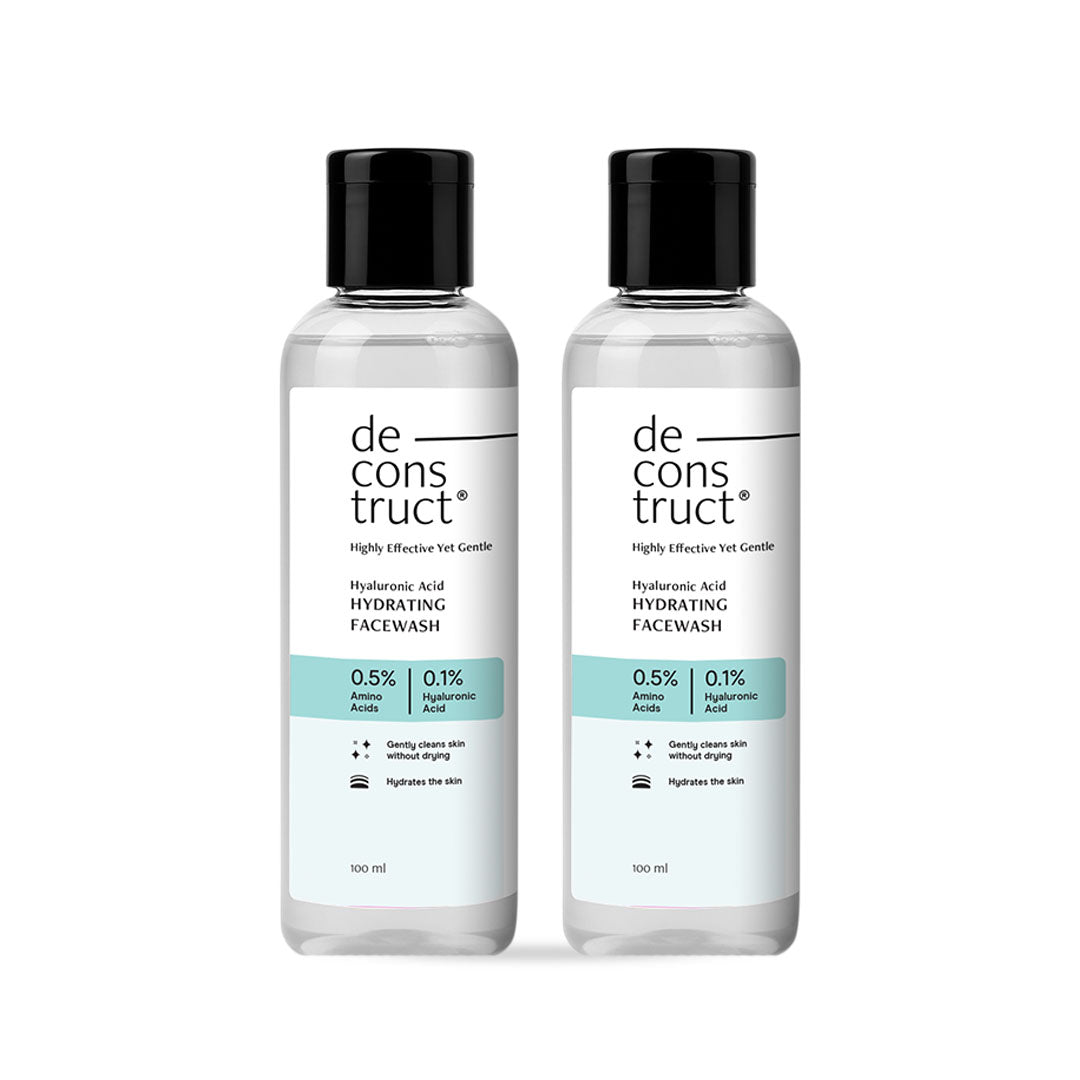
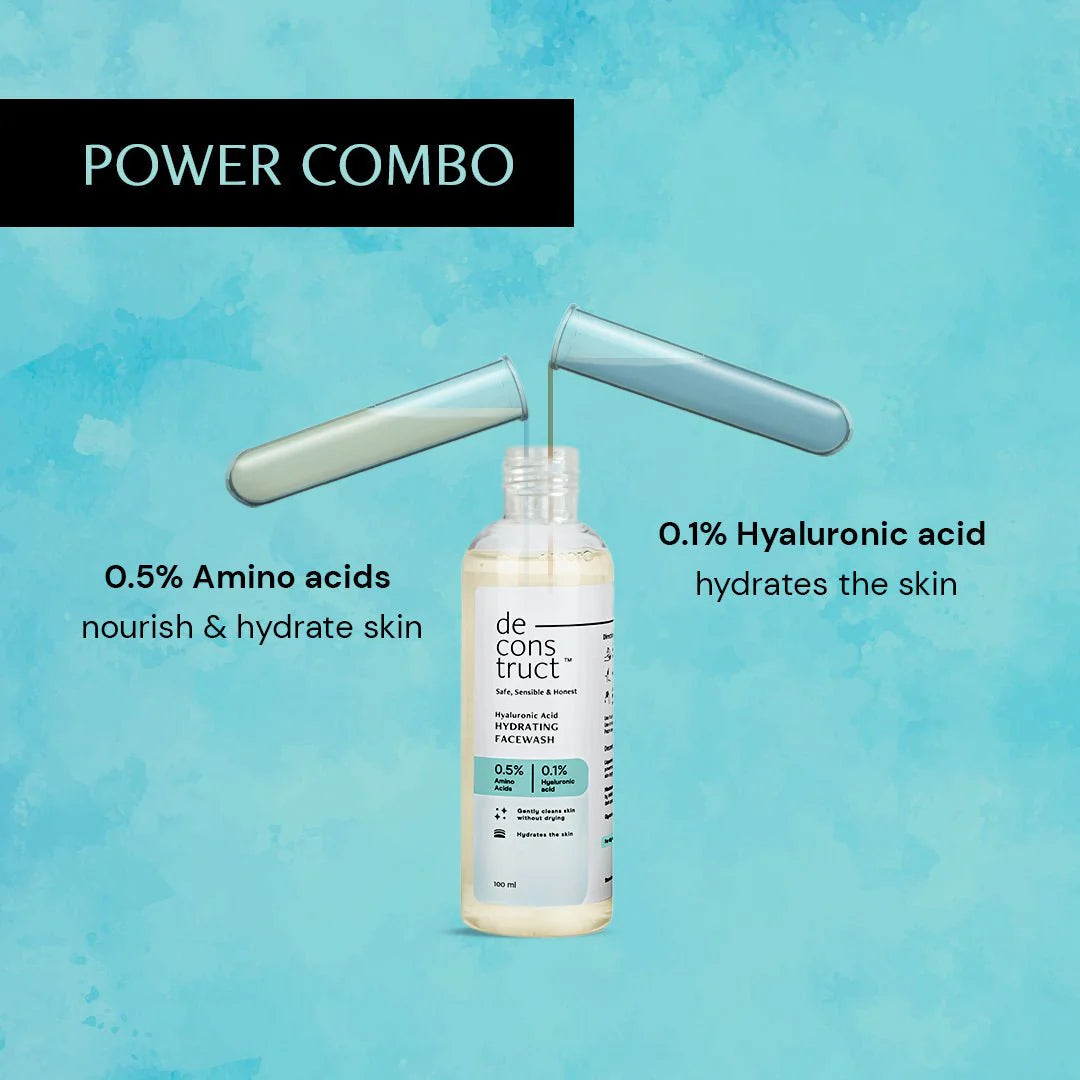
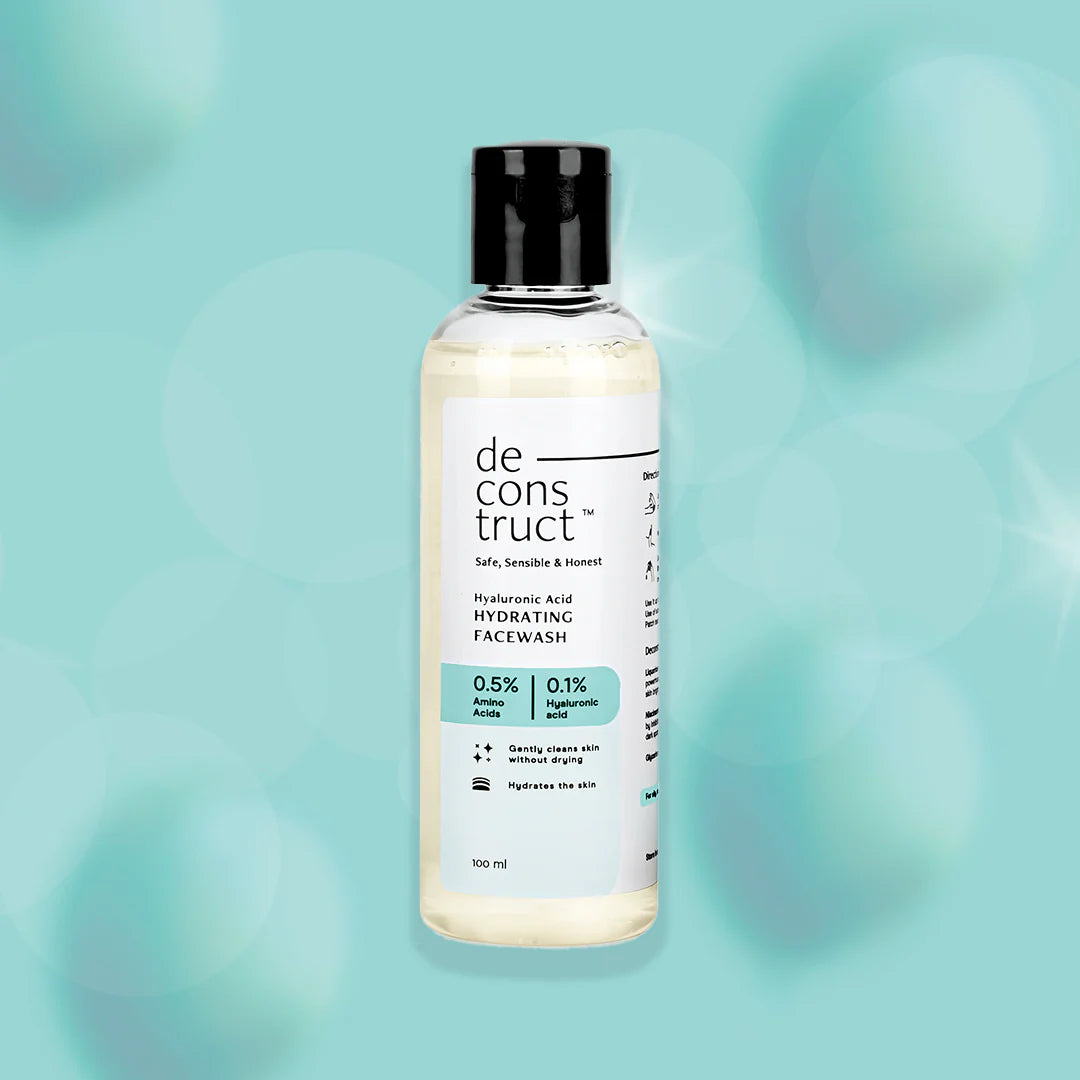
Daily use pH balanced hyaluronic acid face wash, enriched with Amino acids, Hyaluronic acid, Panthenol, Sodium PCA & Glycerin, that gently washes away impurities leaving skin nourished and hydrated. The amino acid with hyaluronic acid blend envelopes skin in a unique non-stripping soothing gel formula for calm and balanced skin.
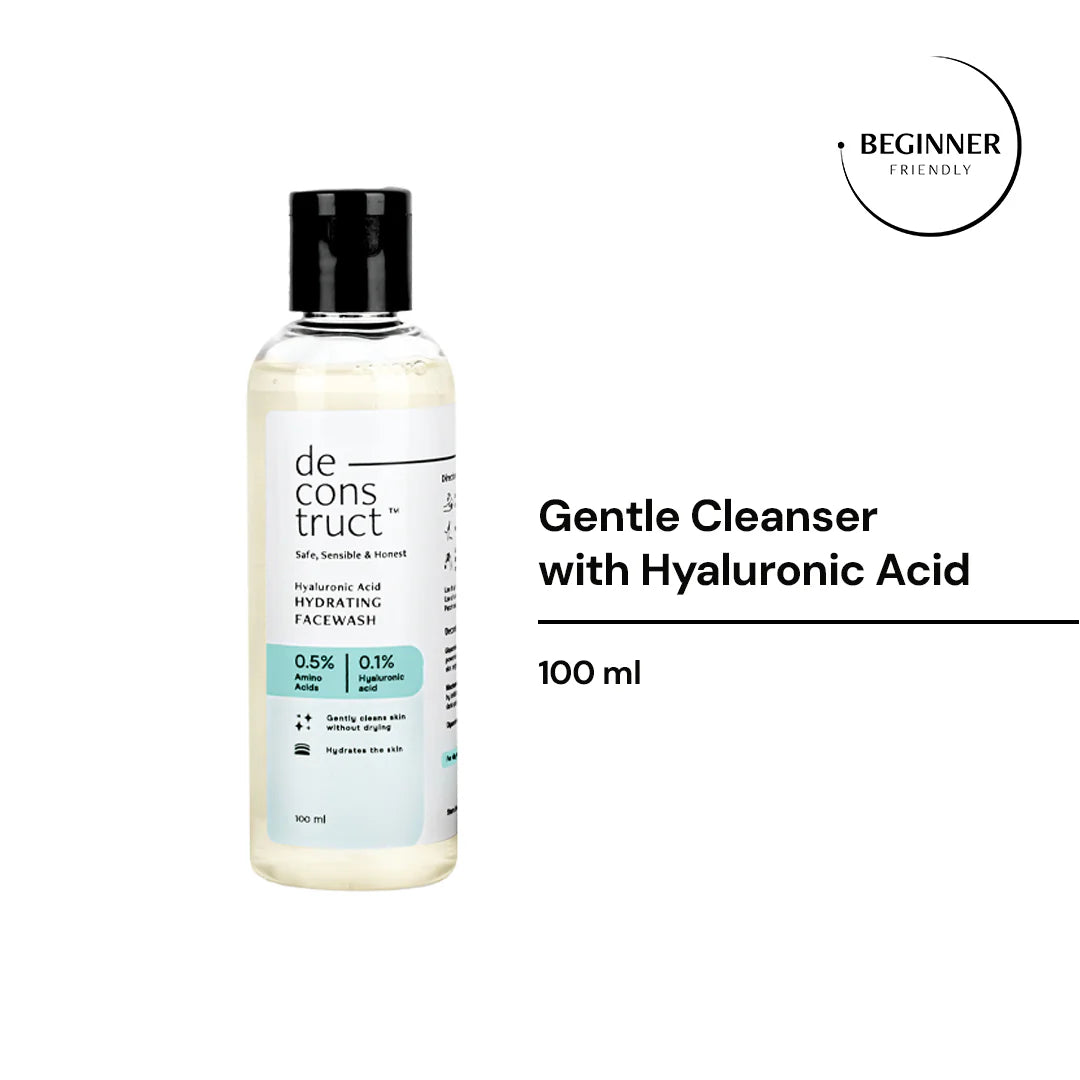
Why is this beginner friendly?
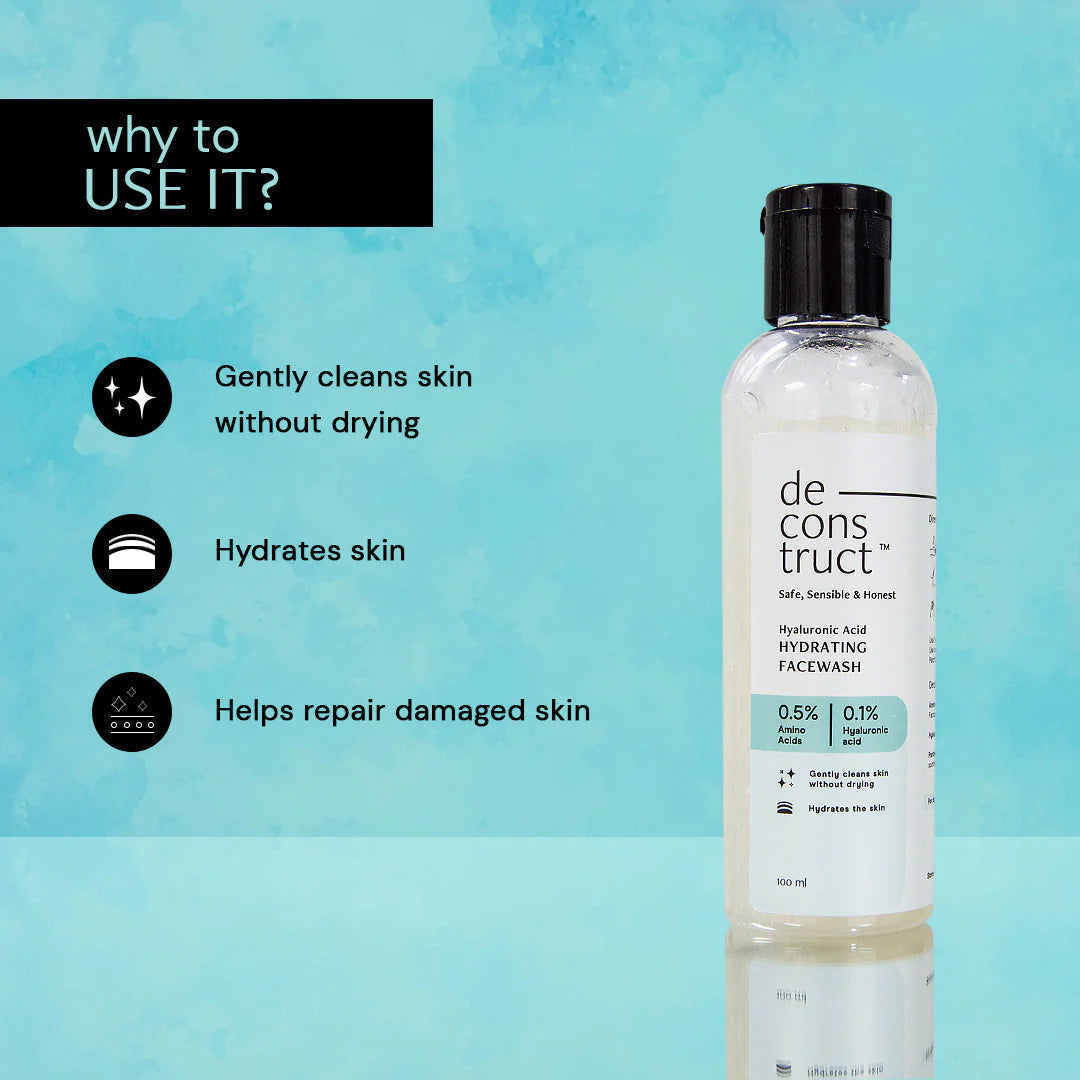
- Gentle cleansing: This face wash removes dirt and impurities from the skin without stripping off natural oils.
- Hydrating: Contains hyaluronic acid which keeps the skin hydrated.
- 0.5% Amino acid: Nourishes and firms the skin and helps to repair the damaged skin barrier.
How Does it Work on the Skin?
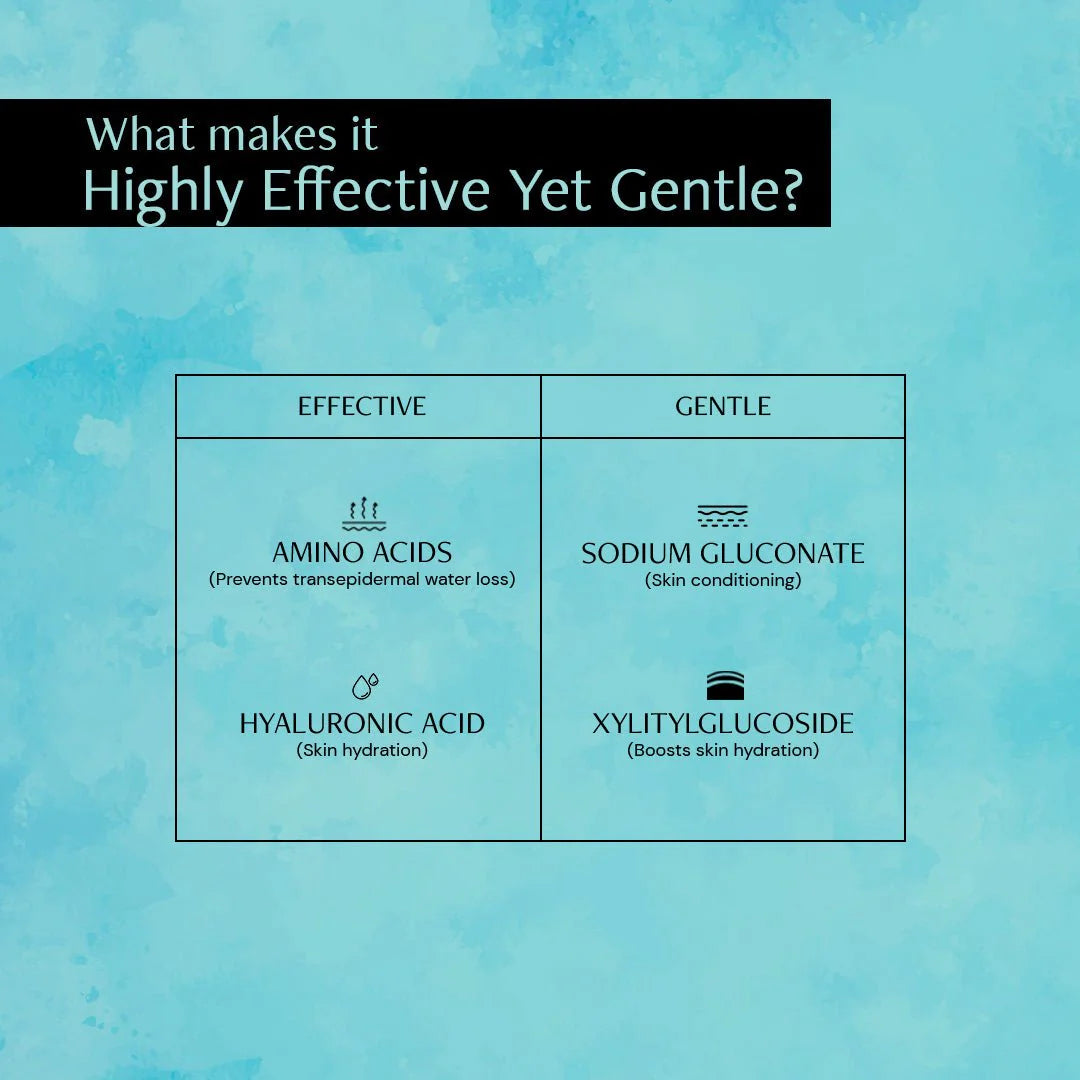
- 0.5% Amino acids like proline and hydroxyproline help to nourish and firm the skin. They promote overall skin health and help to repair damaged skin.
Amino acids are naturally present in the skin and are building blocks of proteins. They help in healing of the skin, maintain the acid base balance and hold on to water in the stratum corneum providing a healthy appearance to skin. - 0.1% Hyaluronic acid attracts and binds water to the skin. This helps to keep skin plump and healthy.
- Panthenol and Sodium PCA are natural humectants found in our skin that traps water and increases hydration.
How to use?
- Dampen your face.
- Take a small amount of hyaluronic acid face wash and massage onto your skin for 30-60 seconds.
- Rinse with water and pat dry.
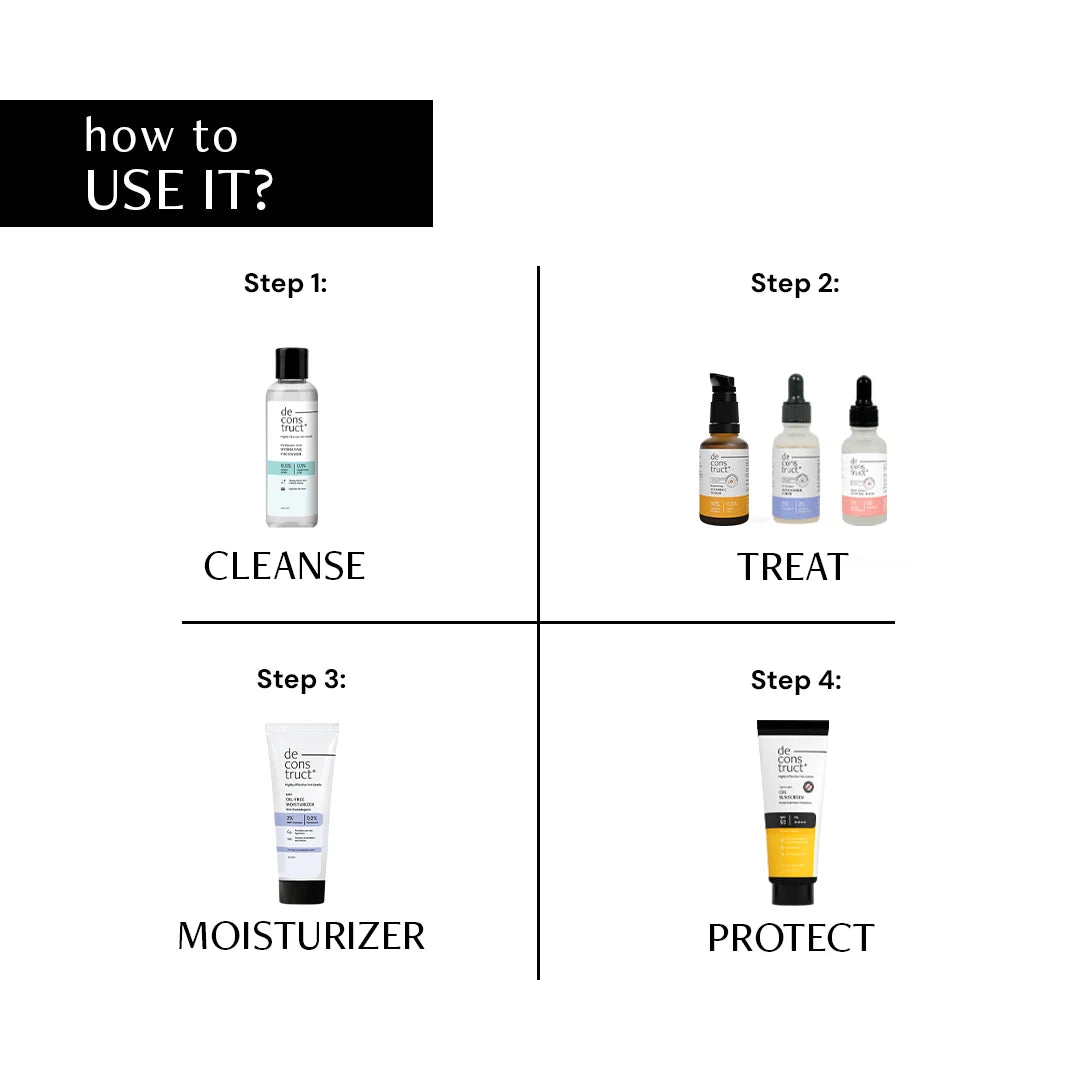
- Use daily, morning and evening.
DECONSTRUCTING Hyaluronic Acid Hydrating Face Wash - 0.5% Amino Acids + 0.1% Hyaluronic acid
Proline, Hydroxyproline: Proline, hydroxyproline are amino acids that have been proven to improve skin health and promote collagen thereby helping to repair skin damage and prevent formation of lines.
Solano F. Metabolism and Functions of Amino Acids in the Skin. Adv Exp Med Biol. 2020;1265:187-199. doi: 10.1007/978-3-030-45328-2_11. PMID: 32761577.
Sodium PCA: Polycarboxylic acid can be naturally found in our skin and functions as a humectant.
Andersen, F. A. (1999). Final Safety Assessment for PCA and Sodium PCA. International Journal of Toxicology, 18(2 Suppl), 25–34.
Panthenol: Panthenol soothes, moisturises and helps to maintain integrity of the skin barrier by preventing transepidermal water loss (TEWL).
Camargo FB Jr, Gaspar LR, Maia Campos PM. Skin moisturizing effects of panthenol-based formulations. J Cosmet Sci. 2011 Jul-Aug;62(4):361-70. PMID: 21982351.
Sodium Hyaluronate: A humectant and a skin conditioning agent that provides hydration to the skin . Final Report of the Safety Assessment of Hyaluronic Acid, Potassium Hyaluronate, and Sodium Hyaluronate.
International Journal of Toxicology, 28(4_suppl), 5–67. doi:10.1177/1091581809337738
Glycerine: Glycerine is a humectant that holds water and strengthens the skin's barrier. It also helps in the penetration of other ingredients and works in combination with other emollients present.
Fluhr JW, Darlenski R, Surber C. Glycerol and the skin: holistic approach to its origin and functions. Br J Dermatol. 2008 Jul;159(1):23-34. doi: 10.1111/j.1365-2133.2008.08643.x. Epub 2008 Jul 1. PMID: 18510666.
Xylitylglucoside, Anhydroxylitol, Xylitol : Reinforces the barrier function by stimulating ceramide synthesis and optimised water reserves by boosting natural moisturising factor and hyaluronic acid.
Journal of Cosmetic Dermatology, 8(1), 32-39
Betaine: A plant-derived gentle hydrating ingredient that soothes skin.
Chem. Phys. 142, 212438 (2015)
Sodium Gluconate: An active ingredient booster that has a radical scavenging effect to inhibit cellular free radical formation.
https://www.cosmeticsinfo.org/ingredients/sodium-gluconate/
Hyaluronic Acid: Water-soluble super ingredient that keeps the skin moisturised for long and improves skin texture overtime by working on signs of ageing on the skin.
Draelos, Z.D., Diaz, I., Namkoong, J. et al.(2021) Efficacy Evaluation of a Topical Hyaluronic Acid Serum in Facial Photoaging. Dermatol Ther (Heidelb) 11, 1385–1394. The Journal of clinical and aesthetic dermatology, 7(3), 27–29.
Maltooligosyl Glucoside : A polysaccharide that has multiple functions in skincare- texture enhancer, soothing and binding agent.
https://www.cir-safety.org/sites/default/files/saccharides.pdf
Cocamidopropyl Betaine: Secondary surfactants. These compounds, in conjunction with other anionic (negatively charged) surfactants, have low skin and eye irritation properties, are effective foam boosters and thickeners/viscosity builders for many anionic surfactants.
Surfactant Action on Skin and Hair: Cleansing and Skin Reactivity Mechanisms, L. Rhein, in Handbook for Cleaning/Decontamination of Surfaces (2007), part 2.2.2.2
Sodium Methyl Cocoyl Taurate, Sodium Methyl 2-Sulfolaurate, Disodium 2-Sulfolaurate : Blend of mild non- drying anionic surfactants that work together to gently yet thoroughly clean skin.
PETTER, P.J. (1984), Fatty acid sulfo-alkyl amides and esters as cosmetic surfactants. International Journal of Cosmetic Science, 6: 249-260. https://doi.org/10.1111/j.1467-2494.1984.tb00382.x
Hydrogenated Starch Hydrolysate: Humectant, texture enhancer and film former to maintain skin barrier.
https://www.cir-safety.org/sites/default/files/plpogu092015final.pdf
Caprylic Capric Triglyceride: Capric caprylic triglyceride acts as an emollient, dispersing agent, and solvent. It moisturises and replenishes skin.
https://www.cir-safety.org/sites/default/files/trygly122017FAR.pdf
Acrylates/C10-30 Alkyl Acrylate Crosspolymer: A polymer that provides sensory benefits such as texture, touch and feel to the product. It also acts as a stabilizer and thickener.
https://www.cir-safety.org/sites/default/files/acryco092018TAR.pdf
Triethanolamine: Triethanolamine helps to adjust the pH, improve texture and stabilize the product.
Int J Toxicol. 2013 May-Jun;32(3 Suppl):59S-83S
Ethylhexylglycerin, Phenoxyethanol: Broad spectrum preservative system that is effective against bacteria, yeasts and mould fungi.
Contact Dermatitis. 2016 May;74(5):281-8
Silica: Hydrated Silica acts as an absorbent and helps to maintain the gel texture of the cleanser.
Silica and Silicates Data Profile –December 2018 – Writer, Christina Burnett
PRODUCT INGREDIENTS
Aqua, Cocamidopropyl Betaine, Sodium Methyl Cocoyl Taurate, Sodium Methyl 2-Sulfolaurate (and) Disodium 2-Sulfolaurate, Glycerin Xylitylglucoside (and) Anhydroxylitol (and) Xylitol, Maltooligosyl Glucoside (and) Hydrogenated Starch Hydrolysate, Sodium PCA (and) Panthenol (and) Glycerin (and) Sodium Hyaluronate (and) Proline (and) Hydroxyproline, Sodium PCA, Caprylic Capric Triglyceride, Acrylates/C10-30 Alkyl Acrylate Crosspolymer, Triethanolamine, Silica, Phenoxyethanol, Ethylhexylglycerin,Betaine, Proline, Serine, Inositol, Sodium Gluconate, Hyaluronic Acid
WHICH INGREDIENTS CAN I MIX?
Amino acids and Hyaluronic acid are compatible with most other actives and can be used for all skin types. It's a great daily cleanser that cleans the face and prepares it for the next steps in the skincare routine.
For extra hydrating results
Use with Deconstruct’s Hydrating Serum- 2% Hyaluronic Acid + 1% Niacinamide for hydrated and dewy skin. Take small amounts of the Deconstruct’s Hydrating Cleanser and gently massage for 30 seconds on damp face. Rinse well with water. Pat face slightly dry. Over a damp face, apply 2-3 drops of the Deconstruct’s Hydrating serum. Follow up with moisturiser.
THINGS TO KEEP IN MIND
- Patch testing prior to use is advised
- All products are gender-neutral
- Best suited for individuals above 18 years of age.
RECOMMENDED SKIN CONCERNS & SKIN TYPES
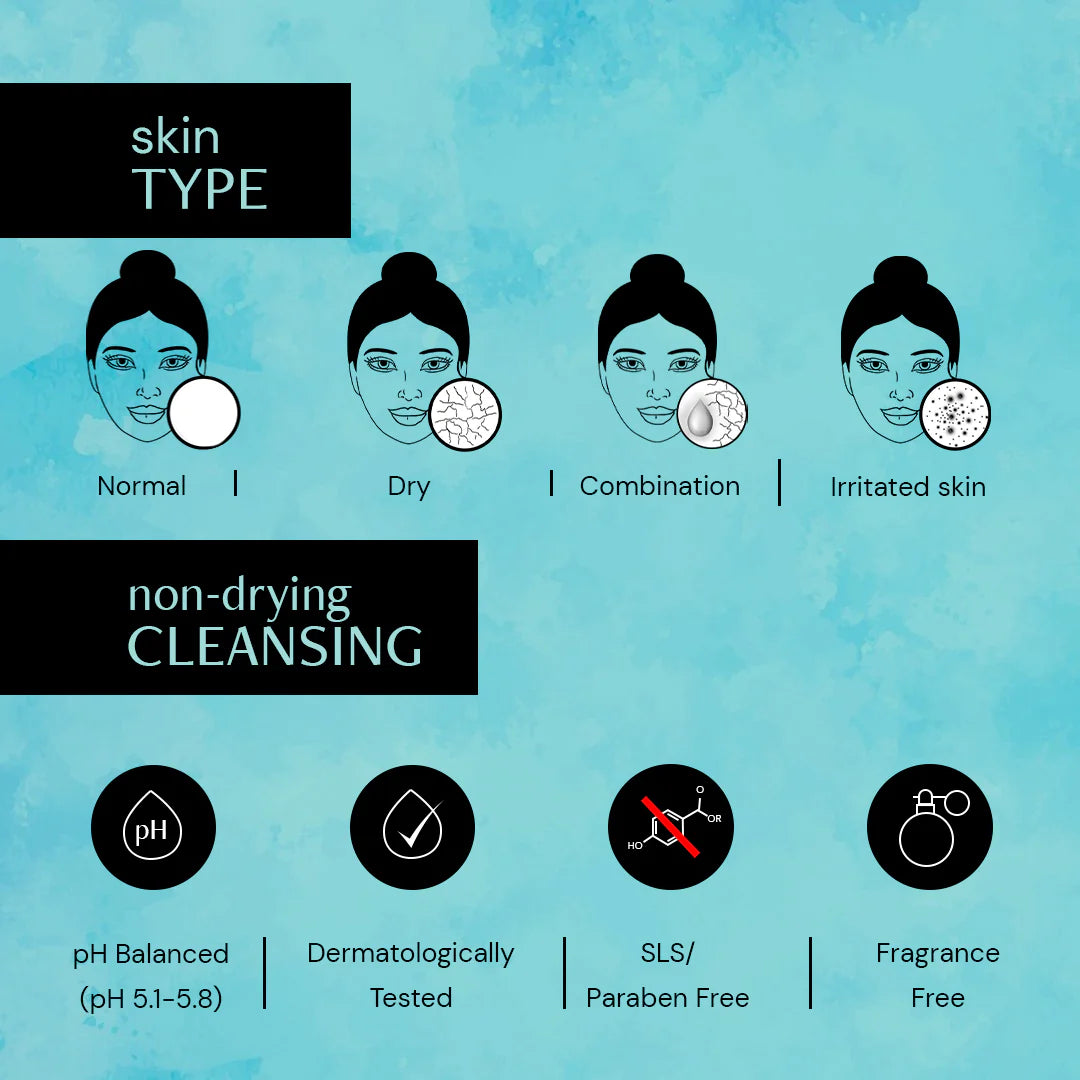
This hyaluronic acid face wash best suits people with
- Dry/ Dehydrated skin
- Sensitive skin
- Combination skin
- Normal skin
Use this hyaluronic acid face wash, if your concerns are
- Drynes
- Flakiness
- Wrinkles
- Finelines
- Dehydrated skin
FAQs
- Can I use it with Hydrating serum?
Yes, you can use Hydrating cleanser and Hydrating serum together for best results, as it will work in the same pathway, and make the skin hydrated without making it feel oily.
- Is Hyaluronic acid face wash non-comedogenic?
Yes, the Hydrating face wash is non - comedogenic, it will not clog your pores. It will cleanse your face and will also hydrate the skin. - What should I apply after using Hyaluronic Acid face wash?
You can use our Hydrating serum to retain hydration on the skin. Follow up with a moisturiser. - Can I use the Hydrating face wash everyday?
Yes, Hydrating Face wash can be used 2-3 times everyday. - At what age can I use this face wash?
This face wash can be used by everyone, including teenagers. Always advise to do a patch test before uses - Can Hyaluronic Acid face wash be used by pregnant and lactating women?
This face wash is safe to be used by pregnant and lactating women
Manufacturer Details
Bjain,E, 41/F, RIICO Industrial Area, Bhiwadi, Khushkhera, Rajasthan 301707
Country of Origin: India
Our Rating On Other Platforms


