
By lunchtime, grease shows up across your forehead. Washing leaves a taut feeling behind. By dusk, little flaky patches appear near your lips. And the lotion you trusted all year suddenly sits heavy without helping. Sound familiar? That tightness after a rainy walk isn’t your face playing tricks on you — it’s dehydration, the most misread skin problem of the season.

Deconstruct — Vitamin C + Ferulic Acid Serum
Damp air doesn’t mean your skin stays moist. Moving in and out of muggy streets and dry, air-conditioned rooms slowly weakens your skin’s outer layer, so it sheds water faster than it locks any in. The fix is lightweight, science-backed serums for monsoon dryness — built around ingredients that restore water and repair the barrier. Here’s exactly what to look for, broken down by ingredient, by skin type, and by how to layer them correctly.
Quick answer: can skin be dehydrated in humid weather?Yes — skin can be dehydrated even during the monsoon. Dehydration is water loss from the skin’s outer layer, not a measure of moisture in the air. The most effective serums for monsoon dryness pair lightweight humectants (hyaluronic acid, glycerine) with barrier-repair actives (ceramides, niacinamide, panthenol), in gel or water-based textures. Apply to damp skin and always seal with a moisturiser. |
Why Skin Gets Dehydrated During Monsoon
Humidity vs Hydration: The Common Misconception
Humidity measures water vapour in the air around you. Skin hydration measures the water held inside the outermost layer of your skin, the stratum corneum. The two have almost nothing to do with each other. Ambient moisture doesn’t soak in on its own — your barrier has to be healthy enough to draw water in and hold it. When that barrier is compromised, which happens easily in the monsoon, it can’t retain moisture no matter how humid it gets.
How Rainy Weather Disrupts the Skin Barrier
Monsoon is a perfect storm for barrier damage. Excess surface moisture softens the lipid matrix that holds your barrier together. Pollution stays high. Sweat and humidity encourage bacterial activity. And most people over-cleanse when they feel “grimy,” stripping the barrier further. The result is a barrier that leaks water — trans-epidermal water loss, or TEWL — faster than you can replace it. Water escapes, irritants get in more easily, and skin looks dull and feels tight despite the wet air. If you’re unsure how often to wash, this guide on what type of face wash you should use daily is a good place to start.
Signs Your Skin Is Dehydrated
-
Tight or uncomfortable feeling after cleansing
-
Fine lines look more visible than usual
-
Dull, “grey” complexion with no glow
-
Rough or flaky patches, especially around the mouth and cheeks
-
Skin looks oily on the surface but feels dry underneath
-
Products that usually work are suddenly causing sensitivity
What Makes a Good Serum for Monsoon Dryness?
Lightweight Yet Deeply Hydrating Formulas
The monsoon sweet spot is a serum light enough to wear in humidity but effective enough to actually restore water. Gel-based and water-based serums win here — they sink in within seconds, don’t sit heavily, and layer cleanly under moisturiser and SPF. Heavy, oil-based serums tend to feel occlusive and sticky when the air is already thick.
Barrier Repair vs Surface Hydration
The best hydrating serums work on two levels at once. Humectants like hyaluronic acid and glycerine pull water toward the surface for immediate relief. Barrier-repair ingredients like ceramides and panthenol work deeper, reinforcing the lipid structure so your skin stops leaking water in the first place. You need both. One without the other is a temporary fix.
Ingredients to Avoid in Humid Weather
-
High-alcohol formulas — listed as “alcohol denat.” near the top of an ingredient list. In high concentrations these speed up water evaporation.
-
Heavy occlusives like thick waxes and petrolatum — great in dry winters, but they can trap sweat and cause congestion in humidity.
-
High-fragrance serums — a compromised monsoon barrier reacts far more easily to sensitising ingredients.
Best Hydrating Ingredients for Dehydrated Skin During Monsoon
These are the six ingredients worth building your shortlist around. Each is backed by clinical evidence, well tolerated by most skin types, and suited to the kind of dehydration the monsoon triggers.
1. Hyaluronic Acid
Hyaluronic acid (HA) is a molecule that occurs naturally in skin and binds many times its own weight in water — often cited as up to 1,000 times. It works as a humectant, drawing moisture from the environment and deeper skin layers up to the surface. In humid monsoon air there’s more ambient moisture for it to pull on, which makes it one of the season’s most effective dehydration fixes. The trick is application: smooth it onto slightly damp skin, then follow with a moisturiser to seal in what it draws up.
Best for: All skin types. Especially effective for oily-dehydrated skin.
2. Ceramides
Ceramides are the lipids that form the “mortar” in your barrier, holding skin cells together and keeping water from escaping. When the barrier is damaged, ceramide levels drop and TEWL rises. Ceramide serums replenish this lipid matrix directly — rather than just adding surface moisture, they repair the structure that retains it, so results compound over time. Pair them with humectants for the best outcome.
Best for: Dry, sensitive or barrier-compromised skin. Essential if you’ve been over-cleansing or over-exfoliating.
3. Niacinamide
Niacinamide (vitamin B3) is the multitasker monsoon-dehydrated skin genuinely needs. It strengthens the barrier, helps regulate excess sebum, calms redness and post-acne marks, and smooths uneven texture. The barrier benefit isn’t just marketing: a 2021 review of clinical evidence in the journal Antioxidants reports that topical niacinamide boosts the skin’s own synthesis of ceramides and other barrier lipids, and that 2–5% formulas improved stratum corneum hydration and barrier function in controlled trials. For oily-but-dehydrated skin — the most common monsoon combination — it tackles both sides of the problem at once.
Best for: Oily, combination or acne-prone skin. Typically effective at around 4–5%.
Try it: Deconstruct’s 5% Niacinamide Dark Spot Clearing Serum is a water-light, fragrance-free option at pH 5–6. Alongside niacinamide it carries the humectants Sodium PCA and trehalose plus glycerine, so it supports hydration while it works on oil and uneven tone.
4. Glycerine
Glycerine is one of the most researched and most underrated humectants in skincare. It pulls water to the surface while forming a light film that slows evaporation, and it’s non-comedogenic and suitable for even reactive skin. Most good hydrating serums already include it as a lead or supporting ingredient. If you find one without glycerine, treat that as a flag.
Best for: All skin types, including acne-prone. Works well paired with HA for layered hydration.
5. Panthenol (Vitamin B5)
Panthenol converts to pantothenic acid in the skin and has a strong track record for soothing, healing and supporting barrier recovery. If your skin has been sensitised by over-exfoliation, weather or aggressive actives, panthenol calms the irritation while rebuilding the barrier from within. It also improves elasticity and moisture retention over time, which makes it a long-game ingredient rather than a quick fix.
Best for: Sensitive, irritated or reactive skin. Ideal for post-exfoliation recovery.
6. Squalane
Unlike most facial oils, squalane is structurally similar to your skin’s own sebum, which makes it remarkably compatible and non-pore-clogging. It gives emollient nourishment without heaviness, so it works even for oily skin in humid climates. It doesn’t hydrate like a humectant; instead it prevents moisture loss by filling microscopic gaps in the barrier. Think of it as the lightweight finish that keeps everything else locked in.
Best for: Oily, combination, or anyone who finds traditional oils too heavy in monsoon humidity.
Ingredient Comparison at a Glance
| Ingredient | What it does | Best for | Texture | Layer with | Monsoon rating |
|---|---|---|---|---|---|
| Hyaluronic Acid | Pulls water into skin (binds many times its weight) | All skin types | Weightless gel | Moisturiser + SPF | 5/5 |
| Ceramides | Repairs and seals the skin barrier | Dry, sensitive | Serum / cream | HA, panthenol | 5/5 |
| Niacinamide | Hydrates, controls oil, calms redness | Oily, combo | Water-thin | HA, glycerine | 5/5 |
| Glycerine | Humectant; locks in surface moisture | All skin types | Slightly thick | Any serum | 4/5 |
| Panthenol (B5) | Soothes, repairs barrier, reduces irritation | Sensitive, dry | Lightweight | Ceramides | 4/5 |
| Squalane | Non-greasy nourishment; mimics skin’s own oil | Oily, combo | Dry-touch oil | HA, niacinamide | 4/5 |
Best Serums for Different Skin Types in Monsoon
For Oily but Dehydrated Skin
This is the most misunderstood condition of the season. Skin over-produces oil to compensate for water loss, so the surface looks shiny while the deeper layers stay starved. Treat only the oiliness — stripping cleansers, no moisturiser — and you make the dehydration worse. What works: lightweight, water-based serums with niacinamide and hyaluronic acid, in gel textures that absorb without residue. Deconstruct’s 5% Niacinamide Dark Spot Clearing Serum fits this profile neatly. Skip anything cream-heavy or oil-rich.
Layering tip: apply your HA serum to damp skin, follow with a gel moisturiser, done.
For Sensitive Skin
Sensitive skin turns even more reactive during monsoon — the barrier is already fragile, and small environmental shifts tip it into redness and irritation. Prioritise ceramide- and panthenol-rich, fragrance-free formulas. Hold off on vitamin C, retinol and AHAs while the barrier feels compromised.
Layering tip: ceramide serum first, then a bland moisturiser to reinforce the barrier. No actives until skin feels settled.
For Combination Skin
Combination skin needs balance: enough hydration for the dry patches without overloading the oily zones. A glycerine-forward serum all over works well, with niacinamide concentrated on the T-zone. Gel-serum textures are ideal.
Layering tip: apply the same serum everywhere, then a lighter moisturiser on the T-zone and a slightly richer one on dry areas.
For Extremely Dry Skin
Extremely dry skin needs surface hydration and deep barrier repair together. Look for serums that stack ceramides, panthenol and glycerine, layer them under a rich moisturiser, and apply while skin is still slightly damp for maximum absorption.
Layering tip: don’t skip moisturiser. A hydrating serum alone on very dry skin will evaporate without a seal on top.
Quick Recommendation Matrix
| Skin type | Main problem in monsoon | Go-to ingredients | Texture to pick |
|---|---|---|---|
| Oily + dehydrated | Shiny surface, tight underneath | Niacinamide + HA + glycerine | Water-gel serum |
| Sensitive | Redness, reactive flare-ups | Ceramides + panthenol + squalane | Fragrance-free serum |
| Combination | Dry patches + oily T-zone | HA + niacinamide + glycerine | Lightweight gel |
| Extremely dry | Flaking, rough, tight skin | Ceramides + panthenol + HA | Rich serum + moisturiser |
How to Use Hydrating Serums Correctly During Monsoon
When to Apply Serums
Apply your hydrating serum after cleansing (and toning, if you tone), while skin is still slightly damp — not soaking, not bone-dry. This matters for humectants like HA and glycerine, which work much better when there’s surface moisture to draw from. Both morning and evening is ideal. If you’re refining your wider routine, this breakdown of an AM vs PM face wash routine pairs well with the serum steps below.
Layering With Moisturiser
A serum is the treatment step, not the sealing step. Always follow with a moisturiser — even a lightweight gel counts. Without it, everything the serum drew to the surface evaporates, especially in air-conditioned rooms. In the morning, SPF goes over the moisturiser; at night, a slightly richer moisturiser helps lock in overnight recovery.
Your monsoon routine in five steps:
-
Gentle, low-pH cleanser (twice daily, maximum)
-
Hydrating serum on damp skin, pressed in gently
-
Wait 30–60 seconds for absorption
-
Lightweight gel moisturiser
-
SPF 30+ in the morning; a richer moisturiser at night
Common Mistakes That Cause More Dryness
-
Skipping moisturiser because skin “already has serum on” — the serum has nothing to seal it.
-
Applying HA to completely dry skin in a low-humidity room — it pulls moisture from deeper layers instead.
-
Over-cleansing — more than twice a day strips the barrier every time.
-
Layering too many actives at once — irritation compounds dehydration.
-
Skipping SPF on cloudy days — UV still penetrates, and photo-damage worsens dehydration.
Ingredients to Avoid If Your Skin Feels Dehydrated
Over-Exfoliating Acids
AHAs (glycolic, lactic) and BHAs (salicylic) have real benefits — but not every day, and not on a compromised barrier. If your skin already feels tight, dull or reactive, exfoliating acids accelerate water loss and delay recovery. Limit them to once or twice a week, always pair with a hydrating serum, and always follow with SPF.
High Alcohol Content
Denatured alcohol (listed as “alcohol denat.” near the top of an ingredient list) shows up in some lightweight toners and serums to create a fast-drying, matte finish. In high concentrations it disrupts the barrier and raises TEWL directly. It can feel refreshing on oily skin at first, but the long-term result is more dehydration.
Heavy Occlusives in Humid Weather
Petrolatum, lanolin and heavy mineral-oil creams are excellent sealers in cold, dry climates. In monsoon humidity they trap sweat, disturb the skin’s microbiome and trigger congestion or milia. Swap to lighter emollients like squalane, or gel moisturisers that protect without smothering.
Dermatologist-Approved Tips for Preventing Monsoon Dehydration
Barrier-Friendly Habits
The single most useful thing you can do in the monsoon is stop disrupting your barrier. Cleanse with gentle, pH-balanced formulas only. Pat — never rub — the face dry. Skip physical scrubs for the season. And when your skin is showing stress signals, give barrier ingredients like ceramides and panthenol priority over active correctors.
Hydration Beyond Skincare
Topical serums work better when you support hydration from the inside too. Drinking enough water through the day, eating water-rich foods like cucumber, watermelon and leafy greens, and managing your air-conditioning exposure all help. If you spend long hours in heavily air-conditioned spaces, a compact humidifier can make a real difference.
When to See a Dermatologist
If your skin stays persistently flaky, inflamed or red despite a consistent serum-plus-moisturiser routine, it may point to an underlying condition. Eczema, seborrheic dermatitis and perioral dermatitis can all flare during monsoon and may need targeted prescription treatment. Over-the-counter serums can’t replace clinical care when the barrier is severely compromised.
FAQs About Monsoon Dryness and Serums
Can skin be dehydrated even in humid weather?
Yes, and it’s extremely common. Dehydration is a temporary condition caused by water loss from within the skin — it has nothing to do with how humid the air is. Over-cleansing, barrier damage, air conditioning and pollution all cause dehydration regardless of season.
Is hyaluronic acid good during monsoon?
It’s one of the best ingredients for this season. Monsoon air gives HA more ambient moisture to draw from, so it works better than in cold, dry weather. Apply it to damp skin and always follow with a moisturiser — especially indoors, where AC strips out the ambient moisture HA needs.
Should oily skin use hydrating serums?
Absolutely. Oily skin can be dehydrated at the same time; excess oil is often a response to water loss. A lightweight, non-comedogenic hydrating serum (niacinamide + HA) reduces the skin’s need to over-produce oil, and it’s one of the most useful things oily-skinned people can do for overall skin health.
Can I skip moisturiser if I use a serum?
No. They do different jobs. Serums deliver active hydrating ingredients; moisturisers seal the surface so that hydration doesn’t evaporate. Without a moisturiser on top, your serum’s effect drops sharply — especially in air-conditioned rooms where humidity is low.
How often should I apply hydrating serum?
Twice daily (AM and PM) is standard for most hydrating serums. Humectant-based formulas like HA and glycerine are safe at this frequency with no risk of over-hydrating. Just always follow with moisturiser, and with SPF in the morning.
When can I add brightening serums back in?
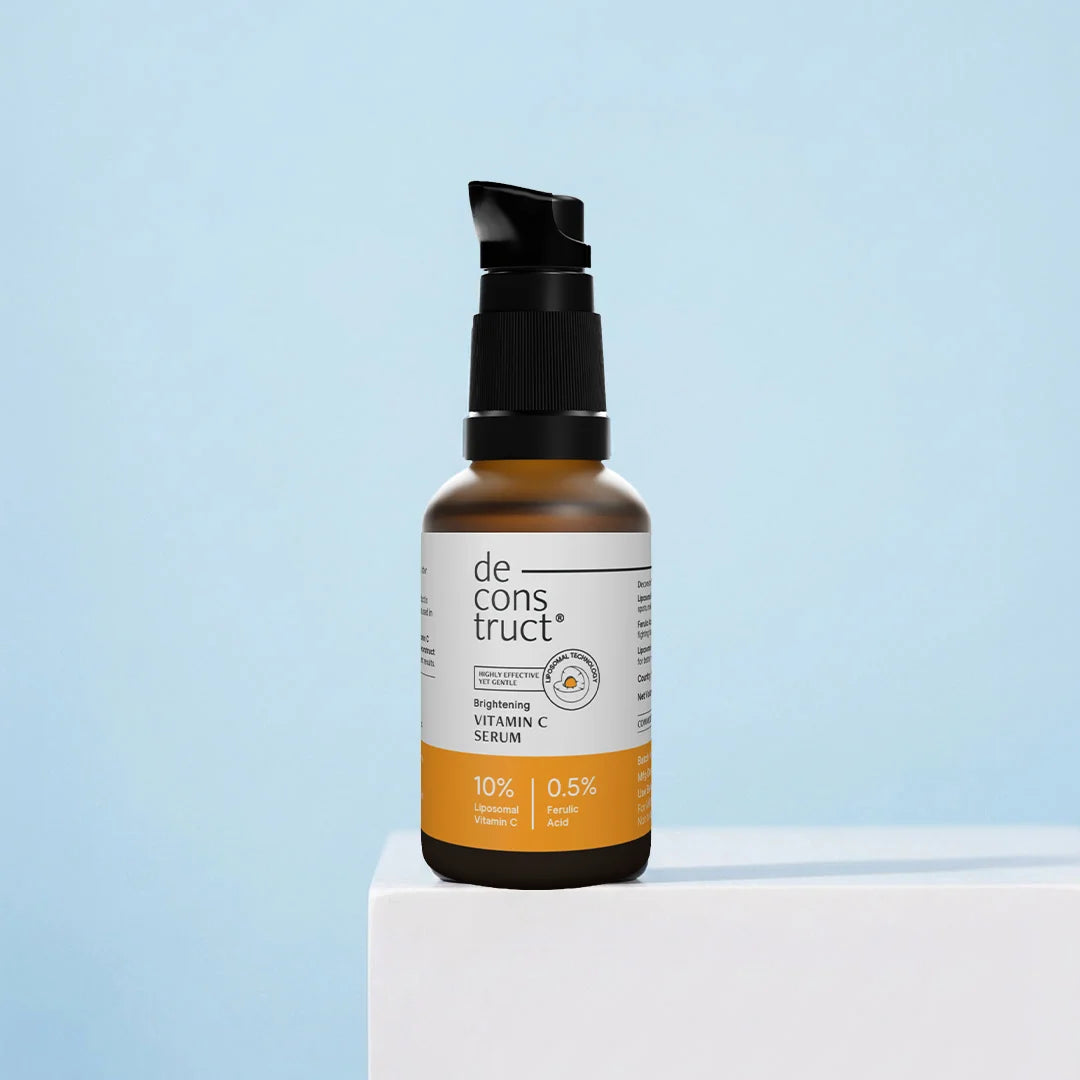
Once your barrier feels calm and hydration is restored, you can reintroduce a brightening step for dullness or dark spots. A vitamin C serum used in the morning pairs well with SPF; Deconstruct’s 10% Vitamin C + Ferulic Acid Serum is one option. Bring it back gradually — not while skin is actively flaky or reactive.
The Takeaway: Shop by Ingredient, Not by Claims
Monsoon dehydration isn’t complicated — it just needs the right approach. The barrier gets compromised, water escapes faster than it should, and surface oil hides the real problem. The fix is ingredient-led. Build your serums for monsoon dryness around hyaluronic acid, ceramides, niacinamide, glycerine, panthenol and squalane, ideally in lightweight, gel-based textures that layer cleanly under your moisturiser. Apply to damp skin. Seal every time. And park the heavy occlusives until the weather turns.
Skip the ten-step routine, the fragrance-heavy formulas, and anything that promises a miracle without naming its mechanism. Ingredient transparency is how you know a formula will actually do something — which is exactly what we build around at Deconstruct, every active and every percentage clearly labelled. Explore the full Deconstruct face serum range and find the right formulation for your skin type, your barrier and your monsoon routine.
Reference
Boo, Y. C. (2021). Mechanistic Basis and Clinical Evidence for the Applications of Nicotinamide (Niacinamide) to Control Skin Aging and Pigmentation. Antioxidants, 10(8), 1315. https://pmc.ncbi.nlm.nih.gov/articles/PMC8389214/