
Have you ever reached for your Vitamin C serum only to notice that it’s turned brownish or yellow? Like a flat liquid resembling apple juice? You’re not alone. It’s one of the most common frustrating moments in skincare.
In this dermatologist-approved blog, we help you finally understand how your serum turns yellowish or brown, deconstruct the science behind it, and how ineffective it is after it does, and when exactly it is time to throw out your bottle into the trash.
Why Does Vitamin C Turn Yellow Or Brown? The Science Behind It
If you notice your Vitamin C serum turning yellow or brown, it means it has undergone oxidation. Vitamin C loses electrons when easily exposed to heat, light and oxygen(air) or even high pH levels(Köllmer et al., 2013).
According to Yin (2022), Because it is a powerful reducing agent, it donates its electrons to reactive oxygen species or free radicals, turning itself into dehydroascorbic acid and further breaks down into inactive compounds, causing the distinct colour change.
The Colour Spectrum of Oxidation: A Guide
Here’s a quick breakdown of how to “audit” and evaluate the colour of your serum
-
Clear to champagne pale yellow: fresh, highly active and perfectly safe for use.
-
Bright yellow to light orange: the process of oxidation has begun. The serum is not unsafe at this stage but it has lost its maximum potency.
-
Dark orange, amber or brown: the serum has heavily oxidised, it’s highly unstable and is not safe to use on skin.
Is An Oxidised Serum Still Effective?
If your vitamin C serum has undergone oxidation, it means it has lost its maximum effectiveness.
If your serum has turned dark orange, amber or brown, consider it completely ineffective as it has lost all its ability to deliver the skincare benefits you originally bought it for.
Here’s a clear table showing you what oxidised Vitamin C looks and feels like
|
Feature |
Fresh Vitamin C Serum |
Oxidized Vitamin C Serum |
|
Typical Appearance |
Clear, tint of champagne |
Dark yellow, amber, muddy brown |
|
Active Molecule |
L-Ascorbic Acid |
Dehydroascorbic Acid / Inactive acids |
|
Efficacy |
Maximum brightening & anti-aging |
Completely ineffective |
|
Skin Feel |
Smooth, absorbs cleanly |
Can feel sticky, causes redness or staining |
|
Smell |
Neutral or light citrus |
Metallic, sour, or heavily artificial |
Product Recommendation: Deconstruct’s Vitamin C Serum with Liposomal Technology
Research from the Journal of Topical and Cosmetic Sciences notes the benefits of Vitamin C as well as its high instability in skincare. They also note the several strategies applied to topical vitamin C to improve stability of the formulation. Like using more stable derivatives of Vitamin C like 3-0 Ethyl Ascorbic Acid (EAA), and using stabilising agents like Ferulic Acid to boost antioxidant protection and increase stability.
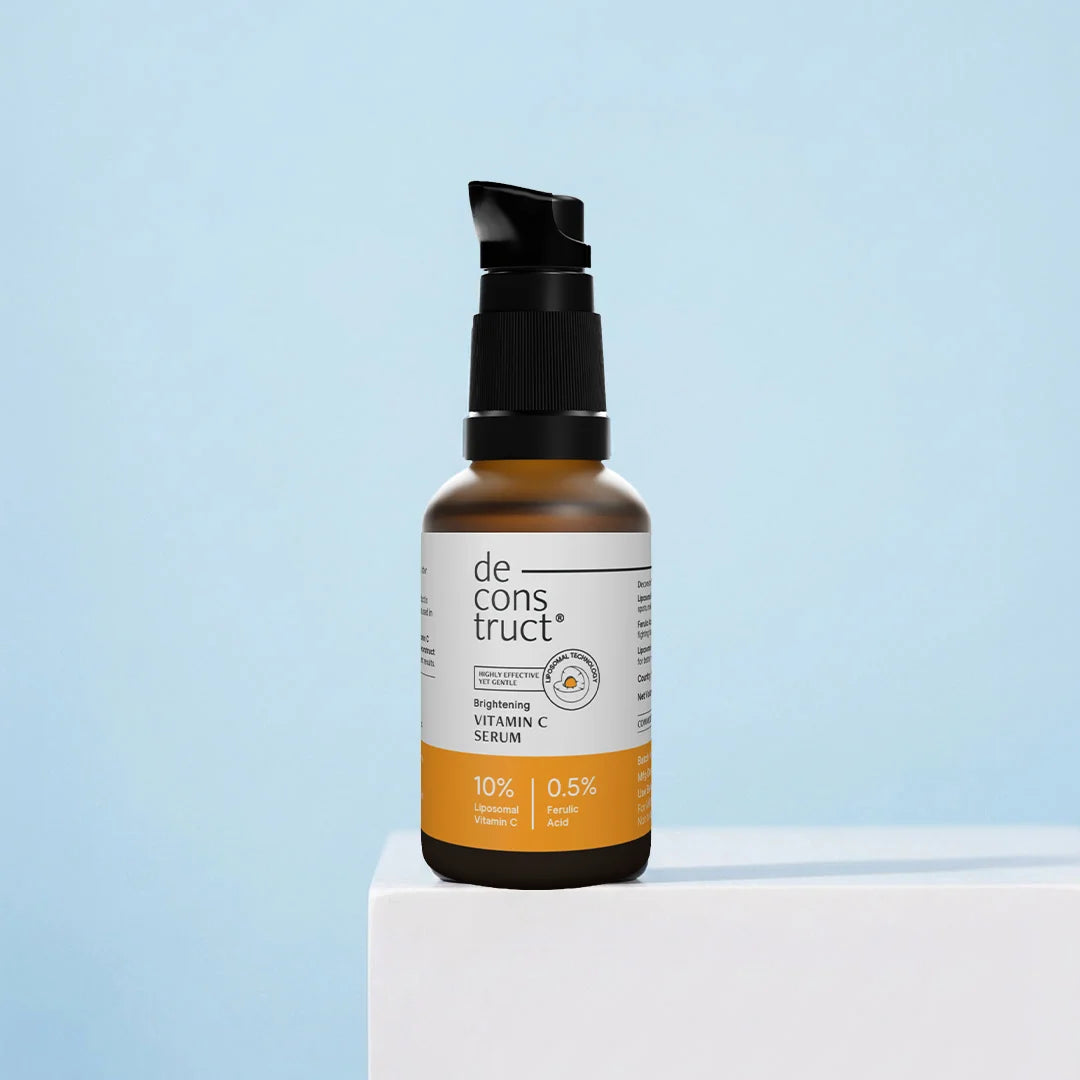
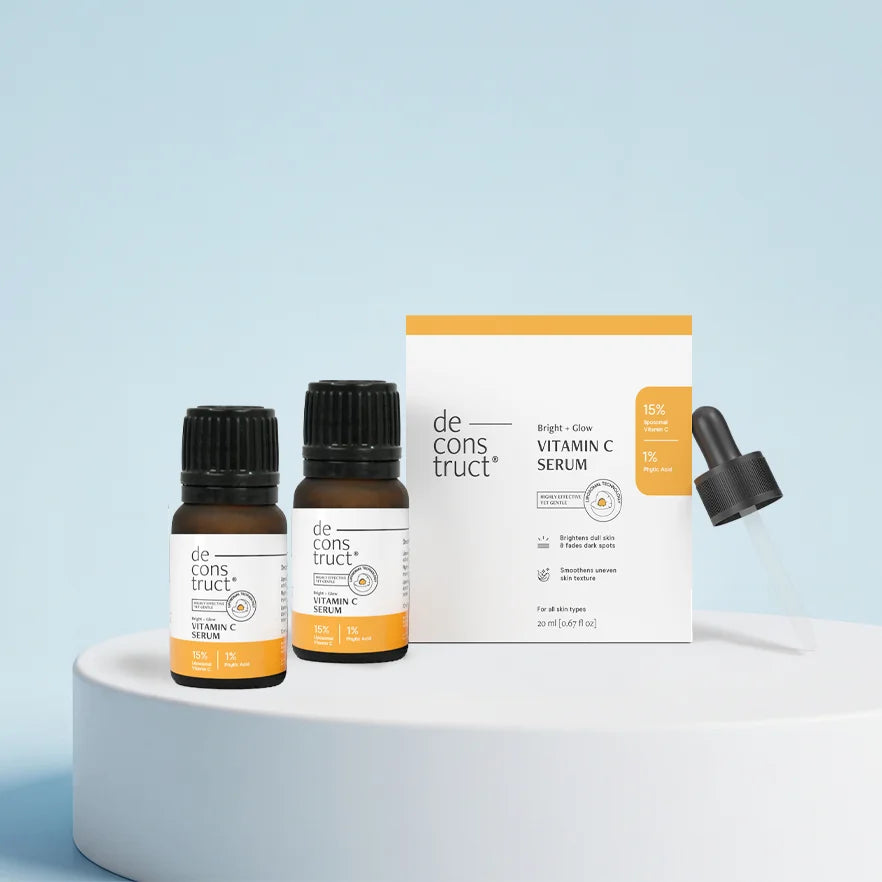
One formulation that does just that is Deconstruct’s Vitamin C Serum with Liposomal Technology.
How Deconstruct’s Vitamin C Serum Vitamin C Fights Instability and Helps Delay Oxidation
-
Liposomal 10% Vitamin C for targeted and controlled delivery of the active to help treat dark spots, pigmentation and uneven skin tone, to ensure the active doesn't just stay on your skin’s surface and evaporate.
-
0.5% Ferulic acid to help boost antioxidant protection and help increase stability of the Vitamin C serum
-
It’s lightweight water-based formula helps keep your skin hydrated
-
Some Vitamin C serums come in dropper bottles, which are a nightmare for stability. Every time you open it, it allows for light and air to enter. Deconstruct package their vitamin C serum in dark amber bottles that do not let light enter and a pump mechanism to avoid any contact other than directly with your skin.
How to Apply Your Vitamin C Serum The Right Way.
AM Routine (Protect and Brighten)
Cleanse
First, start with a gentle cleanser to clean dirt, impurities and have a fresh, clean base.
Treat
Next, comes your Vitamin C serum. Vitamin C should be applied to clean, dry skin for best absorption.
Moisturise
Follow up with a gentle, hydrating moisturizer to help your skin retain moisture and stay nourished throughout the day
Sunscreen
A non-negotiable, end your routine with a broad spectrum SPF sunscreen formula to keep your skin protected against UV rays as well as help protect your serum’s progress.
Pro tip: Choose a Vitamin C sunscreen for added antioxidant protection with brightening benefits.
Tips To Delay Oxidation and Improve Shelf Life
Look for Smart Packaging
Choose serums housed in dark amber bottles or pump mechanisms rather than droppers with transparent bottles that expose the liquid to light
Keep Away from Bathrooms
Storing your Vitamin c serums in bathrooms exposes it to a constant cycle of heat and humidity which acts as a catalyst to increasing the process of oxidation. Store it in a cool, dry place away from direct sunlight
Seal It Tight
Make sure to close the bottle tightly and securely to not allow any air inside the liquid.
Consider formulations with stabilising agents and more stable derivatives of Vitamin C
So if you’re probably wondering why your serum is not working, check if you’re making these common mistakes to help increase your Vitamin C’s shelf life.
The Final Verdict
Vitamin C is an undeniable powerhouse when it comes to delivering antioxidant protection against environmental stressors like UV, pollution, along with brightening benefits, fading dark spots, pigmentation and uneven skin tone. But when it comes to instability and oxidation, it is not far behind. If you’ve noticed your serum turn into an “apple juice” liquid, know that it has started losing its maximum efficacy due to the process of oxidation and it’s potency is actively dropping. If your serum has turned orange or brown, it’s no longer working as the protective shield you bought it for. Remember to store your Vitamin C serum away from direct sunlight and in a cool, dry place, away from heat and humidity, especially in bathrooms to help increase its shelf life and delay oxidation. Choose stable Vitamin C formulas, with more stable derivatives and stability agents like a ferulic acid-based Vitamin C serum, with pump packaging which increase its longevity to keep your skin protected and actively brighten it for longer.
FAQs
Should I throw away my Vitamin C serum as soon as it turns light yellow?
No, you do not need to immediately discontinue your Vitamin C serum as soon as you see it turn pale yellow. This colour means its in the first stage of oxidation and slowly will start losing its efficacy with time. Discard your Vitamin C serum when you notice dark orange, amber or brownish colour.
How long does a Vitamin C serum usually last?
Usually 3-6 months after opening. Refer to the POA on the product (period after opening)
Does a change in smell mean my serum has gone bad?
If your serum starts smelling metallic or sour, then that indicates your serum has gone bad and needs to be discarded.