

When asked the question what is your skin type, there is one group which is always confused. Oily forehead, nose and chin but the cheeks are dry or sometimes sensitive. Clueless is this group struggling with Combination skin. So what should they be using because different skin types need different products is what skincare tells us. Is one serum suitable for multiple skin types. For Vitamin C, the answer is yes, provided the formulation is right. This guide is your checklist to tick all your questions around combination skin .
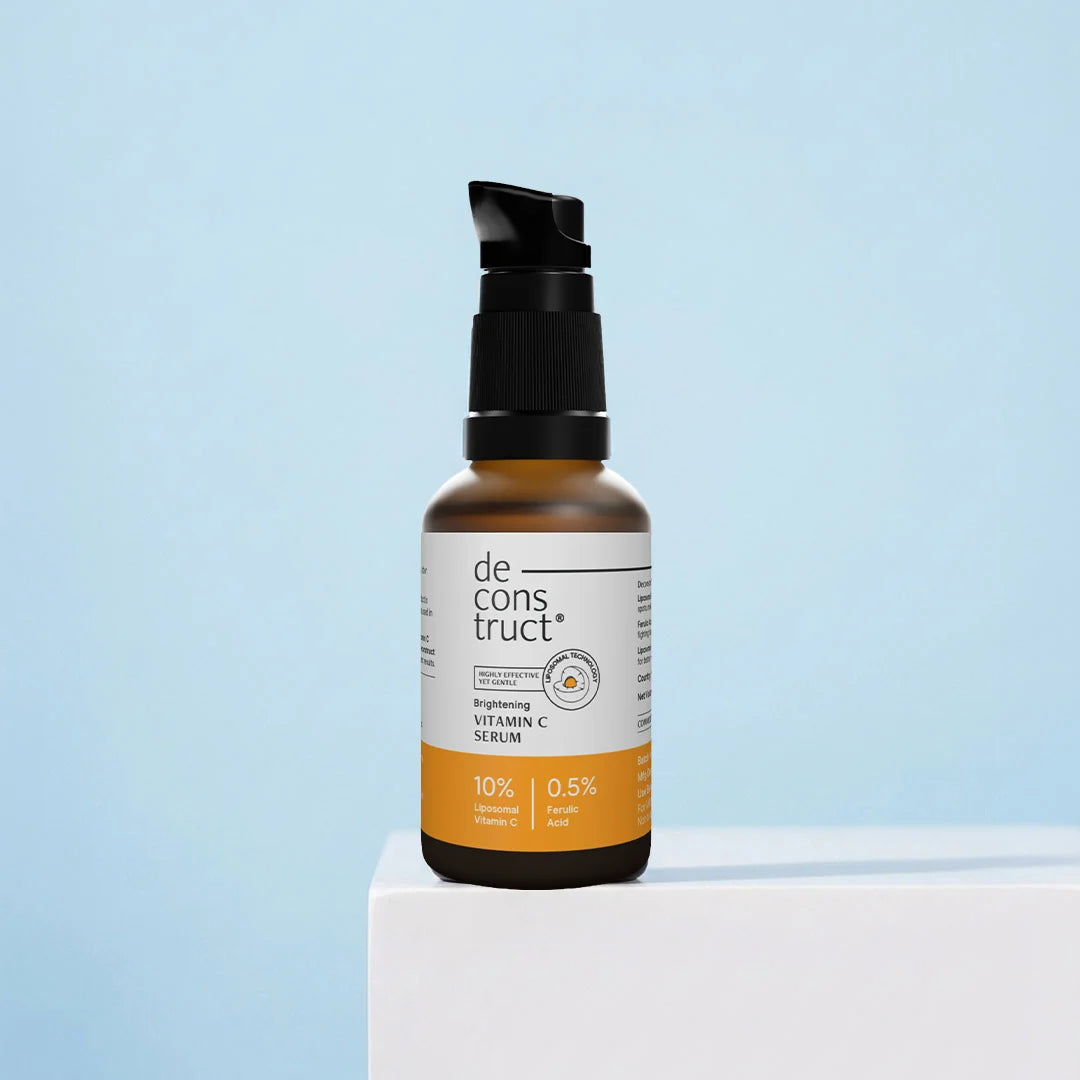
Deconstruct — Vitamin C + Ferulic Acid Serum
WHAT MAKES COMBINATION SKIN DIFFERENT?
OILY T-ZONE, DRIER CHEEKS
The T-zone and cheeks don't just look different , they behave differently at a biological level. Sebaceous glands are more densely concentrated along the forehead, nose and chin, which is why these areas produce more oil. The cheeks have fewer active glands, which is why they're prone to dryness, sensitivity and sometimes visible flakiness , particularly in air-conditioned environments or cooler weather.
A product that's perfect for the T-zone can feel rich or occlusive on the cheeks. One that suits the cheeks can feel insufficient for managing the oilier zones. This is the core tension combination skin navigates with every product choice.
CHOOSING PRODUCTS THAT WORK ACROSS THE FACE
The most practical solution isn't two separate serums , it's one balanced formulation that sits comfortably across both zones. Lightweight, water-based serums absorb quickly enough that they don't add heaviness to the T-zone, but they also provide the antioxidant and brightening support that drier cheek areas benefit from equally. A well-matched texture solves the problem without requiring a zone-by-zone application strategy.
IS VITAMIN C SERUM GOOD FOR COMBINATION SKIN?
A lightweight Vitamin C serum can be suitable for combination skin because it absorbs quickly, supports brighter-looking skin and layers comfortably without feeling heavy on oilier areas.
WHY DERMATOLOGISTS RECOMMEND VITAMIN C FOR COMBINATION SKIN
ANTIOXIDANT SUPPORT FOR EVERYDAY ENVIRONMENTAL EXPOSURE
UV radiation and pollution affect every part of the face , oily T-zone and drier cheeks alike. Free radical damage doesn't discriminate by skin zone and antioxidant protection is relevant across the entire face regardless of how different those zones behave. Dermatologists recommend Vitamin C for combination skin precisely because it addresses a universal concern , environmental stress , rather than one that's zone-specific.
HELPS IMPROVE THE APPEARANCE OF UNEVEN SKIN TONE
Combination skin is particularly prone to uneven tone. Breakouts cluster around the T-zone and leave post-acne marks. Sun exposure creates discolouration that doesn't distribute evenly. The cheeks and T-zone can look noticeably different in tone even on an otherwise healthy skin day. Vitamin C addresses this by inhibiting the melanin production that drives discolouration , improving the evenness of tone across both zones with consistent daily use.
WORKS WELL IN LIGHTWEIGHT FORMULATIONS
The reason Vitamin C suits combination skin is less about the active and more about the format. A lightweight, water-based Vitamin C serum absorbs quickly on the T-zone without adding to existing oiliness and delivers brightening and antioxidant support to the cheeks without the richness that could clog pores or feel heavy. The formulation is what makes it work across both zones simultaneously.
HOW TO BUILD A ROUTINE FOR COMBINATION SKIN
MORNING ROUTINE
-
Gentle cleanser
-
Lightweight moisturiser
-
SPF 50+
EVENING ROUTINE
-
Gentle cleanser
-
Targeted treatment as needed
-
Lightweight moisturiser
Note: The evening routine is where zone-based adaptation is most useful , adjusting moisturiser weight based on what each area needs. The morning routine, anchored by a lightweight Vitamin C serum and SPF, works best applied consistently across the full face.
RECOMMENDED PRODUCT: DECONSTRUCT 10% VITAMIN C SERUM
WHY IT'S SUITABLE FOR COMBINATION SKIN
For combination skin, a lightweight formula isn't a preference , it's a practical requirement. A heavy serum that works on the cheeks will overwhelm the T-zone. A serum designed for oily skin sits comfortably on the T-zone and delivers the same antioxidant and brightening benefits to the rest of the face without any compromise.
10% Vitamin C (3-O-Ethyl Ascorbic Acid) - a stable derivative at an effective daily-use concentration. Suitable for consistent morning application without the irritation risk of higher percentages.
Lightweight, fast-absorbing texture - absorbs within 60 seconds across all facial zones. No residue on the T-zone, no heaviness on the cheeks. It behaves the same way everywhere on the face.
Comfortable across different facial zones - the water-based formula doesn't discriminate between oilier and drier areas. It sits comfortably across both without requiring zone-specific application.
Supports brighter-looking skin and more even tone - combination skin's uneven tone and post-acne marks respond to consistent Vitamin C use. Visible improvements typically build within 4 - 8 weeks of daily use.
Layers well under moisturiser and sunscreen - absorbs fully before the next product goes on. The morning routine layers cleanly and consistently from step one to SPF.
COMMON MISTAKES COMBINATION SKIN USERS MAKE
TREATING THE ENTIRE FACE THE SAME WAY
The most consistent mistake with combination skin is applying every product uniformly across the full face. A moisturiser that suits the cheeks can overload the T-zone. A rich serum that's comfortable on drier areas becomes problematic on oilier ones. The morning routine can be kept consistent , lightweight serum, lightweight moisturiser, SPF across the whole face. The evening routine is where zone-based variation pays off.
CHOOSING RICH FORMULAS FOR THE T-ZONE
Assuming the T-zone needs the same treatment as dry skin is a common but costly misread. Rich, emollient formulas on an already-oily zone adds to congestion rather than solving it. Lightweight, water-based formulas address oiliness far more effectively and they sit just as comfortably on the cheeks.
SKIPPING SUNSCREEN
Post-acne marks and the uneven tone combination skin is prone to are directly worsened by UV exposure. Sunscreen isn't just a prevention step , it's what stops existing discolouration from deepening daily. Skipping SPF undoes the brightening work that Vitamin C is building. No exceptions.
DERMATOLOGIST TIPS FOR CHOOSING A SERUM
-
Lightweight texture : absorbs fully within 60 seconds across all facial zones
-
Fast absorption : water-based formula, not cream or oil-heavy
-
Compatible with sunscreen : layers cleanly as step two in the morning routine
-
Suitable for combination skin : non-comedogenic, no heavy supporting ingredients
-
Fits your primary skin goal : for combination skin, Vitamin C addresses dullness and uneven tone; match the active to the concern
FINAL THOUGHTS
Combination skin doesn't need two separate skincare routines , it needs products that are balanced enough to work across both zones without compromising either. Lightweight Vitamin C formulations sit in that balance naturally: fast-absorbing enough for the T-zone, effective enough for the cheeks and consistent enough to deliver visible brightening results with daily morning use.
Deconstruct's 10% Vitamin C Serum is a practical daily option for combination skin , lightweight, stable and designed to work comfortably across the full face rather than for one specific zone.
FAQs
IS VITAMIN C SERUM SAFE FOR COMBINATION SKIN?
Yes. A lightweight, water-based Vitamin C serum is well-suited to combination skin, it absorbs quickly without adding oiliness and delivers antioxidant and brightening benefits
SHOULD COMBINATION SKIN USE VITAMIN C EVERY DAY?
Yes Vitamin C can be used on a daily basis in the morning routine for both oily and combination skin type.
CAN VITAMIN C MAKE THE T-ZONE OILIER?
No scientific research suggests that Vitamin C stimulates sebum production. If a Vitamin C serum made the T-zone oilier, the issue was the formula's supporting ingredients , not the active itself.
WHEN SHOULD COMBINATION SKIN USE VITAMIN C , MORNING OR NIGHT?
Morning. Vitamin C's antioxidant properties work most effectively as a first line of defence against UV and pollution exposure throughout the day. Pair with SPF for the most complete protective and brightening routine.
WHAT'S THE BEST VITAMIN C CONCENTRATION FOR COMBINATION SKIN?
10% is the recommended starting point , effective for visible brightening and antioxidant protection, comfortable for daily use across oily and normal facial zones without irritation risk.