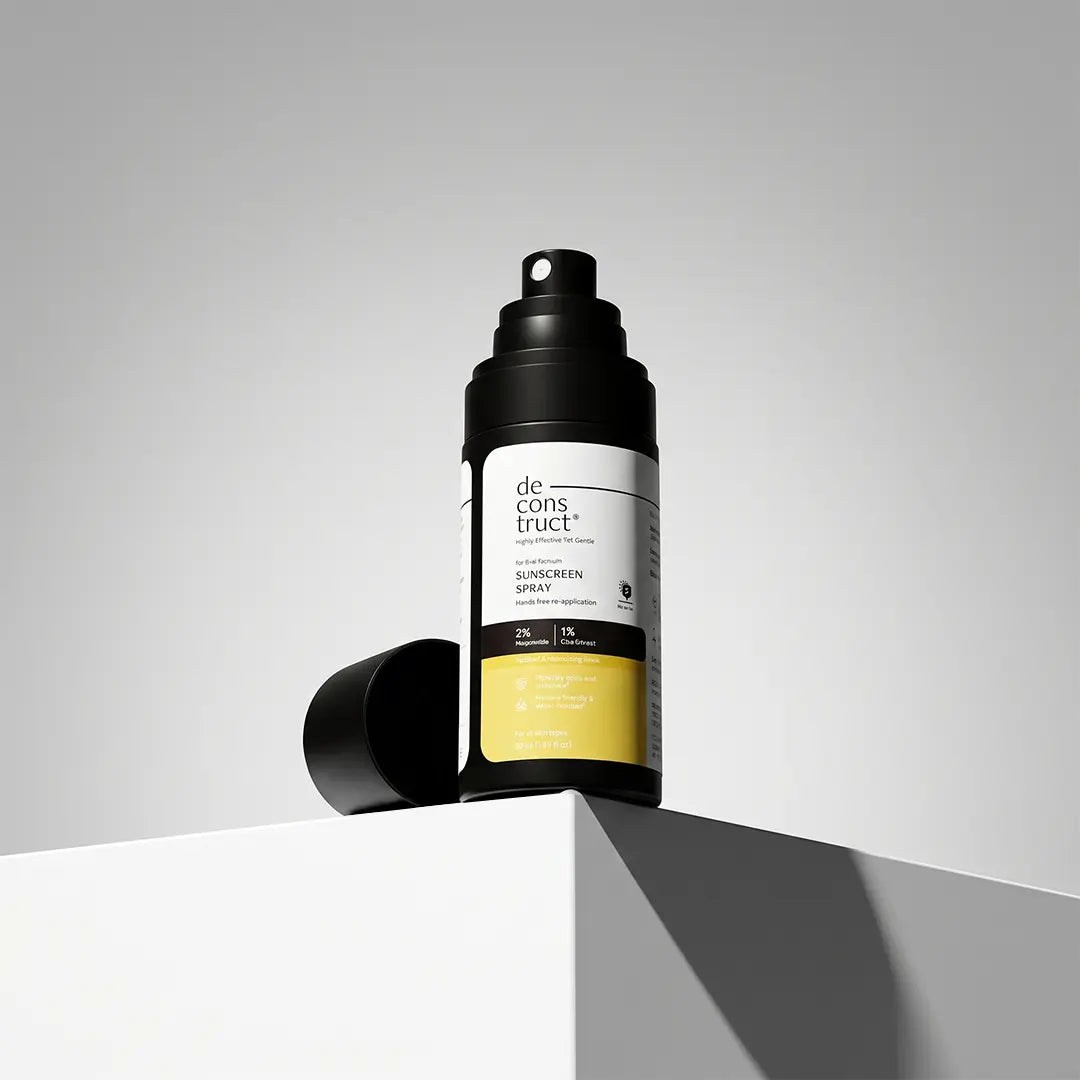

One of the most common skincare confusions arise with the question, “moisturizer or sunscreen, first?” Whether you’re a skincare beginner or professional, you’re not alone. But here’s the thing, applying products in the wrong order can reduce the products’ effectiveness and the results on your skin. Here’s the quick answer to this common skincare question:
Moisturizer first, SPF last (before makeup).
In this dermatologist-approved guide, we help you understand which product goes first- SPF or moisturizer, and help you understand why.
What Is the Correct Order: Moisturizer or Sunscreen First?
The General Rule
Here’s the general rule of thumb:
-
Skincare products should be applied from thinnest to thickest.
-
Sunscreen acts as the final protective layer for your skin.
Why Sunscreen Goes After Moisturizer
Moisturizers are designed to hydrate and nourish the skin and skin’s barrier. They work best when they are applied directly onto the skin’s surface. SPF on the other hand, forms a protective layer, either reflecting or absorbing UV rays to shield the skin from UV damage.
-
Moisturizer hydrates and supports the skin barrier.
-
Sunscreen acts as a protective shield against UV damage.
-
Applying moisturizer over sunscreen can dilute or disrupt UV protection, leading to uneven coverage and UV protection.
Quick Takeaway Box
Here’s the order of your skincare routine
Cleanser → Serum (optional)→ Moisturizer→ Sunscreen→ Makeup
Think of your SPF as your skin’s raincoat. Everything under it helps nourish your skin while your SPF works tirelessly to protect and shield your skin from the harsh effects of UV.
Why Product Order Matters in Your Skincare Routine
If you’re wondering why layering matters in skincare, this section is for you.
Better Hydration
Moisturizers help your skin stay hydrated, nourish and repair your skin’s barrier. They do this best when they are applied directly onto your skin. When moisturizers are applied in the wrong order, it can dilute the effects of the product.
Maximum Sun Protection
Sunscreen needs to be applied properly and evenly for effective UV protection. Applying moisturizer before your sunscreen, and following layering helps your sunscreen work uninterrupted to give you the maximum protection
Improved Product Performance
Proper layering ensures that each product absorbs deeply, active ingredients don’t cancel each other out while your moisture barrier stays balanced. Your skincare can work as intended, without any interference.
|
Incorrect Order |
Correct Order |
|
Sunscreen → Moisturizer |
Moisturizer → Sunscreen |
|
Reduced SPF performance |
Full SPF protection + hydration absorption |
|
Uneven application and coverage |
Better coverage and even application |
Choosing the Right Moisturizer and Sunscreen Combination
Not all formulas are created equal, especially not for all skin types. Remember to choose the right SPF and moisturiser based on your skin type and skin needs.
For Oily and Acne-Prone Skin
For oily and acne prone skin types, you need lightweight, non-comedogenic options that do not feel heavy, greasy or clog up your skin.
Here’s a dermatologist-approved SPF + moisturizer combo for oily and acne prone skin:
Recommended moisturizer:
Deconstruct Oil-Free Moisturizer
Why it works best:
-
Lightweight
-
Non-greasy finish
-
Supports the skin barrier while remaining comfortable to wear in humid conditions
Recommended Sunscreen:
Deconstruct’s Gel Sunscreen for Oily Skin
Why it works best:
-
Lightweight
-
Gel-based texture
-
Suitable for daily wear as well as layering under makeup
For Combination Skin
For combination skin, look out for SPF and moisturizers that are oil-free and at the same time, hydrating. They need to hydrate areas that are dry (like your cheeks) while regulating oil in your T-zone.
Recommended moisturizer formulas
-
Lightweight
-
Non-comedogenic
Recommended SPF formulas:
-
Broad- spectrum SPF 30-50
-
Matte-finish
For Dry Skin
For anyone with dry skin, you need a moisturizer that strengthens your moisture barrier and hydrating SPF formulas
Recommended SPF formulas:
-
Lightweight, gel-based
-
Hydrating formulas, rich in ceramides
-
Fluid-based formulas
Product Recommendation Box
Ideal Morning Pairing for Oily Skin
-
Deconstruct Oil-Free Moisturizer
-
Deconstruct Gel Sunscreen for Oily Skin
This powerhouse combo provides lightweight hydration and effective daily UV protection without making your skin feel heavy or greasy throughout the day in humid conditions.
Knowing which sunscreen is right for your skin is a crucial step in applying your sunscreen.
Common Mistakes When Applying Sunscreen and Moisturizer
Here are some mistakes you may not know you’re making when applying your SPF and moisturizer.
Applying Sunscreen Before Moisturizer
Remember, SPF always goes last (before makeup).
Using Too Little Sunscreen
Always remember to apply the sufficient amount, not too much, not too little. Follow the two-finger rule for application to ensure sufficient coverage.
Not Waiting Between Layers
Always wait either 30-60 seconds or ideally, 1-2 minutes, between applying your SPF and moisturizer. This brief gap allows for full absorption of the products, prevents dilution and creates a perfect base for the SPF to be spread evenly for thorough coverage.
Skipping Reapplication
Forgetting to reapply your sunscreen is a crucial mistake. Dermatologists always recommend that you reapply your SPF every 2-3 hours or immediately after sweating, swimming or towel drying.
Quick Tip
Allow your moisturizer to absorb for 1-2 minutes before applying your sunscreen. If you’re in a rush, 30-60 seconds should be more than enough.
The Final Verdict
When it comes to the correct skincare routine order:
moisturizer first, sunscreen last (before you apply your makeup). Remember the simple rule of thumb for the correct order of skincare application, you apply your skincare from the thinnest to thickest. Sunscreen should be the final skincare step before makeup (if applying). If you live in India, we understand the hesitancy in layering too many skincare products. This is where lightweight skincare becomes your skin’s best friend. Choose lightweight, gel-based SPF formulas and hydrating and skin-barrier friendly moisturizers for your morning skincare routine for effective skin protection all- day no matter the harsh temperatures. Always reapply your SPF and stay consistent for healthier skin in the long haul.
Frequently Asked Questions
Q1. Can I skip moisturizer if my sunscreen is moisturizing?
Sometimes, you can, especially if you have oily skin and your SPF is hydrating as well. But generally, it is advised that you still need a dedicated moisturizer to benefit your skin and it’s barrier.
Q2. How long should I wait between applying my moisturizer and sunscreen?
It is recommended that you wait ideally 1-2 minutes or 30-60 seconds when in a rush, between applying your moisturizer then your sunscreen.
Q3. Does sunscreen replace your moisturizer?
No, sunscreen cannot replace your moisturizer. Opt for a lightweight and non-comedogenic moisturizer with barrier-supporting ingredients for the best hydration and nourishment.
Q4. Can I mix sunscreen and moisturizer together?
No, you should never mix sunscreen and moisturizer before applying them. Mixing products, especially sunscreen can dilute the formula, cause uneven coverage, and most importantly, reduce its efficacy of protection.