

Knowing the right way to apply your serum can be the deciding factor between getting visible results and dealing with unnecessary irritation, or simply wasting product. That includes when to apply it.
The answer depends entirely on the formula and the active. Different actives react with water in different ways, so moisture levels play a significant role in how your serum behaves, whether it absorbs fully and how well it performs.
In this dermatologist-approved guide, we cover the best serum application tips: how to apply your serum, and when to apply it on dry, wet or damp skin, so you get the most out of every bottle.
Dry Skin vs Wet Skin vs Damp Skin: What’s the Difference?
- Wet skin: has visible water droplets or excess moisture remaining after washing.
- Damp skin: feels slightly moist to the touch, without water dripping or pooling on the surface.
- Dry skin: has been gently patted dry with a clean towel, with no noticeable surface moisture.
Here’s why it matters:
| Skin Condition | Generally Suitable For | Why |
|---|---|---|
| Slightly damp | Hydrating serums with humectants (e.g., hyaluronic acid, glycerin) | Provides surface moisture for humectants to bind and draw into the skin. Best followed by a moisturizer to lock hydration in. |
| Completely dry | Retinoids and strong exfoliating or potentially irritating actives (e.g., AHAs, benzoyl peroxide) | Slows down absorption, helping reduce the likelihood of irritation from enhanced penetration. The exception is a buffered formula or one labeled for damp skin, so check the product instructions. |
| Wet or dripping | Not usually necessary | Dilutes the formula and makes controlled, even application more difficult. |
Remember, these rules are not universal. Product instructions and directions always take priority.
When You Should Apply Your Serum on Dry Skin
Apply your serum on a dry face if you’re using potent active ingredients that are more likely to irritate skin:
- Exfoliating acids like AHAs and BHAs
- Retinols and retinoids
- Vitamin C or pure L-ascorbic acid
- Acne treatments like benzoyl peroxide
- Azelaic acid
- Higher concentrations of actives (10% or above)
Applying your serum on dry skin allows for slower absorption, reducing the risk of stinging, irritation and barrier damage.
When You Should Apply Your Serum on Damp Skin
Apply your serum on damp skin if you’re using hydrating serums, or serums designed to replenish water in your skin, rather than exfoliating or accelerating skin cell turnover:
- Humectants like hyaluronic acid
- Barrier-supporting ingredients like panthenol (vitamin B5) and ceramides
- Gentle peptide serums
Apply it on skin that is slightly “mist-like” damp, not dripping, right after cleansing or after a toner, to help bind moisture to the skin. Research from the National Library of Medicine supports this.
The right way to apply a serum on damp skin
- Pat your face with a towel so that no water is dripping.
- Spray a fine facial mist onto your skin before applying your serum.
- Don’t wait longer than 60 seconds before applying a moisturizer. Without one to trap moisture, the surface water and humectants can evaporate easily.
Why Formulation Matters Just as Much as Timing
While the dampness of your face decides how well ingredients penetrate your skin, a serum’s overall formulation also plays a huge role in how it acts on your skin, from its base pH and actives to its texture and delivery system. With beginner-friendly formulas, gentle concentrations and stable derivatives of actives, Deconstruct’s face serums are a reliable, effective yet gentle option for targeting specific skin concerns.
For applying on slightly damp skin

Deconstruct — 2% Hyaluronic Acid Serum with 1% Niacinamide
A lightweight, oil-free hydrating serum that adds moisture without feeling sticky.
- Lightweight, non-greasy formula
- Deeply hydrates without making your skin feel sticky
- Triple molecular weight hyaluronic acid to penetrate multiple layers of skin for multi-level hydration
For applying on dry skin
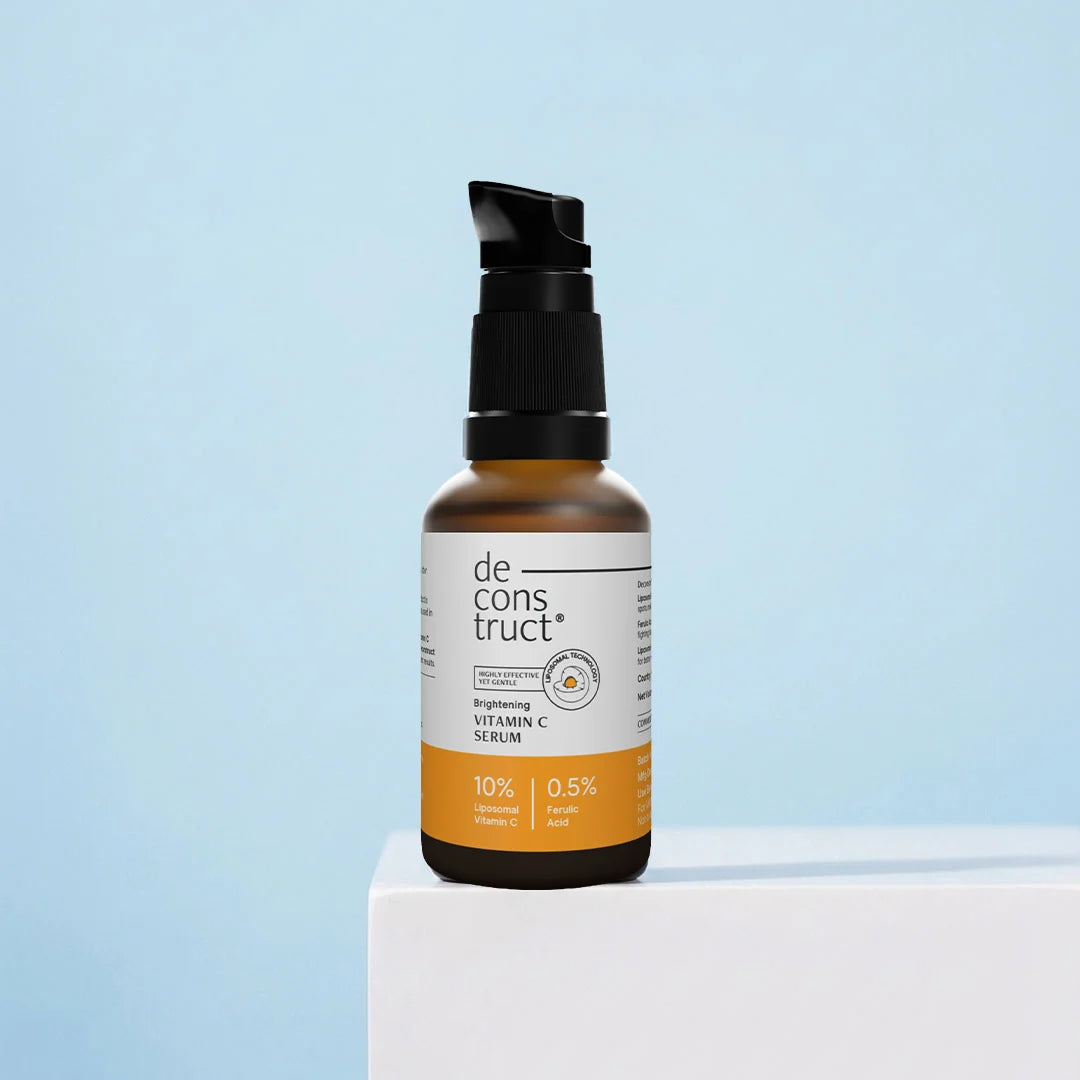
Deconstruct — 10% Vitamin C Serum with 0.5% Ferulic Acid
A liposomal vitamin C serum with ferulic acid for brighter, glowing skin.
- Contains 3-O ethyl ascorbic acid, a more stable derivative of vitamin C than most others
- 0.5% ferulic acid helps stabilise vitamin C, reducing the chance of irritation and adding an antioxidant boost
- Protects the skin from oxidative damage from external stressors like UV and pollution
- Liposomal vitamin C delivers the active in a timed, controlled release, protecting it from oxidising and your skin from irritation
How to Apply a Face Serum After Cleansing
According to the American Academy of Dermatology, serum goes after cleansing and before your moisturizer. This allows direct absorption into the skin for maximum efficacy.
- Cleanse your face. Use a gentle cleanser to remove excess oil, dirt and dead skin cells.
- Adjust your skin’s moisture level. For hydrating serums, apply on damp skin after a fine toner (PubMed). For strong exfoliating serums, apply when your skin is dry after cleansing. Never apply serum on a dripping wet face.
- Apply your serum. Use 2 to 3 drops and pat gently into your skin, spreading it evenly without rubbing. Always check your product’s directions of use.
- Follow up with a moisturizer. Use a non-greasy, oil-free moisturizer to keep your skin nourished and hydrated. For hydrating serums, don’t wait longer than 60 seconds, so the ingredients don’t evaporate.
- Use SPF during the day. If you use your serum in the morning, especially vitamin C, pair it with a broad-spectrum sunscreen to protect your skin from UV damage.
Common Serum Application Mistakes to Avoid
- Applying your serum on a dripping wet face
- Harsh scrubbing
- Skipping moisturizer, especially with hydrating serums
- Using several actives together without considering their compatibility
- Ignoring your serum’s product instructions
- Applying too much product or choosing higher concentrations for faster results
- Applying exfoliating actives on a damp or wet face
Final Verdict
Serums are targeted, leave-in treatments that work on your specific skin concerns, so knowing when to apply your serum matters just as much as choosing the right formula for your skin type. It decides how your skin absorbs the actives and how likely you are to face irritation. Keep it simple: for strong exfoliating actives, stick to clean, dry skin, and for hydrating serums with humectants, apply on slightly damp skin to enhance absorption, then follow up with a moisturizer to help retain moisture.
Related guides
- Can you use a serum without moisturizer?
- Can you layer multiple serums together?
- Best serum routines for day and night
- Vitamin C serum: morning vs night usage
FAQs
Can you apply a serum immediately after washing your face?
There is no set amount of time you need to wait after cleansing to apply your serum. For hydrating serums, apply to damp skin so the moisture binds well to your skin without evaporating. For strong exfoliating acids, apply on dry skin to allow slower absorption, which lowers the chance of stinging, burning or irritation, especially if you have sensitive or reactive skin.
Do I need to apply a moisturizer after applying my serum?
Yes, it is generally recommended, especially if you’re using hydrating serums. A moisturizer keeps your actives from evaporating and helps retain moisture.
Can a hydrating serum replace a moisturizer?
No. You still need a dedicated moisturizer to balance hydration and trap the moisture. Moisturizers act like an occlusive shield that helps prevent moisture loss. Choose a lightweight, oil-free moisturizer based on your skin type and needs.