

If you live or work in a busy city, your skin is exposed to more than just sunlight. Traffic-related pollution, particulate matter and other environmental stressors can come into contact with the skin and contribute to oxidative stress and skin-barrier changes. Over time, this may contribute to a dull or tired-looking complexion. [1] [2]
But pollution is rarely the only reason skin looks dull or uneven. UV exposure, dehydration, irritation, post-acne marks and an inconsistent skincare routine can also contribute.
A practical approach is to keep the routine simple: cleanse gently, add antioxidant support if needed, moisturise, and use sunscreen consistently during the day.
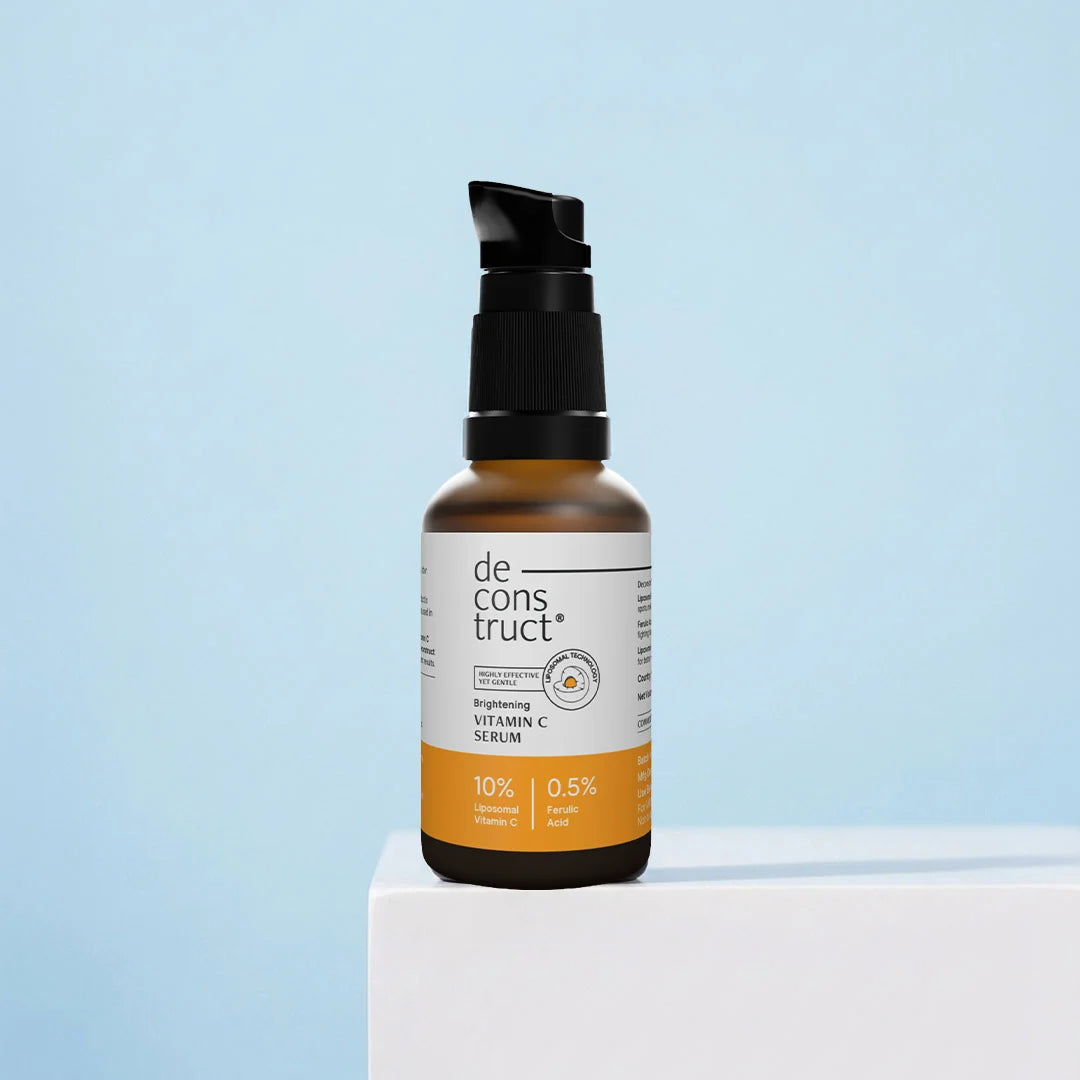
Deconstruct — Vitamin C + Ferulic Acid Serum
Quick Answer: What Serum Is Good for Pollution-Exposed Skin?
There is no single serum that can “remove pollution” from the skin. Instead, look for a formula that provides antioxidant support, fits comfortably into your routine and addresses your actual skin concern, such as dullness or uneven-looking tone.
Vitamin C is one option because topical vitamin C has antioxidant and pigmentation-related applications in skincare. However, it should be viewed as one part of a broader routine rather than a standalone treatment for pollution exposure. [3]
Can Pollution Make Your Skin Look Dull and Uneven?
Yes, environmental pollution can contribute to an unhealthy or dull-looking appearance, although it is not usually the only cause.
Research on particulate matter and other air pollutants suggests that they can contribute to reactive oxygen species, oxidative stress and skin-barrier changes. The exact effect depends on the pollutant, exposure and individual skin condition. [2] [4]
What Can Make Skin Look Dull Alongside Pollution?
- UV exposure: Can contribute to pigmentation and premature skin ageing.
- Dehydration: Can make skin look less fresh and more tired.
- Post-acne marks: Existing pigmentation can make uneven tone more noticeable.
- Irritation: Repeated irritation can affect the appearance and comfort of the skin.
- Dead-skin buildup: Can make the surface appear rough or less radiant.
- Inconsistent skincare: Frequently changing products or skipping basic care can make it harder to manage the underlying concern.
That is why it is better to think about pollution as one environmental stressor rather than assuming every case of dull skin is caused by pollution alone.
What Should You Look for in a Serum for Pollution-Exposed Skin?
If your skin is regularly exposed to urban pollution, a useful serum should complement the rest of your routine rather than add unnecessary complexity.
1. Antioxidant Support
Air pollutants can contribute to oxidative stress in the skin. Antioxidants are therefore a logical ingredient category to consider when building a routine for environmentally stressed skin. [2]
2. A Formula That Targets Your Actual Concern
If your main concern is dullness or uneven-looking tone, choose an ingredient with evidence for antioxidant and brightening support rather than looking for a serum marketed as a “pollution detox”.
3. Comfortable Daily Use
A serum is more useful when you can use it consistently. If you have oily or combination skin, a lightweight, water-based texture can be easier to layer with moisturiser and sunscreen.
4. A Simple Formulation
You do not need several antioxidant serums to address environmental exposure. One targeted serum, combined with cleansing, hydration and sun protection, is a more practical starting point.
Why Vitamin C Fits a Pollution-Focused Skincare Routine
Vitamin C is a useful ingredient to consider when dullness and uneven-looking skin are the main concerns. A review of topical vitamin C research describes antioxidant, antipigmentary and photoprotective applications, while also noting that the effectiveness of topical formulations depends on factors such as stability and penetration. [3]
Vitamin C Provides Antioxidant Support
Topical vitamin C can help neutralise reactive species and provides antioxidant support in the skin. This makes it relevant to routines designed around environmental stress, although it should not be presented as a substitute for sunscreen or as a way to “remove” pollution from the skin. [3]
Vitamin C Can Support a Brighter-Looking Complexion
Topical vitamin C has also been studied for its role in pigmentation and uneven-looking skin tone. Results depend on the formulation, concentration, stability and consistent use. [3]
If you want to learn more about the ingredient itself, read our guide on Vitamin C Serum for Brightening Skin.
Does Vitamin C Replace Sunscreen When You Live in a Polluted City?
No. Vitamin C and sunscreen serve different roles.
Vitamin C can provide antioxidant support, while sunscreen is the primary product in your routine for protecting exposed skin from UV radiation. The American Academy of Dermatology recommends broad-spectrum, water-resistant sunscreen with SPF 30 or higher and advises reapplication when you are outdoors. [5]
Think of the routine as:
Antioxidant support + hydration + UV protection
rather than treating any one product as a complete defence against environmental exposure.
For daily sun protection, explore Deconstruct's Sun Protection collection.
Product Recommendation: Deconstruct Vitamin C Serum
If Vitamin C is the antioxidant ingredient you want to add to a pollution-focused routine, Deconstruct 10% Vitamin C Serum with Liposomal Technology is one option to consider.
The product page lists 10% liposomal Vitamin C and 0.5% Ferulic Acid, with the formula positioned around antioxidant support, dullness, pigmentation and radiance. It is also described as a lightweight, water-based serum. [Deconstruct product details]
Why It Fits This Routine
- 10% Vitamin C: Designed to support a brighter-looking, more even complexion.
- 0.5% Ferulic Acid: Included to support antioxidant performance and formula stability.
- Liposomal technology: Used in the formulation to support delivery and stability of Vitamin C.
- Lightweight texture: Designed to layer comfortably within a daily skincare routine.
- Best suited to this use case: Dull-looking skin, uneven-looking tone and antioxidant-focused routines.
The product should be viewed as one step in a pollution-conscious skincare routine, not as a product that removes pollution from the skin.
Shop Deconstruct 10% Vitamin C Serum
How to Build a Simple Routine for Pollution-Exposed Skin
Morning Routine
- Gentle cleanser
- Deconstruct Vitamin C Serum
- Lightweight moisturiser, if needed
- Broad-spectrum sunscreen
This follows a simple principle:
Cleanse → support → hydrate → protect
You do not need several antioxidant serums at the same time. Choose one targeted active and give your routine time to work consistently.
Evening Routine
- Cleanser
- Targeted serum, if needed and tolerated
- Moisturiser
For oily skin, Deconstruct's Oil-Free Moisturizer is one lightweight option. The product contains a 3% NMF Complex and 0.2% Panthenol and is positioned for oily, acne-prone and sensitive skin. [Deconstruct product details]
How to Remove Daily Pollution Buildup Without Over-Cleansing
Pollution exposure does not mean your skin needs aggressive scrubbing or repeated cleansing.
Cleanse at the End of the Day
A gentle evening cleanse can help remove sunscreen, makeup, sweat and accumulated residue from the day without unnecessarily stripping the skin.
For a brightening-focused cleansing step, you can explore Deconstruct's Vitamin C Brightening Face Wash, which contains 0.5% Vitamin C and 2% Niacinamide and is positioned around dullness and uneven-looking skin. [Deconstruct product details]
Do Not Scrub Aggressively
Over-cleansing and aggressive exfoliation can irritate the skin. A polluted environment does not mean that you need a stronger cleanser or frequent scrubbing.
Keep the Skin Barrier Comfortable
Support your skin with appropriate hydration rather than trying to remove every trace of environmental residue through harsh cleansing.
Pollution and Sun Exposure: Why Sunscreen Still Matters
Pollution and UV exposure are different environmental stressors, so addressing one does not replace protection against the other.
Broad-spectrum sunscreen protects against UVA and UVB radiation. The American Academy of Dermatology recommends SPF 30 or higher, broad-spectrum coverage and water resistance, with reapplication every two hours when outdoors and after swimming or sweating. [5]
For Deconstruct's range of sunscreens, visit the Sun Protection collection.
How Long Does It Take to Improve Dull-Looking Skin?
There is no universal number of days in which pollution-related dullness will disappear.
How your skin looks over time can depend on:
- The underlying cause of dullness
- How much UV and environmental exposure you have
- Your existing pigmentation or post-acne marks
- The formulation and active ingredients you use
- Your skin's tolerance
- How consistently you follow the routine
A consistent routine is more useful than frequently switching products in search of an overnight change.
Common Mistakes When Treating Pollution-Related Dullness
Using Too Many Brightening Serums
More actives do not automatically mean better results. Start with one targeted serum and build the routine around it.
Over-Exfoliating
Trying to “scrub away” pollution can lead to unnecessary irritation. Focus on gentle cleansing and a consistent routine.
Skipping Sunscreen
If uneven tone and dullness are concerns, daily sun protection remains an important part of the routine. [5]
Expecting a Serum to Remove Pollution
A serum cannot literally pull pollution out of your skin. Its role is to support a specific skin concern, such as antioxidant protection or the appearance of dullness.
Ignoring Hydration
Even oily or combination skin can benefit from appropriate hydration. Choose the texture according to how your skin feels rather than assuming oily skin needs the driest possible routine.
Changing Products Too Frequently
Constant product switching makes it difficult to understand what is actually working for your skin. Keep the routine consistent unless a product is causing discomfort or clearly does not suit you.
FAQs
Can pollution make skin look dull?
Yes. Research suggests that air pollutants can contribute to oxidative stress and skin-barrier changes, which may affect the appearance and health of the skin. However, pollution is not the only possible cause of dullness. [2]
Which serum is best for dull skin caused by pollution?
There is no single “best” serum for everyone. If dullness is your main concern, consider a serum with antioxidant and brightening support that fits comfortably into your routine. Vitamin C is one evidence-supported option. [3]
Does Vitamin C help with pollution-related dullness?
Vitamin C provides antioxidant support and has been studied for pigmentation and photoageing-related skin concerns. It can be a useful part of a routine for dull-looking skin, but it does not replace sunscreen or gentle cleansing. [3]
Can I use Vitamin C every morning?
Many Vitamin C products are designed for regular use, but the ideal frequency depends on the formulation and your skin's tolerance. Follow the product instructions and reduce frequency if the formula causes irritation.
Should I use Vitamin C before or after moisturizer?
In a simple morning routine, Vitamin C serum is generally applied after cleansing and before moisturizer and sunscreen. Always follow the instructions for your specific product.
Do I need sunscreen if I use Vitamin C?
Yes. Vitamin C and sunscreen are complementary rather than interchangeable. Vitamin C can provide antioxidant support, while sunscreen provides primary UV protection. The AAD recommends broad-spectrum SPF 30 or higher. [5]
Final Thoughts
Pollution can contribute to dull-looking skin, but treating the problem does not require a complicated “detox” routine. A better approach is to identify what your skin actually needs and build a simple routine around it.
For pollution-exposed skin, think: gentle cleansing + antioxidant support + hydration + daily sunscreen.
Vitamin C can be a useful antioxidant step when dullness and uneven-looking tone are your main concerns. If you want a lightweight Vitamin C option, Deconstruct 10% Vitamin C Serum with Liposomal Technology is designed around Vitamin C and Ferulic Acid and is positioned for dullness, pigmentation and radiance.
The goal is not to “remove pollution” from your skin with one serum. It is to build a consistent routine that supports healthier-looking, more even skin despite daily environmental exposure.
Sources
- Effects of air pollution on the skin: A review — PubMed
- Impact of airborne particulate matter on skin: A systematic review — PubMed
- Topical Vitamin C and the Skin: Mechanisms of Action and Clinical Applications — PubMed
- The impact of air pollution on skin and related disorders — PubMed
- American Academy of Dermatology — How to Apply Sunscreen