
If you have acne, you have probably been told to use non-comedogenic skincare and left wondering what that actually changes. Choosing the wrong moisturiser can feel like a big mistake in India, where sweat, humidity, pollution, and long commutes can quickly make skin feel sticky.
A non-comedogenic moisturizer can genuinely lower the chances of clogged pores for acne-prone skin, but the label is not a magic shield. Your skin can break out because of hormones, irritation, over-cleansing, sweat, hair products, or simply using too many actives at the same time. What non-comedogenic skincare does is tilt the odds in your favour, especially if you clog easily.
So, does “non-comedogenic” matter as a label? How to choose a moisturiser for acne? What are the ingredients that clog pores? In this guide, we will answer all these questions in detail.

Deconstruct — Acne Control Moisturizer
What Does “Non-Comedogenic” Actually Mean?
“Non-comedogenic” means the products are made to be less likely to clog pores. Comedones are the technical name for blocked pores, like blackheads and whiteheads.
It does not mean it will work for every skin type or it will never break you out. It just means the formula is free of ingredients that clog pores.
Origin of the term and why it became popular
The comedogenic idea became popular after early lab testing, including the rabbit ear assay, where ingredients were tested on rabbit ears for how easily they created comedones.
That history matters because a lot of “comedogenic rating lists” online still come from these older methods.
Is there a regulated standard?
Not really. There is no single globally regulated, consistent test standard that brands must follow to use “non-comedogenic” on packaging. Reviews and dermatologist explanations point out that brands can use different testing methods, and some claims are simply marketing language.
So the ‘non-comedogenic’ label is helpful, but it is only one part of the decision.
Does a Non-Comedogenic Moisturizer Really Help With Acne?
Acne starts when oil and dead skin cells build up inside a pore, forming a plug. That plug can stay as a blackhead or whitehead, or it can inflame into a pimple.
If your skin already clogs easily, heavy or overly occlusive formulas can make that plug more likely by trapping oil, sweat, and dead skin on the surface.
The role of best non-comedogenic moisturizer for acne in barrier health
This is the part many acne routines miss. A lot of acne treatments are drying. Benzoyl peroxide, salicylic acid, adapalene, tretinoin and similar actives can cause dryness, tightness, and irritation. Using a noncomedogenic moisturizer (their spelling) along with sunscreen can help tolerability when using topical retinoids.
When the barrier is irritated, acne often looks worse because:
-
skin gets sensitized and reactive
-
you stop treatment midway because the skin is sensitized
A moisturizer that suits your skin type and hydrates well keeps your routine consistent, which is what acne actually needs.
So yes, does non-comedogenic matter in moisturizers ? For acne-prone skin, it often matters because it helps you moisturize without increasing risk of clogged pores, and it supports acne treatment tolerance.
Ingredients That Commonly Clog Pores (Comedogenic Ingredients List)
Comedogenicity depends on the concentration, formulation, and your skin. Comedogenicity testing is inconsistent and not perfectly predictive of what happens on facial skin in real life because of the lack of a standardized testing method.
Still, ingredient awareness is useful, especially if your pores clog easily.
Oils with higher comedogenic ratings:
-
coconut oil
-
wheat germ oil
-
cocoa butter
-
isopropyl myristate
Silicones and alcohols: friend or foe?
-
Silicones (like dimethicone): They are inert and can help reduce irritation by smoothing the surface. Many acne-safe gels use silicones for that “primer-like” feel.
-
Alcohols: fatty alcohols like cetyl and cetearyl are generally fine. Though high amounts of denatured alcohol can be irritating and drying to the skin, and irritation can trigger acne-prone skin.
|
Ingredient |
Comedogenic Rating |
Notes for acne-prone skin |
|
Isopropyl myristate |
Higher |
Can feel heavy/occlusive for some |
|
Coconut oil |
Higher |
More likely to clog in acne-prone faces |
|
Cocoa butter |
Medium to higher |
Rich texture can trap oil in humidity |
|
Shea butter |
Medium |
Some tolerate, others feel congested |
|
Dimethicone |
Low |
Usually acne-safe, formula matters |
|
Glycerin / Hyaluronic acid |
Very low |
Hydrates without clogging |
How to Choose a Non-Comedogenic Moisturizer for Acne-Prone Skin
Labels to look for
-
non-comedogenic
-
“for acne-prone skin”
-
“dermatologist tested”
Texture and formula (gel vs cream)
For Indian weather, texture matters a lot because sweat and humidity change how products sit on your skin.
-
Gel or gel-cream: best for oily and acne-prone skin, especially in humid cities
-
Light lotion: great for combination skin or dehydrated acne
-
Rich cream: better for dry, non-clog-prone skin, or targeted dry patches
Non-Comedogenic vs Oil-Free vs Fragrance-Free: What’s the Difference?
-
Non-comedogenic: focuses on ingredients that do not clog pores
-
Oil-free: no oils added in the product, but it can still feel heavy depending on thickeners and the base used in the formula
-
Fragrance-free: No fragrance lowers irritation risk, especially if your acne flares up when skin is sensitive
If you mostly get clogged pores, prioritize using non-comedogenic products. If you mostly get red, itchy, reactive breakouts, make sure you are using fragrance-free products to avoid unnecessary irritation.
Recommended Ingredients That Support Acne-Prone Skin
A good moisturizer for acne-prone skin usually contains:
-
Niacinamide - for barrier support and reducing redness
-
Hyaluronic acid or glycerin - for hydration without the heaviness
-
Ceramides - to support barrier repair
-
Panthenol - Helps sooth sensitive skin
-
Ectoin -
When Non-Comedogenic Moisturizer Isn’t Enough
See a dermatologist if:
-
acne is painful, cystic, or scarring
-
breakouts continue despite a consistent routine
-
you have intense burning, peeling, or dermatitis-like irritation
-
acne is affecting your daily life
A moisturizer supports the skin, but medical acne often needs targeted treatment.
Final verdict: Does a Non-Comedogenic Moisturizer matter?
Yes, it matters because acne-prone skin needs hydration to stay calm, and “non-comedogenic” usually signals a formula that is less likely to trap oil and dead skin in your pores. Dermatologists also recommend using a moisturizer to reduce irritation and improve tolerability with common acne treatments.
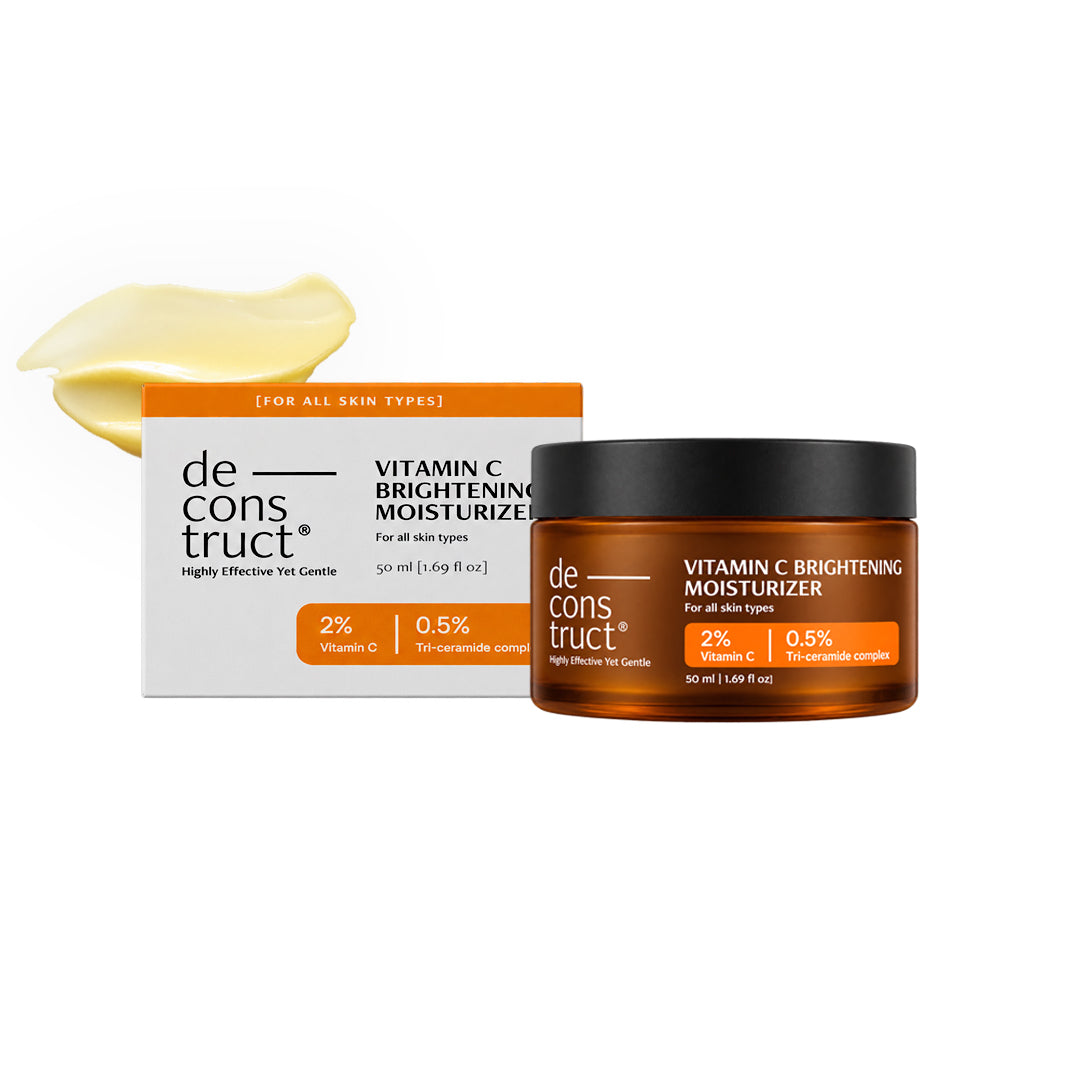
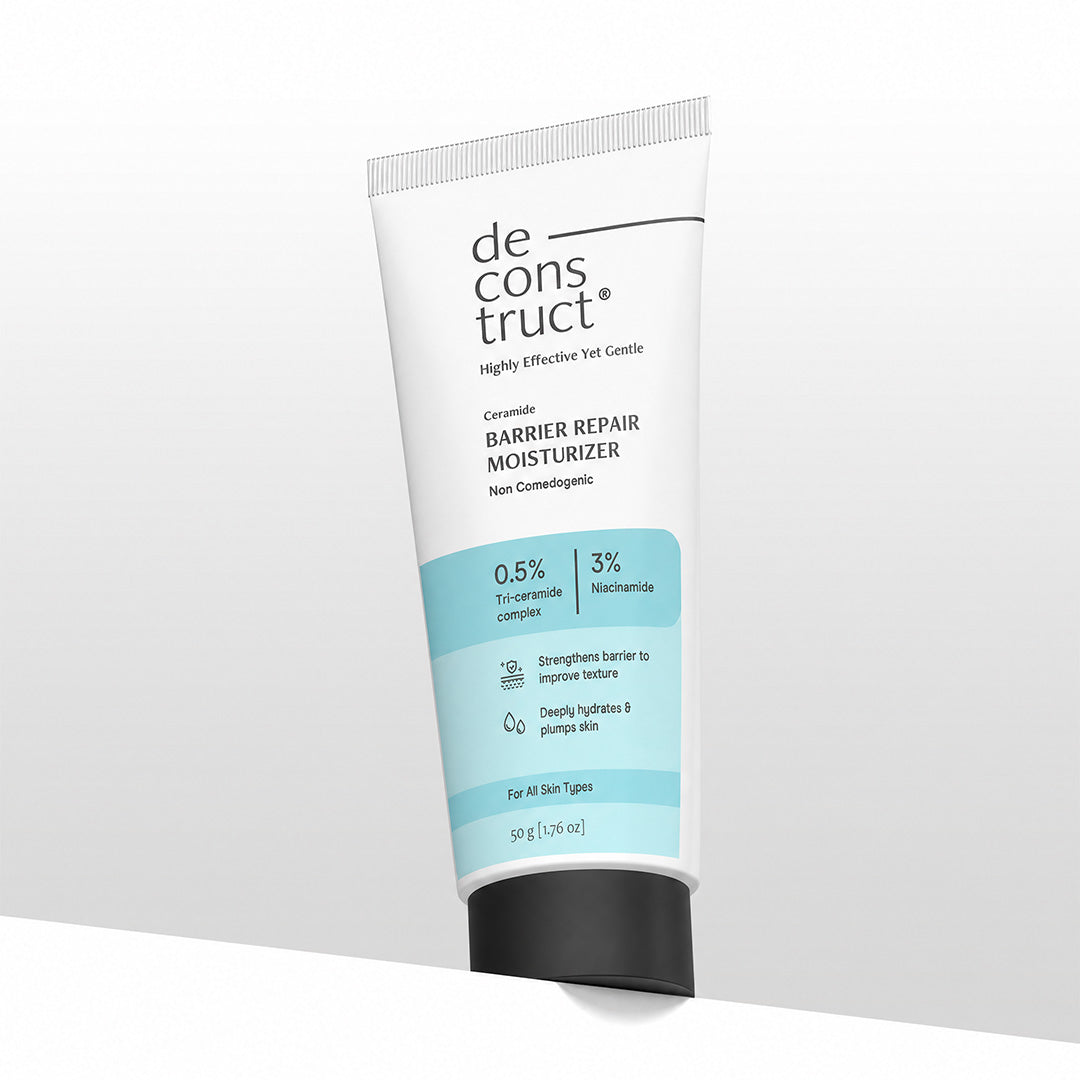
Choose a lightweight, non-comedogenic moisturizer that feels comfortable daily, then keep the rest of your routine simple and consistent. To begin with, Deconstruct has a range of non-comedogenic moisturizers that are formulated specially to cater to Indian skin. Here are a few dermatologist-recommended moisturizers from Deconstruct:
|
Product |
Price |
Availability |
Texture |
Best For |
Strength / Key Actives |
|
Deconstruct Acne Control Moisturiser |
₹399 |
Amazon, Flipkart, Deconstruct website, Nykaa, Blinkit, Zepto, Swiggy Instamart, Myntra, Purplle, Meesho |
Lightweight cream/gel |
Acne control and barrier repair |
Ectoin and Ceramides |
|
Deconstruct Oil‑Free Moisturizer for Oily Skin |
₹349 |
Gel, lightweight |
Oily / acne-prone skin |
3% NMF Complex and 0.2% Panthenol |
|
|
Deconstruct Brightening Face Moisturizer |
₹399 |
Cream |
Brightening / uneven tone |
3% Vitamin C and 1% Kojic Acid Dipalmitate |
|
|
Deconstruct Hyaluronic Acid & Squalane Moisturizer |
₹389 |
Lightweight cream |
Daily hydration for normal-to-combination skin |
0.2% Hyaluronic Acid + 1% Squalane |
|
|
Deconstruct Skin Soothe Moisturizer |
₹379 |
Cushiony cream |
soothing and barrier support for dry / sensitive skin |
1% Ceramide and 0.2% Bisabolol |
|
|
Deconstruct 0.1% Retinol Night Cream |
₹499 |
Rich night cream |
Night repair / anti-aging |
0.1% Retinol + 1% Beta-Glucan Complex |
FAQs
Is a non-comedogenic moisturizer actually better for acne-prone skin?
Often yes, because it is designed to reduce clogging risk and helps you moisturize consistently without feeling heavy.
Can moisturizers really clog pores and cause breakouts?
They can, especially if you’re using rich formulas on skin that clogs easily.
How can I tell if a product is truly non-comedogenic?
There is no universal regulation, so to tell if a product is truly non-comedogenic, check the the label along with the texture and always do a patch test.
Are non-comedogenic products always oil-free?
No. Some oils have a low comedogenicity score and do not necessarily clog pores.
What ingredients should I avoid if I have acne-prone skin?
If you clog easily, be cautious with very rich oils/butters (like coconut oil, cocoa butter) and emollients like isopropyl myristate. These have a high comedogenicity score and can clog your pores.