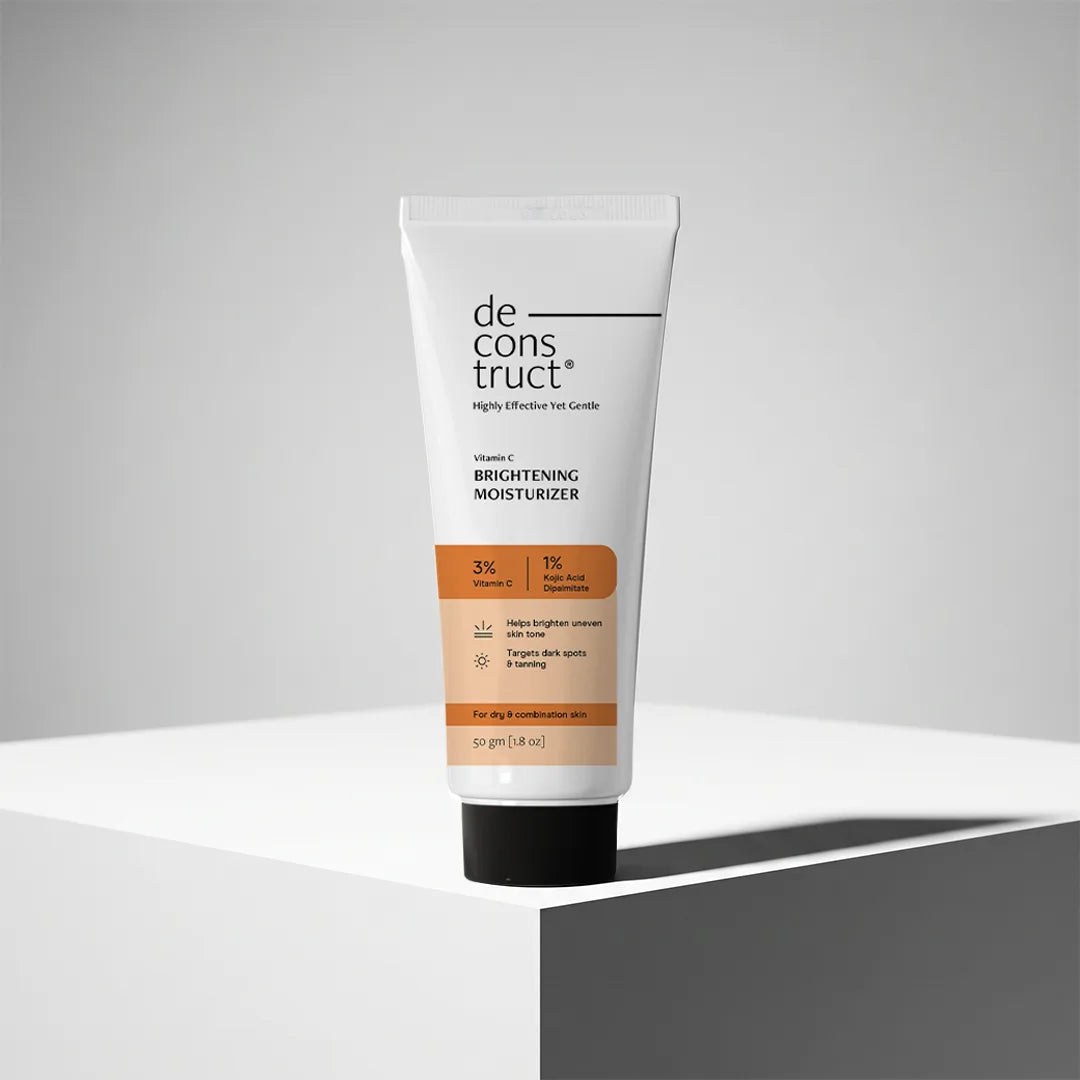

Is lotion the same as moisturizer? It's common to think they are because they both hydrate and soften the skin. The debate over "moisturizer vs body lotion” isn’t exactly new. Many people have been using the two interchangeably too.
In reality, moisturizer is an umbrella term, and lotion is one of its subtypes. Learning the difference between moisturizers and body lotions will help you choose the correct formulation for your skin type, season, and concern.
What is a Moisturizer?
General Definition
Let’s begin by understanding the meaning of a moisturizer. A moisturizer is any topical product designed to hydrate your skin and maintain its moisture balance. It prevents water loss from the skin's superficial layers, protects it from dryness, improves overall texture, and comes in various types, one of which is lotion.
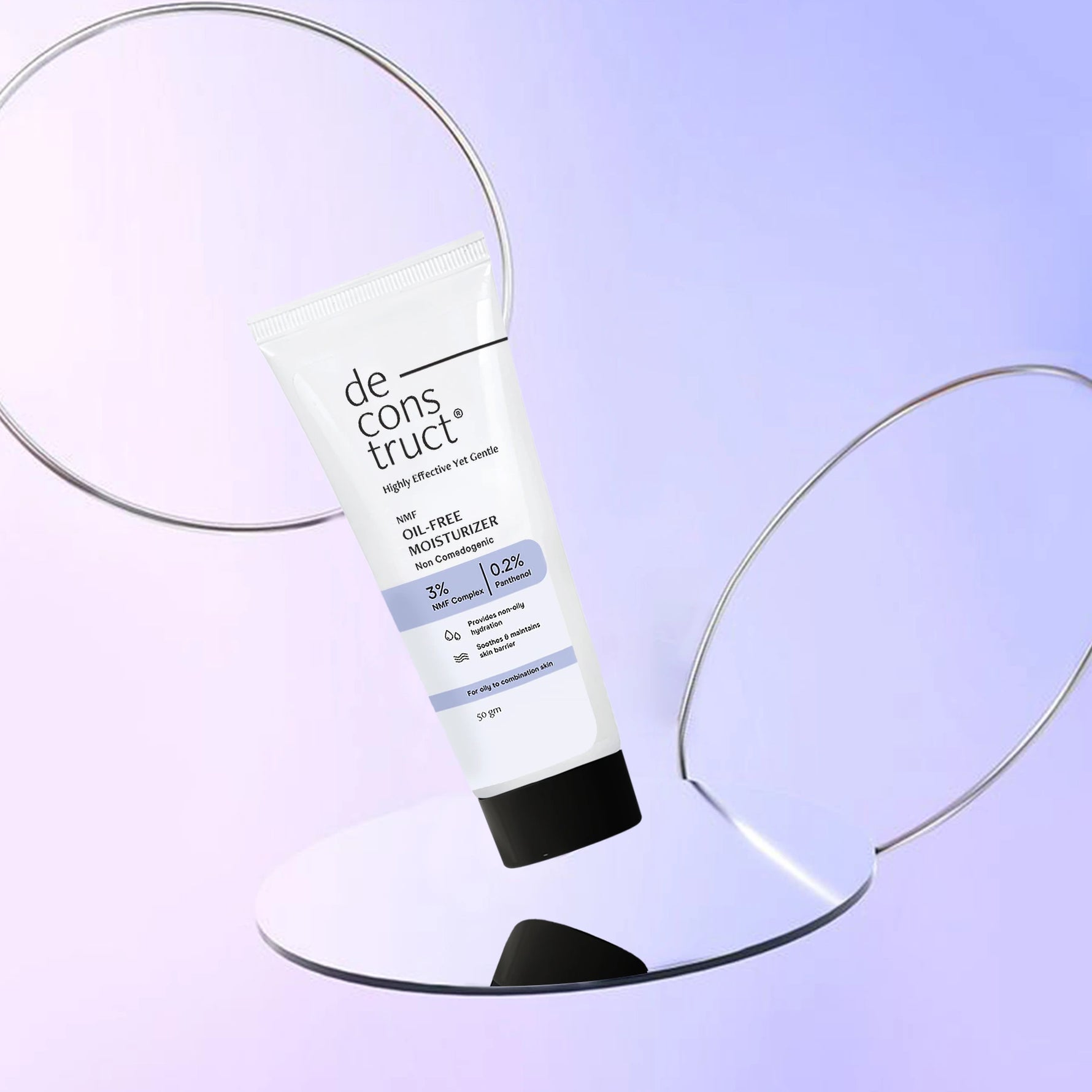
Deconstruct — Oil-free Moisturizer for Oily Skin
Types of moisturizers:
-
Creams → They are thicker formulations, rich in oils, and can be non-greasy to mildly greasy. Thus, suited for dry skin.
-
Lotions → Lotions have a higher water content and thinner consistency than creams. They're on the lighter end of the hydration spectrum, quickly absorbing into your skin and suitable for everyday use.
-
Gels → Gels are incredibly lightweight and often oil-free. Consequently, they work well for oily skin.
-
Ointments → Ointments contain the most oil of all. They are very heavy, almost greasy, and stay on top of your skin. Therefore, suited for severe dryness or medical use.
What is a Body Lotion?
Lotion as a subtype of moisturizer
The “Lotion vs Moisturizer's meaning" has confused skincare users for ages. A body lotion is a subtype of moisturizer. It is specially created for your arms, legs, back, and other body areas. It delivers a quick dose of hydration, prevents superficial moisture loss, and nourishes your skin without leaving a residue or feeling greasy.
Typical formulation & purpose (lighter, higher water content)
Lotions have a high water content and less oil, making them lighter. Typically, it contains:
-
Water – Serves as the base and helps deliver hydration directly into the skin.
-
Lighter Emollients – For the lotion to spread easily and soften your skin. For example, Aloe Vera.
-
Humectants – Attract moisture and retain it, like Hyaluronic acid or Glycerin.
-
Emulsifiers – To create a stable formula
The formulation is designed for everyday use. They're ideal for maintaining skin suppleness post-shower or hydration when your skin does not need intense hydration.
Key Differences Between Moisturizer and Body Lotions

Deconstruct — Detan Sunscreen Body Lotion (4% Niacinamide + 1% Kojic Acid Dipalmitate, SPF 50 PA+++)
Texture and consistency comparison
-
Lotions: Thin, light and fluid for spreading across the body.
-
Creams: Medium-thick, offering rich hydration.
-
Ointments: Dense and heavy. Thus, it sits on top of the skin.
The texture determines how quickly the products absorb into your skin. Lighter, thinner textures absorb easily, leaving no grease behind. Thus, it is comfortable for daytime and humid weather. Thicker textures require considerable time and feel greasy.
Water-to-oil ratio differences
Water-to-oil balance determines where the product sits on the moisturizer spectrum from heavy to light.
-
Lotions – They have higher water content and are on the lighter end of the spectrum.
-
Creams and oils – Although richer and protective, they contain more oil and are heavier.
Intended use cases
-
Lotion: Designed to spread and absorb easily into your body for daily hydration.
-
Creams/ointments: Sits on your skin to create a protective layer. Hence, it is suited for targeted areas, like hands and elbows, or for intensive care in winters and specific medical conditions.
-
Face moisturizers: Moisturizer vs lotion for face is another raging discussion. It's better to use a face moisturizer because it is formulated differently to be non-comedogenic and lighter for delicate facial skin.
Moisturizer vs Body Lotion: Which One Should You Use?
For dry skin
Body lotion vs moisturizer for dry skin? Which works better? A moisturizer.
Creams and ointments which are types of moisturizers, contain more oil and intensely hydrating ingredients that nourish and repair dry, flaky skin. A body lotion may not be sufficient to overcome intense dryness.
For oily/normal skin
Oily skin is at risk of excess oil and acne flare-ups due to clogged pores. Creams and ointments have a thicker consistency. Consequently, they can leave behind residue, take longer to absorb, and can clog your pores.
A lighter lotion or a gel is much better to avoid greasiness and residue. They hydrate your skin without clogging pores or trapping impurities in your skin.
Seasonal considerations (winter vs summer)
-
Winters: Winter skin loses moisture quickly, leading to dryness and flakiness. It requires intense hydration, especially for dehydrated skin. Thus, creams and ointments are better.
-
Summers: High heat and humidity require breathable, hydrating options. Lightweight lotions and gel-based moisturizers work well. They leave behind a non-greasy finish, keeping you comfortable throughout the day.
Quick Comparison Table
Here’s a summary of the moisturizer vs body lotion debate:
|
Feature |
Moisturizer (Cream/Gel/Ointment) |
Body Lotion |
|
Category |
Umbrella term (includes body lotions) |
Subtype of moisturizer |
|
Texture |
Varies from light (gel) to heavy (ointment) |
Light and fluid |
|
Water-to-Oil Ratio |
|
High water and less oil |
|
Best For |
Targeted use (face, hands, dryness) |
Full-body daily hydration (arms, legs, back) |
|
Absorption |
Fast absorbing (gels) to slow, protective layers (ointment) |
Fast-absorbing |
|
Finish |
Can be rich and greasy or matte |
Smooth, lightweight, and non-greasy |
|
Ideal Season |
Winter, dry climates |
Summer, humid weather |
Final Thoughts: Understanding Your Products
So, is lotion the same as moisturizer? No.
Moisturizers come in many forms, and lotion is one of them. Moisturizers like cream and ointment contain a higher oil percentage than lotions. The former is much more suited for skin repair and protection, while the latter fulfills your body’s daily hydration without feeling greasy.
The key is to understand your product better and see how it adds to your skincare routine!
FAQS
How often should I apply moisturizer or body lotion?
Apply at least twice daily. Once after the shower and again before bedtime.
Can I use face moisturizer on my body?
Yes, but it is not as effective. Body lotions are formulated for larger areas and absorb better into the body's skin.
How do I choose the right moisturizer or body lotion for sensitive skin?
Look for fragrance-free, hypoallergenic, and pH-balanced formulas with soothing ingredients like Niacinamide or Panthenol.
Is body lotion the same as moisturizer?
Body lotion is a type of moisturizer. Other types of moisturizers are creams, ointments, and gels.
Can I use body lotion on my face?
Avoid it. Body lotion may contain heavier emollients compared to a facial moisturizer, which may clog your pores and irritate your skin.
Is lotion good for oily skin?
Yes, as long as it is oil-free and non-comedogenic.