
Finding the right moisturizer for oily skin with dark spots can be challenging. Excess oil, clogged pores and acne can leave behind dark marks, while heavy moisturizers may feel greasy or uncomfortable on oily skin. This often leads people to skip moisturizer altogether.
However, oily skin still needs hydration. A suitable moisturizer helps maintain the skin barrier and keeps the skin comfortable without adding an unnecessarily heavy layer to your routine. If you also have post-acne marks or uneven skin tone, choosing a moisturizer with appropriate brightening ingredients may help address these concerns.
The best moisturizer for oily skin with dark spots is one that provides lightweight hydration, suits your skin type and contains ingredients that may help improve the appearance of uneven skin tone. Daily sunscreen use is equally important because UV exposure can darken existing pigmentation.
In this guide, we'll explain why oily skin develops dark spots, which moisturizer ingredients to look for, and how to build a simple skincare routine for oily and acne-prone skin.
Why Does Oily Skin Develop Dark Spots?
Oily skin is often associated with clogged pores and acne. When a breakout causes inflammation, the skin may produce excess melanin, the pigment responsible for skin colour. This can lead to post-inflammatory hyperpigmentation (PIH), which appears as flat brown or dark marks after acne heals.
Several factors can contribute to dark spots on oily and acne-prone skin.
1. Excess Oil and Acne
Excess sebum can combine with dead skin cells and contribute to clogged pores. When these clogged pores develop into inflamed acne, the resulting inflammation can trigger pigmentation that remains after the breakout has healed.
2. Post-Inflammatory Hyperpigmentation
Post-inflammatory hyperpigmentation occurs when inflammation stimulates pigment production in the skin. It can affect different skin types and may be particularly noticeable in people prone to pigmentation.
Unlike indented or raised acne scars, PIH usually appears as flat discoloured marks. These marks may gradually fade, although the process can take time.
3. Picking or Squeezing Acne
Picking, squeezing or repeatedly irritating breakouts can increase inflammation and the risk of dark marks and scarring. Avoiding unnecessary irritation can help reduce the likelihood of new post-acne marks.
4. Sun Exposure
UV exposure can darken existing pigmentation and make post-acne marks more noticeable. This is why sunscreen is an essential part of a skincare routine for oily skin with dark spots.
If you prefer lightweight textures, consider a gel sunscreen such as Deconstruct Vitamin C Gel Sunscreen, subject to your skin's needs and the product's current formulation.
What Should You Look for in a Moisturizer for Oily Skin with Dark Spots?
When choosing a moisturizer, focus on two priorities: maintaining hydration without an excessively greasy finish and selecting suitable ingredients to help improve the appearance of uneven skin tone.
1. Choose a Lightweight, Oil-Free Moisturizer
Gel-based moisturizers and lightweight lotions can feel comfortable on oily skin, particularly if you dislike heavy or greasy products.
- Lightweight texture: Gel or lotion formulas may feel less heavy on oily skin.
- Oil-free formulation: This may suit people who prefer a less greasy finish, although oil-free does not automatically mean non-comedogenic.
- Non-comedogenic labelling: Consider this if clogged pores are a concern, while remembering that individual skin responses vary.
- Comfortable hydration: Your moisturizer should leave your skin feeling comfortable rather than tight, dry or excessively greasy.
If you have both oily and dehydrated skin, you may benefit from a lightweight moisturizer that helps maintain moisture without feeling heavy.
2. Look for Ingredients That Support Hydration
A moisturizer can contain humectants, emollients and occlusives, which support hydration in different ways.
- Glycerin: A humectant that attracts water to help hydrate the skin.
- Panthenol: Helps condition the skin and support skin comfort.
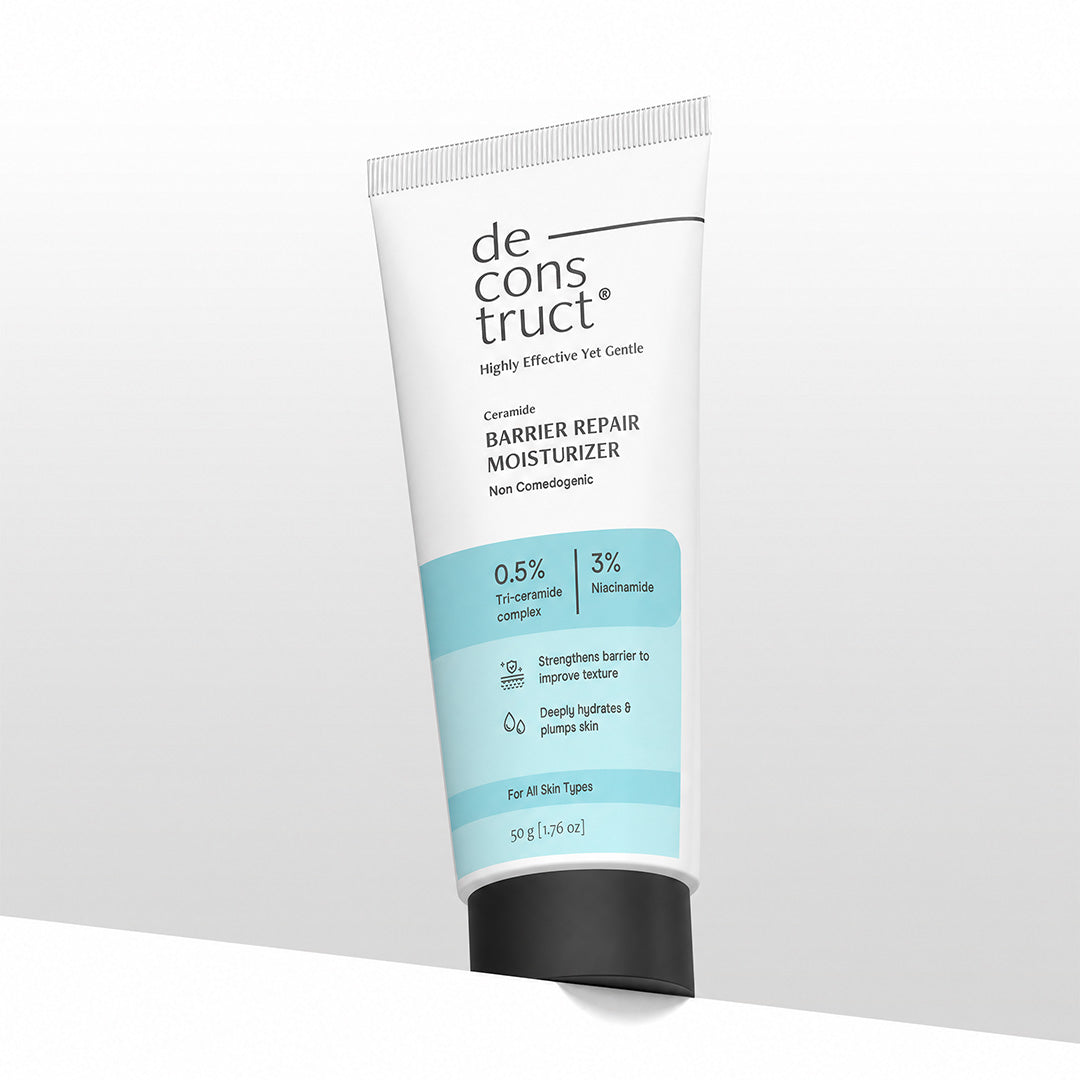
- Ceramides: Help maintain the skin barrier and reduce moisture loss.
- Natural Moisturizing Factor (NMF) components: Help attract and retain water in the outermost layer of the skin.
The complete formulation determines how a moisturizer feels and performs. You do not need every hydrating ingredient in one product.
Read our related guide to humectants, emollients and occlusives to understand how different moisturizing ingredients work.
3. Consider Ingredients That Help Improve the Appearance of Dark Spots
If post-acne marks and uneven skin tone are your main concerns, look for ingredients formulated to address pigmentation.
Niacinamide
Niacinamide may help improve the appearance of uneven skin tone, support the skin barrier and reduce the appearance of excess oil. It can be a useful ingredient for people managing both oily skin and post-acne marks.
Vitamin C
Vitamin C is an antioxidant that may help improve the appearance of dullness, dark spots and uneven skin tone with consistent use. Its effects depend on the concentration, formulation and stability of the product.
Alpha Arbutin
Alpha arbutin is used in some skincare formulations designed to improve the appearance of uneven pigmentation.
Kojic Acid
Kojic acid is another ingredient used in brightening formulations to help address the appearance of dark spots and uneven skin tone.
These ingredients are not interchangeable, and using more actives does not necessarily produce better results. Their effectiveness depends on the formulation, consistent use and individual skin response.
For more information, explore our guides on how niacinamide can help fade dark spots and ingredients that help improve the appearance of dark spots.
Can a Moisturizer Fade Dark Spots on Oily Skin?
Yes, a moisturizer containing suitable brightening ingredients may help improve the appearance of dark spots over time. However, the results depend on the ingredients, their formulation and how consistently you use the product.
A basic moisturizer primarily hydrates the skin and supports the skin barrier. Although hydration is important for healthy-looking skin, it does not automatically fade pigmentation.
A moisturizer formulated with ingredients such as niacinamide or vitamin C may provide additional benefits for uneven skin tone. However, a moisturizer alone may not be sufficient for persistent pigmentation or active acne.
It is also important to distinguish between post-acne marks and acne scars. Flat brown or dark marks may gradually fade, while indented or raised scars often require a different treatment approach.
Remember: Moisturizer supports hydration, targeted ingredients may help improve the appearance of pigmentation, and sunscreen helps prevent further UV-related darkening.
Which Deconstruct Moisturizer Can You Consider for Oily Skin with Dark Spots?
If you have oily skin and are concerned about dark spots, consider a moisturizer that combines hydration with ingredients formulated to improve the appearance of uneven skin tone.
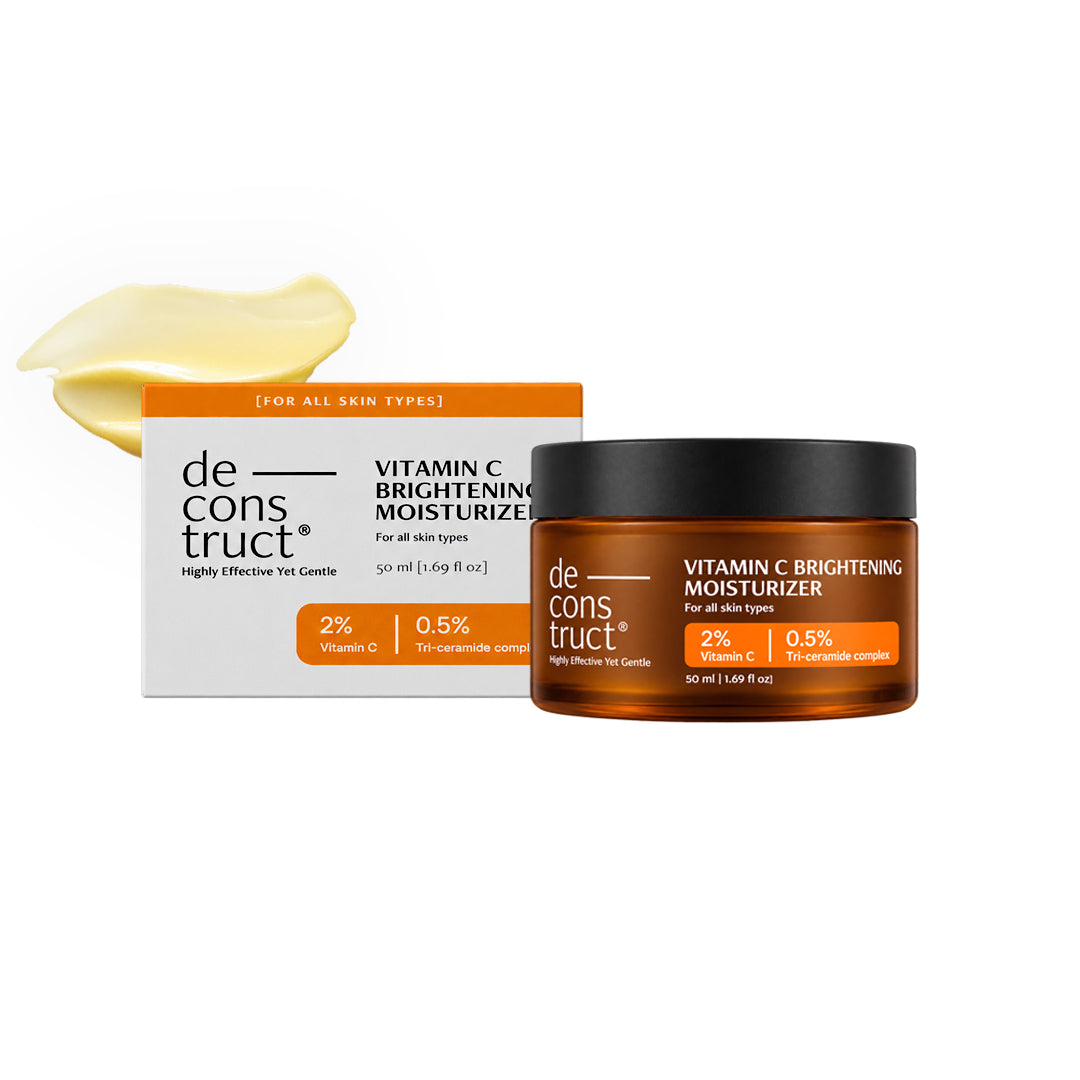
Deconstruct Brightening Moisturizer
The Deconstruct Brightening Moisturizer is an option to explore if you want to combine moisturization with brightening-focused skincare.
When evaluating this product, check its current ingredient list and product label for the exact active ingredients and concentrations.
A moisturizer can fit into your routine in several ways:
- Hydration: Helps maintain skin moisture and support the skin barrier.
- Brightening support: Suitable ingredients may help improve the appearance of dark spots and uneven skin tone.
- Skin comfort: A suitable formulation can help keep the skin feeling soft without an excessively greasy finish.
- Routine compatibility: A moisturizer can be used alongside a gentle cleanser, a suitable targeted serum and sunscreen.
Choose the product based on its actual formulation and how well it suits your skin. Avoid relying on the product name or marketing claims alone.
Pair Your Moisturizer with Sunscreen
Daily sun protection is important when managing post-acne marks and uneven skin tone. UV exposure can darken existing pigmentation, making consistent sunscreen use an essential part of your routine.
Consider Deconstruct Vitamin C Gel Sunscreen if its texture and formulation suit your skin. Alternatively, explore our guide on choosing the right sunscreen for your skin type in India.
Choose a broad-spectrum sunscreen with an appropriate SPF and UVA protection rating, apply it according to the product instructions, and reapply as directed.
How to Build a Skincare Routine for Oily Skin with Dark Spots
A consistent skincare routine can help manage excess oil, maintain hydration and improve the appearance of post-acne marks. You do not need to introduce several active ingredients at once.
Morning Skincare Routine
- Cleanse: Use a gentle face wash suited to oily skin to remove excess oil, sweat and impurities.
- Apply a serum, if needed: Consider a suitable brightening serum, such as Deconstruct Vitamin C and Ferulic Acid Serum, if it suits your skin and your routine.
- Moisturize: Apply a lightweight moisturizer to maintain hydration and support the skin barrier.
- Apply sunscreen: Finish with a broad-spectrum sunscreen. Choose an appropriate SPF and UVA protection rating, apply enough product and reapply according to the instructions.
Night Skincare Routine
- Cleanse: Gently remove sunscreen, dirt, sweat and excess oil.
- Apply a targeted treatment, if needed: Use a suitable product for acne or uneven skin tone, depending on your skin's tolerance.
- Moisturize: Finish with a moisturizer to maintain hydration and support the skin barrier overnight.
Introduce new active ingredients gradually, particularly if you have sensitive skin. Excessive irritation can make post-acne marks more noticeable.
For more guidance on targeted skincare ingredients, read our article on niacinamide serum for oily skin.
Common Moisturizer Mistakes to Avoid When You Have Oily Skin and Dark Spots
- Skipping moisturizer: Oily skin still needs hydration to maintain a healthy skin barrier.
- Choosing products based only on brightening claims: Consider the full ingredient list, formulation and suitability for your skin.
- Overusing exfoliating acids or active ingredients: Excessive irritation can worsen discomfort and contribute to post-inflammatory pigmentation.
- Picking or squeezing acne: This can increase inflammation and the risk of post-acne marks and scarring.
- Skipping sunscreen: UV exposure can darken existing pigmentation and make marks more noticeable.
- Expecting moisturizer alone to resolve every type of pigmentation: Persistent pigmentation may require targeted treatment or professional advice.
A consistent, gentle routine is generally more useful than frequently switching products or introducing too many active ingredients at once.
Frequently Asked Questions
1. Which moisturizer is best for oily skin with dark spots?
The best moisturizer for oily skin with dark spots is one that provides adequate hydration without feeling heavy or greasy. Consider a lightweight gel or lotion and ingredients such as niacinamide or vitamin C if uneven skin tone is a concern. The complete formulation and your skin's individual tolerance also matter.
2. Can moisturizer help fade dark spots?
Yes, a moisturizer containing suitable brightening ingredients may help improve the appearance of dark spots over time. A basic moisturizer primarily hydrates the skin and supports the skin barrier. Consistent sunscreen use is also important to help prevent dark spots from becoming darker.
3. Should oily skin use moisturizer every day?
Yes. Oily skin can still become dehydrated and benefits from regular moisturization. Choose a lightweight formula that suits your skin and helps maintain the skin barrier. Dehydration does not necessarily cause the sebaceous glands to produce more oil, so excess oil should not automatically be attributed to a lack of hydration.
4. Which ingredients help with dark spots on oily skin?
Niacinamide, vitamin C, alpha arbutin and kojic acid are used in skincare formulations to help improve the appearance of uneven skin tone and dark spots. Their effects depend on the formulation, concentration, consistent use and individual skin response. Daily sunscreen use helps prevent further UV-related darkening.
5. Is an oil-free moisturizer better for acne-prone skin?
An oil-free moisturizer may suit people who prefer a less greasy finish, but oil-free does not automatically mean non-comedogenic. If you are prone to clogged pores, consider a lightweight product labelled non-comedogenic and observe how your skin responds.
6. How long does it take for dark spots to fade?
The time required for dark spots to fade varies depending on the depth and cause of pigmentation, skin type and treatment routine. Some post-acne marks gradually fade over time, while others may persist for months or longer. Consistent sun protection and suitable skincare can help, but persistent pigmentation may require advice from a dermatologist.
Final Verdict
The best moisturizer for oily skin with dark spots is one that provides adequate hydration without leaving your skin feeling heavy or uncomfortable. Choose a lightweight formula that suits your skin type, and consider ingredients such as niacinamide or vitamin C to help improve the appearance of uneven skin tone over time.
Pair your moisturizer with a suitable serum if needed and a broad-spectrum sunscreen during the day. Sunscreen helps protect your skin from UV exposure that can darken existing pigmentation.
Most importantly, remember that hydration and pigmentation are different concerns. A moisturizer supports your skin barrier, targeted ingredients may help improve the appearance of dark spots, and sunscreen helps prevent further UV-related darkening.
For a more complete skincare routine, explore Deconstruct's moisturizers and sunscreens to find products that suit your skin type and skincare priorities.