

We’re often so worried about how sun damage can affect our skin. But our lips? They’re often neglected and ignored when it comes to SPF protection, despite being one of the most exposed and vulnerable to UV damage. Living in the harsh and humid Indian climate, especially tropical cities like Chennai, Kerala and Maharashtra, you’ve already seen the effects of UV damage - excessively dry or chapped lips if you spend too much time outdoors. And your lips are more vulnerable to sunburn, dryness and long-term damage.
That’s why using a lip balm for sun protection is not optional,it is essential. In this article, we help you understand why it’s so important that your lips get SPF protection, too.
Why Are Lips More Vulnerable to Sun Damage?
Lack of Melanin in Lips
-
Lips have less natural UV protection as they contain less melanin, the skin’s natural defence against UV, than the rest of your skin. This makes them more susceptible to UV damage.
Thin Skin Barrier
-
The skin barrier on your lips are much more fragile and thinner than the rest of the skin on your body. This makes it much easier for UV rays to penetrate and damage your lips.
-
Your skin contains 15-16 layers, whereas your lips, only 3-6. This makes them highly prone to burns and dehydration
Risks of Sun Exposure on Lips
-
Your lips are at higher risks for the harmful effects of UV, being
-
Sunburn
-
Hyperpigmentation and darkened lips
-
Premature ageing, fine lines and wrinkles
What Is SPF Lip Balm and How Does It Work?
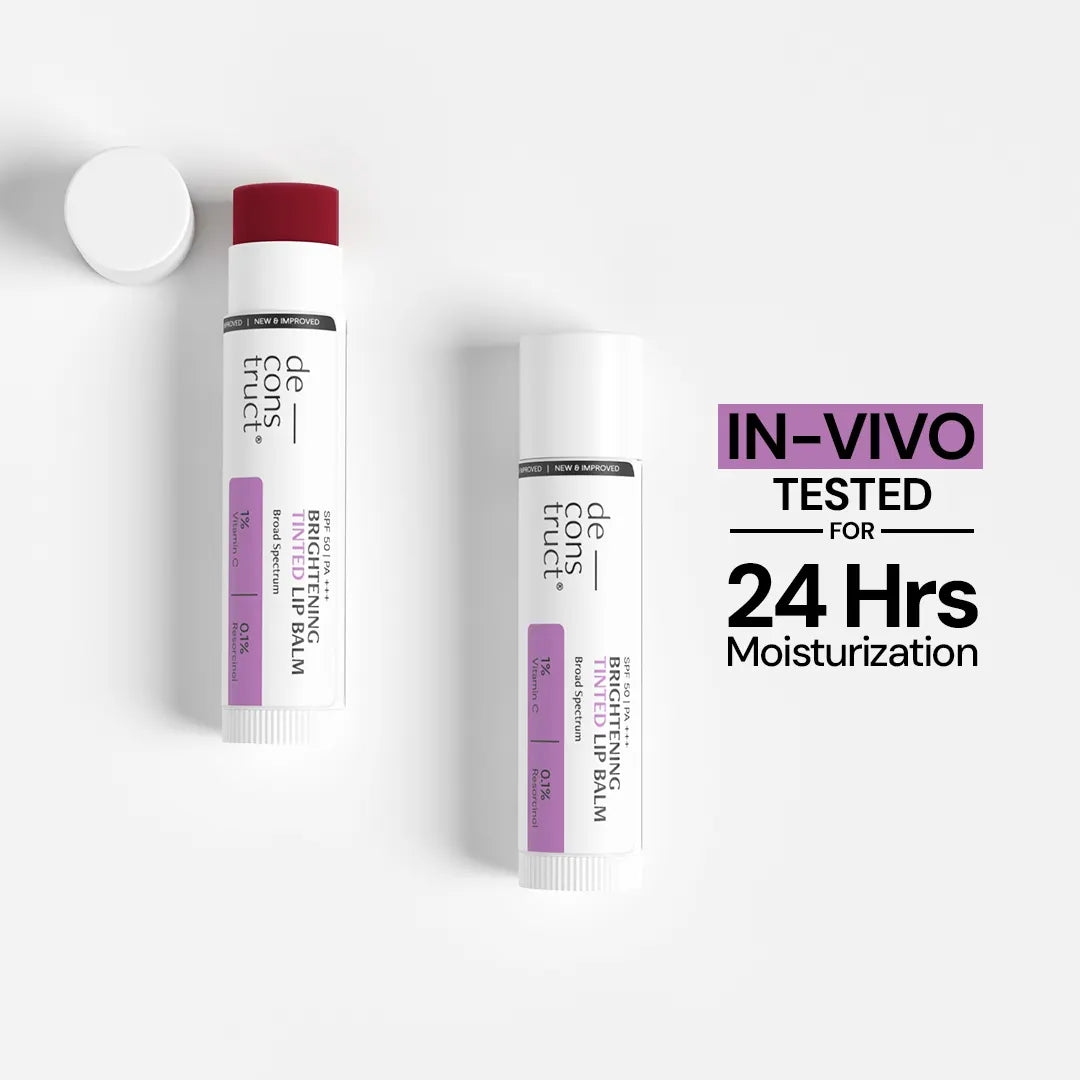
Deconstruct — Brightening Tinted Lip Balm Combo (SPF 30)
A SPF lip balm is one that does not just provide basic hydration, but also offers protection against UV damage.
Understanding SPF in Lip Care
Let’s break down SPF in lipcare
Sun Protection Factor (SPF) measures how much protection your skin gets against primarily UVB rays, which cause immediate sunburn, tanning. SPF acts as a protective barrier over your lips that either reflects or absorbs UV rays, protecting your lips.
SPF 30 blocks approximately 97% of UVB rays
SPF 50 blocks approximately 98% of UVA rays.
Dermatologists recommend a minimum of SPF 30, ideal for daily use and SPF 50 for prolonged sun exposure
Physical vs Chemical UV Filters
-
Physical (mineral) filters like Zinc Oxide, sit over your skin and reflect harmful UV rays, minimising damage
-
Chemical filters (Avobenzone) act more like a sponge, than a shield, absorb UV rays, undergoing chemical reactions, and converting them into harmless heat and releases it from your skin
Benefits of Using Lip Balm with SPF Daily
Here is how using a lip balm with SPF daily will benefit your lips
Prevents Sunburn & Chapping
Harmful effects of UV include
-
Excessive dryness and chapping
-
Immediate and long term sunburn
Using an SPF lip balm will help prevent these and protect long-term lip health
Reduces Risk of Skin Damage
Your lips are much more prone to damage than the skin on your body. UV rays cause
-
Premature ageing, fine lines and wrinkles
-
Pigmentation and dark spots
Choosing a lip balm with SPF helps prevent long term skin damage.
Keeps Lips Hydrated and Healthy
SPF lip balms also contain hydrating ingredients such as
-
Murumuru butter
-
Hyaluronic acid
These ingredients not only provide deep hydration to prevent dryness due to sun exposure, but also nourishes your lips, acting as yet another benefit of SPF lip balms for your lips.
How to Choose the Best Lip Balm for Sun Protection
If you’re a skincare beginner, looking to choose the right lip balm for your lips, follow a dermatologist approved- guide on what exactly to look out for in an SPF lip balm
Recommended SPF Level (SPF 15 vs SPF 30+)
SPF 15: Is effective for minimal and short term UV exposure
Dermatologists recommend that you use a lip balm with SPF 30, minimum, as the ideal choice for daily use for effective UV protection.
Ingredients to Look For
Keep an eye out for these ingredients in an SPF lip balm for optimal protection for your lips against UV damage
-
Vitamin C: Antioxidant support + protection against environmental damage (UV, Pollution) with brightening properties
-
Vitamin E: Provides antioxidant support + anti-inflammatory properties, soothing and restoring hydration in the lips while also accelerating cell regeneration
-
Murumuru butter : Penetrates deeper than any other ingredients, deeply hydrating + repairs skin barrier
-
Resorcinol: A proven brightening agent that fades pigmentation, dark spots and actively brightens your lips while targeting discolouration due to sun-induced damage
Ingredients to Avoid
Here’s what NOT to look for in an SPF lip balm
-
Fragrances (Artificial/ Synthetic)
-
Drying alcohols
When and How to Apply SPF Lip Balm

Deconstruct — Brightening Lip Balm Combo (SPF)
Learning how and when to apply your SPF lip balm can determine how much your lips are protected from the harmful effects of UV.
Frequency of Application
How often you reapply highly determines how effective your SPF lip balm is in protecting you against UV damage.
-
People think that if you apply once, it’s good to go for the entire day, which is far from the truth.
-
Dermatologists recommend that you reapply your SPF lip balm every 2-3 hours for ideal protection.
Situations You Must Use It
Living in India, the sun is harsh almost throughout the year and especially during summer. Here’s when you shouldn’t forget to apply your SPF lip balm
-
Beach days, hiking, outdoor activities
-
Daily commutes under sun exposure
-
Working out outdoors
Common Mistakes People Make with Lip Sun Protection
-
Not reapplying enough
-
Using low SPF, especially if you’re exposed to direct sun exposure during your day
-
Ignoring SPF on cloudy days. UV rays, especially UVA rays penetrate cloud cover, making it an essential even on cloudy days.
Avoiding these mistakes, that are more common than you think, will help you garner all the benefits of a SPF lip balm for your lips.
Natural vs Chemical SPF Lip Balms: Which Is Better?
| Feature | Natural (Mineral) SPF Lip Balms | Chemical SPF Lip Balms |
|---|---|---|
| UV Filter Type | Mineral filters (e.g., zinc oxide) | Chemical filters (e.g., avobenzone) |
| Skin Sensitivity | Gentle, ideal for sensitive lips | May irritate sensitive skin |
| Finish | Slightly thicker, may leave a mild cast | Lightweight, invisible finish |
| Daily Wear Comfort | Moderate | High (more comfortable for frequent use) |
| Protection Mechanism | Reflects UV rays | Absorbs UV rays, converts them into harmless heat |
| Best For | Sensitive skin, minimal irritation | Everyday wear, outdoor activities, seamless application |
In fact, modern mineral sunscreens are now formulated to be even more lightweight and hydrating, so the “gap” when it comes to daily comfort is much closer than ever.
Final Thoughts: Make SPF Lip Balm a Daily Habit
From daily commutes to work, to weekend outings, your lips are constantly exposed to UV rays. Understanding the benefits of a lip balm with added SPF is crucial to protect them from dryness, chapping, sunburn, pigmentation and long-term effects of sun damage.
Using a SPF lip balm can be the most simple yet effective way to ensure your lips are always protected, while ensuring nourishment and hydration at the same time. That’s where formulations like Deconstruct’s Brightening SPF lip balm come in handy. Formulated with SPF 50, they are ideal for daily protection against the Indian sun.
Their lightweight formula with brightening ingredients like Vitamin C + Resorcinol help treat pigmentation, fade dark spots as well as improve overall lip health over time.
Adding an SPF lip balm to your skincare routine is a small step, yet one that makes a visible difference over time. And it’s not just an upgrade, but a necessity.
FAQs
Q1. Do lip balms actually protect your lips from the sun?
Yes,but only if they are formulated with SPF. Regular lip balms only hydrate but cannot block UV rays unless they contain SPF.
Q2. Can using a lip balm with SPF reduce pigmentation?
Using an SPF lip balm consistently is proven to reduce signs of UV- induced pigmentation in the lips, fade dark spots and uneven skin tone. Look out for brightening ingredients such as Vitamin C + resorcinol
Q3. What is the difference between SPF 30 and SPF 50 lip balm?
SPF 30 blocks out approximately 97% of UVB
SPF 50 blocks out approximately 98% of UVB rays
Dermatologists ideally recommend a lip balm with SPF 50 for anyone who spends prolonged periods of time outdoors or under sun exposure.
Q4. Is mineral SPF lip balms better than chemical SPF lip balms?
Mineral (physical) lip balms are more gentle and generally more ideal for sensitive skin while chemical SPF lip balms are lighter and more invisible on the lips