
If you have been someone who has smoked cigarettes for a long time, you are already aware why those lips have turned dark. Smoking-related lip pigmentation holds a lot of confusion around it. While some might claim lip pigmentation is permanent, others say it can be removed completely. But in the end, nobody likes dark pigmented lips.
Research suggests that genuine depigmentation is actually not difficult. In this article, we will simplify the key points for a clear understanding of what actually happens around smoker lips and the recovery process post quitting.
Can Smoker Lips Go Back to Their Natural Color After Quitting?
Yes, it can actually go back to the lips' natural shade. Pigmentation around the lips when someone regularly smokes happens due to something we know as smoker’s melanosis. Cigarettes contain tobacco, nicotine and other substances which cause chemical reactions on the vermillion (outer layer of the lips) and trigger the melanocytes for melanin production. Heat from cigarettes and sun exposure further dehydrates the skin and causes oxidative stress. (PubMed)
When you quit smoking, the melanocytes are not being triggered constantly. What helps further is protecting the lips against sun damage and water loss. Now the easy solution for that bit is using an SPF lip balm.
It is worth mentioning that the amount and duration of smoking also plays a role in how long it will take before the lip pigmentation begins to fade. (PubMed)
In short: yes, smoking-related pigmentation can fade after quitting, but how much fades and how fast varies by person and it shouldn't be treated as a fixed, guaranteed timeline.
How Long Does It Take for Smoker Lips to Recover?
This is really the question you came here for, so let's walk through it honestly rather than promising exact milestones that don't hold up for everyone.
First few months: the smoking trigger is gone, which matters, but don't expect pigmentation to visibly disappear this early. What often improves sooner is dryness and irritation, if smoking was contributing to that, those changes tend to show up before pigmentation does.
Several months in: pigmentation may start becoming gradually less noticeable for some people. This stage varies enormously from one person to the next, there's no single script everyone follows.
Around one to three years: this is where the research gets more specific. A large epidemiological study reported pigmentation declining toward levels seen in people who never used tobacco, roughly three years after cessation. (PubMed)
A separate, more quantitative study found a real relationship between how much gingival pigmentation faded and how long someone had been smoke-free, longer cessation, more fading. (PMC)
One important qualification, worth sitting with: these studies primarily looked at oral and gingival pigmentation, not a standardized "lip recovery clock" that's been specifically measured and validated. So the three-year figure is genuine evidence about smoking-related oral pigmentation broadly, it isn't a promise that your specific lips will fully recover by year three. Treat it as a realistic reference point, not a deadline.
Why Does Lip Pigmentation Take So Long to Fade?
Smoking stimulates melanocytes, the cells responsible for producing melanin, which is what drives the pigmentation in the first place. Quitting removes that ongoing stimulation, but existing pigment doesn't just vanish the moment the trigger stops. It fades gradually as your skin and mucosal tissue naturally turn over, a process that's influenced by your own individual biology as much as by how long you smoked.
What Determines How Quickly Smoker Lips Recover?
Duration of smoking: Longer exposure tends to be associated with more established, deeper-set pigmentation, which generally takes longer to fade.
Smoking intensity: How much and how often someone smoked plays a role too, not just how many years it lasted.
Baseline lip pigmentation: Naturally pigmented lips won't necessarily lighten past their own natural baseline, recovery brings you back toward your original color, not past it.
Sun exposure: UV exposure can add its own pigmentation on top of whatever's smoking-related and can genuinely slow progress toward a more even appearance.
Individual biology: Pigmentation responses vary from person to person for reasons that aren't always fully explained.
Other causes of dark lips: Medications, chronic irritation, inflammation and other factors can all contribute alongside smoking, sometimes making it hard to isolate exactly what's driving the pigmentation you're seeing.
Research has consistently found smoking-related pigmentation to correlate with smoking exposure and greater improvement tends to show up with longer periods of cessation. (PubMed)
What Happens to Your Lips After You Quit Smoking?
A few things shift, though not all at the same pace. Less ongoing exposure means no more continued tobacco contact, an immediate change the moment you quit. Dryness and irritation often improve relatively early, particularly if smoking itself was contributing to that discomfort. Pigment changes happen far more gradually, this is the slow-moving part of the process. And your natural lip color stays exactly what it always was, quitting doesn't erase genetically determined pigmentation, it just stops adding to what's on top of it.
Worth separating clearly: improved lip health and fading pigmentation are two different processes running on two different timelines, one tends to happen sooner, the other takes real patience.
How to Support Lip Recovery After Quitting Smoking
Morning:
Apply a thick layer of The Deconstruct Brightening Lip Balm with SPF 50 to protect against UV exposure, this matters more during recovery than people expect.
During the Day:
Reapply after eating, drinking, sweating or extended time outdoors.
Night:
Apply a thick layer of The Deconstruct Lip Sleeping Mask formulated with peptides and collagen which repairs the lips and supports overnight moisturization and keeps the lips hydrated.
Note: Lifestyle changes also matter. If you have quit or made the mind of quitting, stay smoke-free, avoid lip licking, skip aggressive scrubbing, resist picking at peeling skin and generally limit unnecessary irritation while your lips are recovering.
Key point: a good lip-care routine supports hydration and protects against further damage, but it doesn't replace the actual act of quitting, that's still the most important step in this entire process, no product changes that.
Product Recommendation
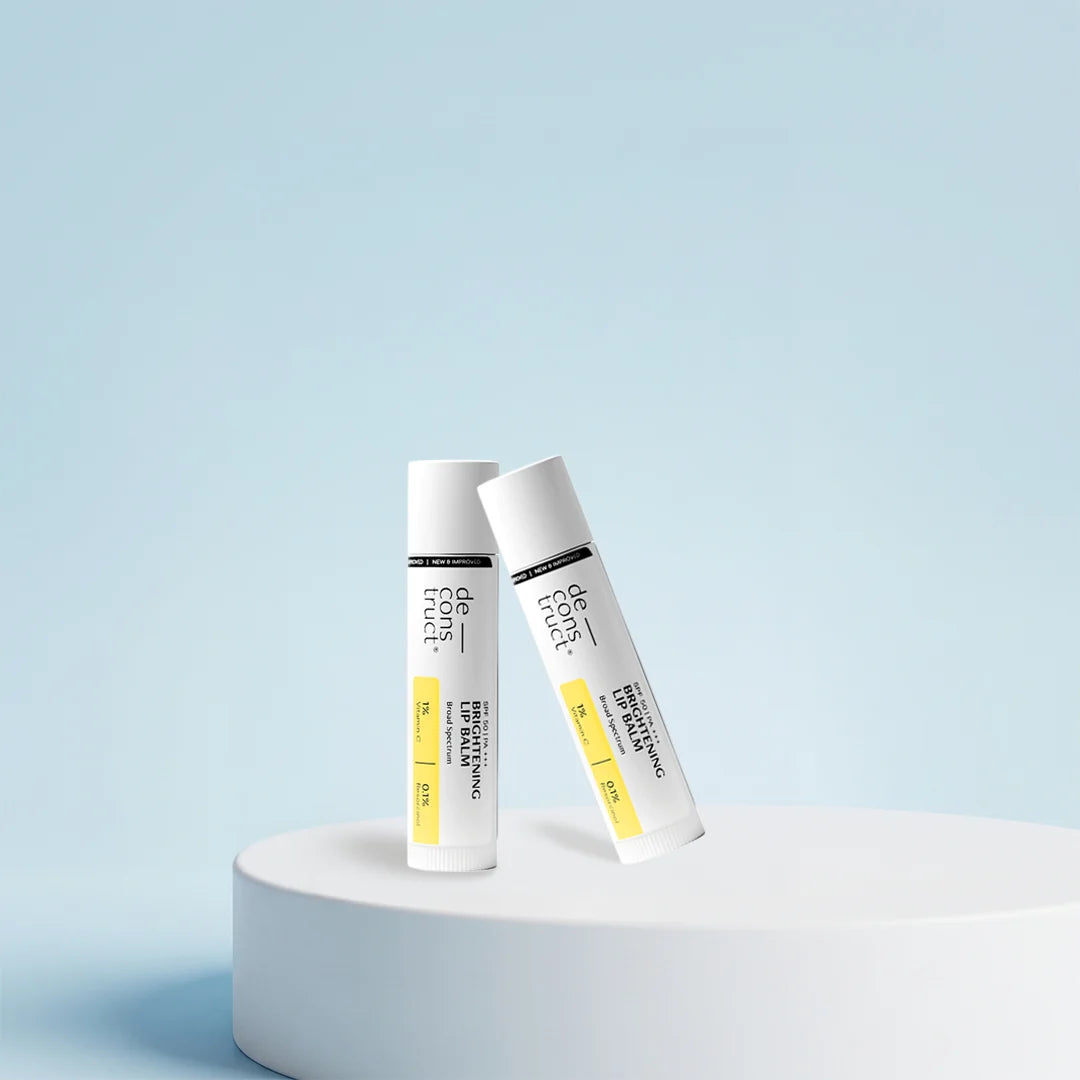
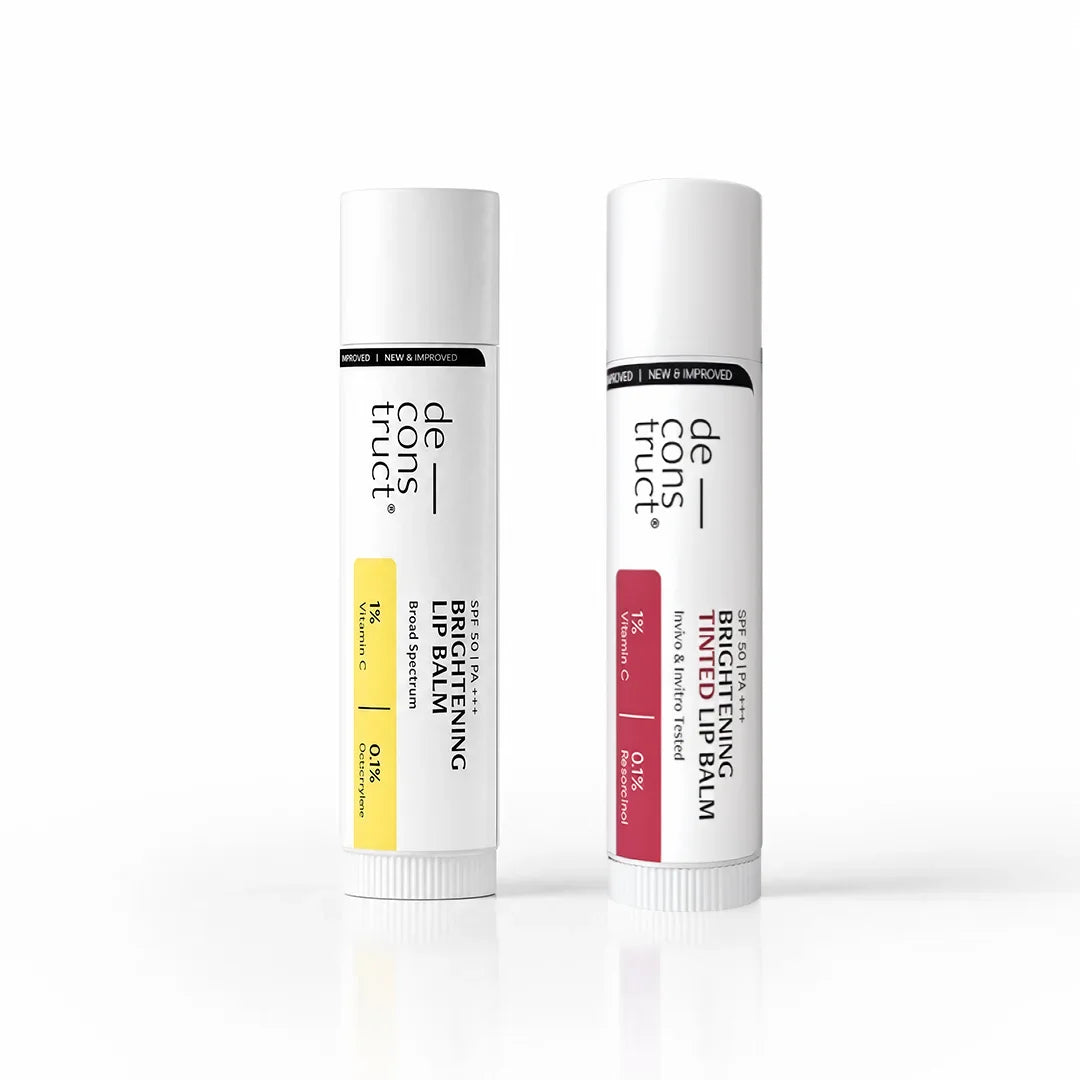
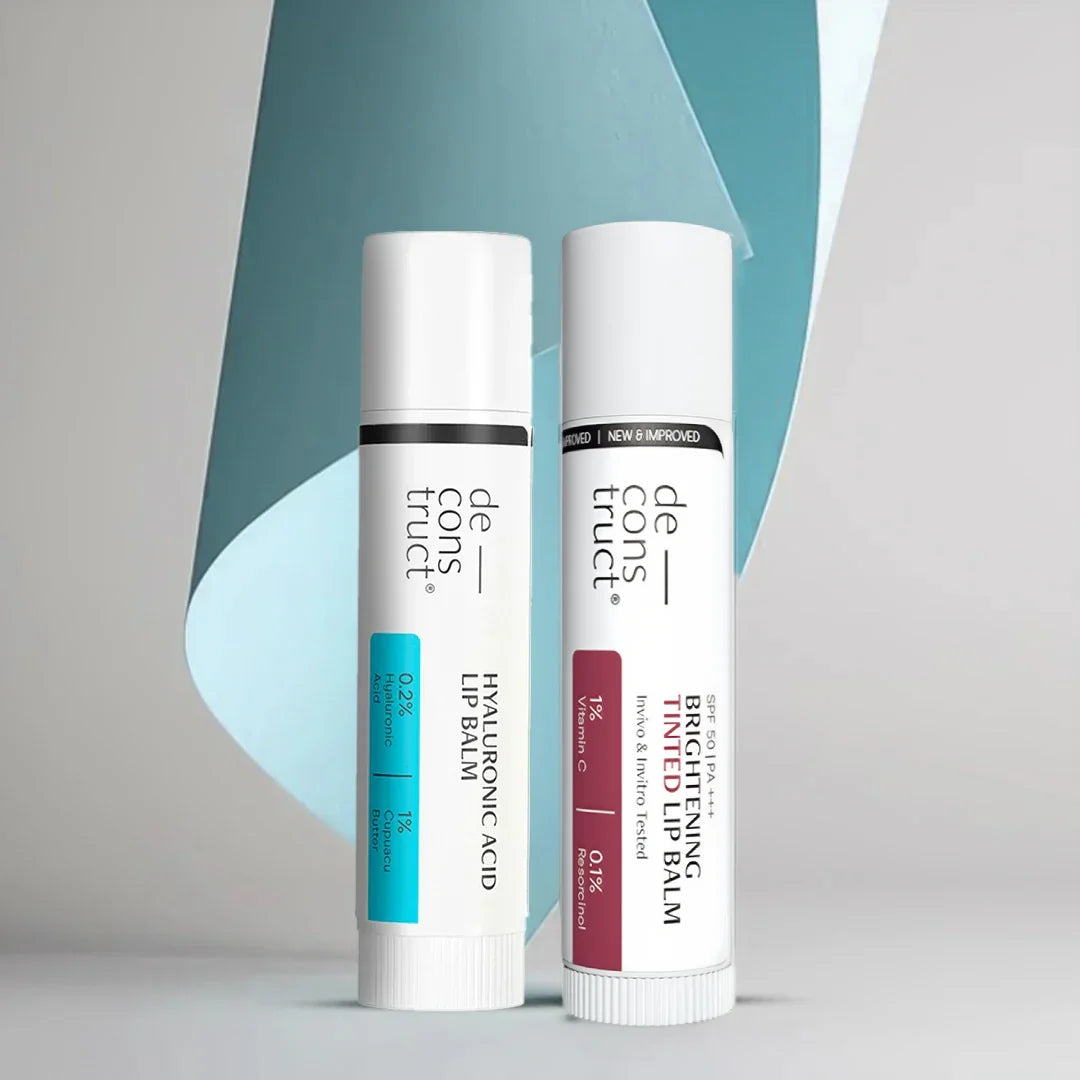
Deconstruct Brightening Lip Balm with SPF 50
- Formulated with 1% Vitamin C and 0.1% Resorcinol along with SPF 50 which protects against UV damage while also reducing dark and pigmented lips.
- 1% Vitamin C works to brighten the lips and reduce discoloration and brighten the lips.
- 0.1% Resorcinol fights sun-induced pigmentation caused by UV rays.
- Includes murumuru butter and Vitamin E which are rich emollients that nourish the lips and retain moisture.
- Built around 24-hour moisturization formulated under IN-VIVO tested rooms for dry, chapped lips.
- Free from petroleum, parabens, and artificial fragrance and is dermatologist-tested and science-backed.
Best Suitable For:
- Smoker lips
- Dark or pigmented lips
- Dry or chapped lips
- Multi-benefit purpose
- You want SPF + Hydration + Moisture + Brightening benefits + Fragrance-free
Can SPF Help Smoker Lips Recover Faster?
Not in the way people often assume. SPF doesn't directly speed up how quickly melanocytes calm down or how fast existing pigment fades, that's not really its job. What it does do is reduce additional sun-induced pigmentation from stacking on top of what's already there, essentially protecting your lips while the existing pigmentation changes at its own pace underneath.
This distinction matters more than it seems, because without it, people sometimes attribute pigmentation that isn't fading fast enough entirely to smoking, when ongoing unprotected sun exposure might actually be the bigger factor slowing things down.
What If My Lips Aren't Improving After Quitting?
Persistent pigmentation doesn't automatically mean quitting "didn't work." A few other things could be going on: your natural baseline pigmentation, ongoing sun exposure, post-inflammatory pigmentation from irritation, chronic lip irritation itself, medication-related pigmentation, another underlying condition entirely or, worth considering honestly, the original pigmentation may not have been primarily smoking-related in the first place.
That said, some changes genuinely warrant a professional look rather than more patience. See a dermatologist or dentist if a dark patch changes rapidly, becomes raised, starts bleeding, shows persistent ulceration, causes pain or if a new focal lesion develops that wasn't there before. Don't automatically file every case of persistent pigmentation under "smoker's lips" without ruling out something else first.
FAQs
How Long Does It Take for Smoker Lips to Return to Normal?
There's no guaranteed timeline. The amount and duration of smoking also plays a role in lip pigmentation. Provided that you have quit smoking and are religiously taking care of your lips, visible results should show up in 2-3 months.
Will Smoker Lips Go Back to Their Original Color After Quitting?
It is possible. Substantial improvement shows up when the lips are taken care of properly with constant SPF protection and constant hydration.
Can Lip Balm Speed Up Smoker Lip Recovery?
A basic lip balm only provides your lips with hydration. Brightening lip balms with SPF would be a better pick because they use active brightening ingredients and SPF filters which does more than one job for your lips.
Does SPF Help After Quitting Smoking?
Yes, SPF protects the lips from UV damage and we already know UV is the number one trigger for more melanin accumulation and dehydration which irritates the lips and contributes to dark pigmented lips.
Final Thoughts
Smoker's lips can genuinely recover after quitting, but it's a gradual process measured in months and years, not days or weeks and the exact outcome depends on how long you smoked, your natural pigmentation, sun exposure and your own individual biology.
Quitting is what actually removes the underlying trigger, everything else, moisturizing, SPF, gentle care, supports that process without replacing it. The Deconstruct Brightening Lip Balm SPF 50 fits well into that kind of supportive daily routine, hydration, sun protection and brightening care working alongside the real progress your body is already making on its own.