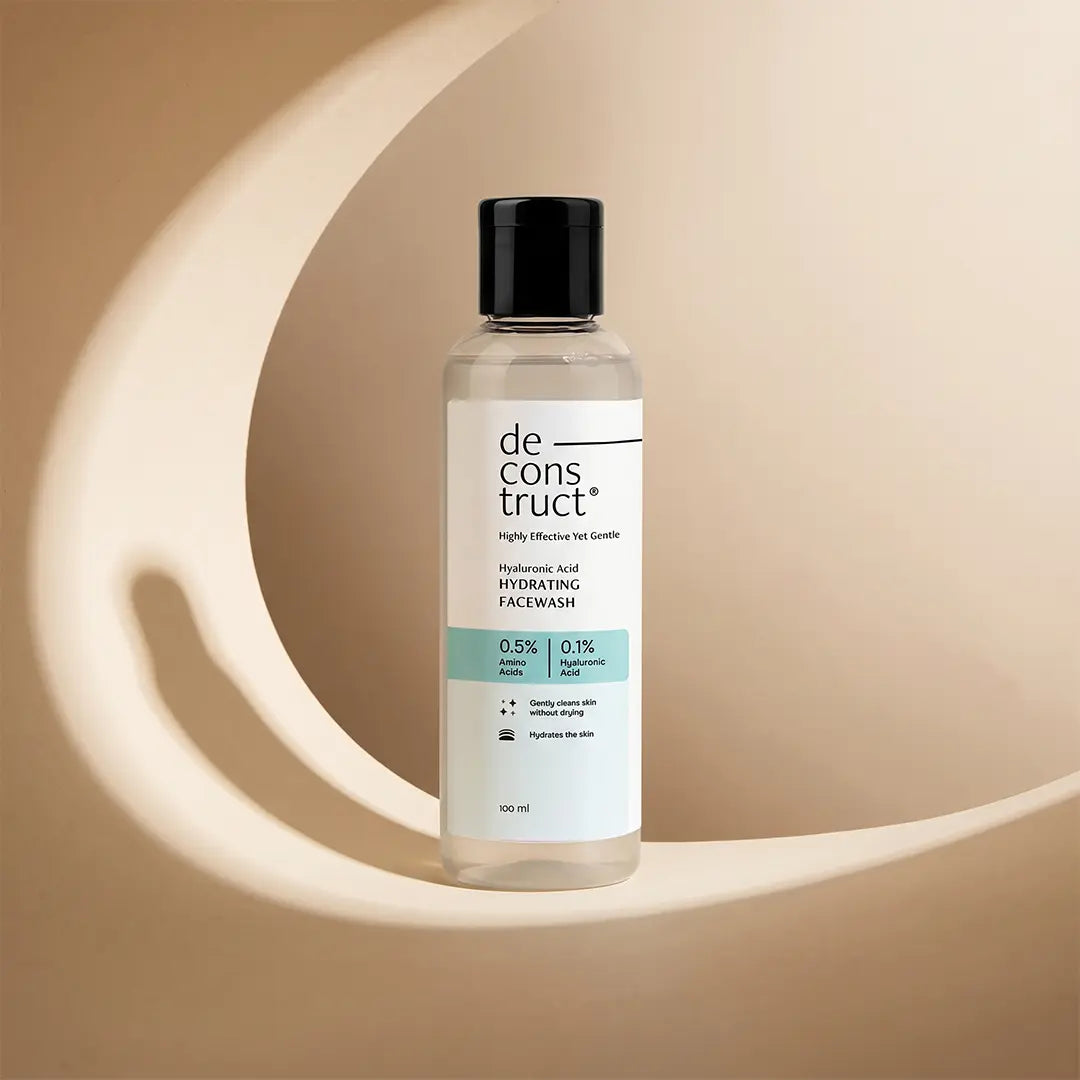

You apply your SPF so diligently, daily, ensuring your skin stays protected from UV, dark spots and premature ageing. You recognize the importance of daily sunscreen. But do you know that ensuring removing it all off is also important? If you’re wrapping up your day with a splash of water and calling it a day, you may be leaving behind leftover sunscreen gunk. How much SPF your face wash removes completely depends on the formula of sunscreen, its water resistance, how much was applied and even your face wash’s formulation.
In this dermatologist-approved blog, let’s answer how to remove SPF properly with the right face wash, when double cleanse is necessary, and choosing the right face wash for you.
Can Face Wash Remove Sunscreen?
According to the International Journal of Pharmaceutical Sciences, facial cleansers use surfactants and other formulation components to lift oils, dirt, sweat and product residues from the skin.
One thing to note is that sunscreen is deliberately formulated in a way that ensures it stays on your skin for prolonged exposure to sweat, water and friction, particularly if your SPF formula is sweat or water-resistant.
When it comes to removing SPF, a clinical study done in the Journal of Cosmetic Dermatology evaluated how the effectiveness of sunscreen removal depended heavily on the chemical formulation of the cleanser used.
One thing to note:
- Regular/non-water-resistant sunscreen: One suitable cleanser may be enough.
- Water-resistant/heavy/reapplied sunscreen: May require more thorough removal.
Why Is Sunscreen Sometimes Difficult to Wash Off?
Sunscreen is scientifically engineered to stay on your skin’s surface. To outlast the constant sweating, swimming, and friction, scientists have designed sunscreen deliberately to resist washing off without a fight.
- Most UV filters are oil-loving filters (lipophilic). This means they dissolve easily and bind beautifully into oils and fats, but repel water. Additionally, mineral sunscreens containing zinc oxide or titanium dioxide are also suspended in oil-bases to help them spread evenly. Standard water-based cleansers are not enough to break down these heavy oil-based SPF formulas.
- Sunscreen is meant to stay on your skin’s surface like a shield, binding to your skin cells and your skin barrier. Since it adheres so tightly to the skin, a gentle face wash may just glide over it.
Water-resistant formulas, tinted sunscreens, the type of formula (mineral or chemical), film-forming ingredients, heavy or multiple reapplications during the day are reasons why simply rinsing with water isn’t enough.
It’s not that all chemical sunscreens are difficult to remove or all mineral sunscreens require double cleansing. The difficulty depends on the whole formulation.
Recent dermatologist-led research similarly emphasizes that the sunscreen formulation and number of layers determine whether one or two cleansing steps are required to help effectively remove your SPF.
Is One Face Wash Enough to Remove Sunscreen?
The answer to this depends entirely on the type of sunscreen you wear and the kind of face wash, its ingredients and type of formula, you use.
One cleanse may be enough when:
- Sunscreen is not highly water-resistant
- No makeup was worn
- You applied a normal amount without multiple reapplications
- A suitable cleanser is used thoroughly
- Skin does not feel coated after cleansing
Consider a more thorough first cleanse when:
- Sunscreen is water-resistant
- Sunscreen was reapplied several times
- You wore tinted sunscreen
- Makeup was also applied
- A persistent film remains after cleansing
When Should You Double Cleanse Sunscreen?
Dermatologists agree that double-cleansing is not a hard and fast rule, or a universal requirement for everyone after wearing SPF.
Whether you double cleanse or not should be on a situational basis, depending on your routine and your sunscreen formula. Double cleansing is best done at night, if you meet the following criteria:
- You wear water-resistant sunscreen
- You use physical or mineral sunscreens
- You use heavy amounts of sunscreen along with multiple reapplications during the day
- You wear makeup or tinted SPF
- You have very oily or acne prone skin
- You live in a highly polluted environment with super high humidity
Here are instances where double cleansing may not be necessary:
- You don't wear makeup
- You slather just a light layer of sunscreen and mostly stay indoors
- Lightweight/non-water-resistant sunscreen
- Dry or easily irritated skin where excessive cleansing can cause discomfort
An oil-based cleanser can be particularly helpful in removing heavy sunscreen and water-resistant makeup and SPF, followed by a water-based, gentle, hydrating cleanser.
Understanding the difference between a face wash and a cleanser and if you need both, is necessary before knowing whether double cleansing is necessary or not.
How to Remove Sunscreen Properly
Step 1: Use an appropriate first cleanser when needed
Use an oil cleanser, cleansing balm or other suitable first-step cleanser for stubborn sunscreen and heavy makeup or both.
Step 2: Massage gently
Do not aggressively scrub the face. Be gentle and massage your face wash in circular motions.
Step 3: Rinse thoroughly
Use lukewarm water. Avoid temperatures that are too hot.
Step 4: Follow with a gentle face wash when needed
Use the second cleanse to remove remaining residue and wash away any excess dirt, oil and impurities left when wearing heavy water-resistant SPF with heavy makeup.
Step 5: Moisturize
Follow cleansing with a gentle, oil-free, hydrating and non-stripping moisturizer.
Only use double cleansing on days of heavy makeup, water-resistant and heavy sunscreen use with multiple applications. Otherwise a gentle face wash with lukewarm water avoiding excessive cleansing is more than enough.
How Can You Tell If Your Sunscreen Has Been Removed?
Explain that you don't need to aggressively test your skin. Here are simple ways to know if you’ve gotten all the sunscreen product off your face.
Possible signs of leftover product include:
- Persistent coated/filmy feeling
- Visible tinted residue
- Greasy residue that does not match your normal skin oil
- Sunscreen visibly remaining around hairline/eyebrows
Remember, you cannot reliably confirm complete sunscreen removal simply by how your skin feels or looks. Therefore, choose a cleansing method appropriate to the sunscreen formulation rather than repeatedly washing just to “feel extra clean.”
Face Wash vs Double Cleansing for Sunscreen Removal
Double cleansing is not always better. Sometimes you can overdo it. Here is how you can decide if your skin needs it based on the situation:
| Situation | Recommended approach |
|---|---|
| Lightweight, non-water-resistant sunscreen | One suitable cleanse may be sufficient |
| Water-resistant sunscreen | More thorough cleansing may be useful |
| Heavy/reapplied sunscreen | Consider first cleanse + face wash |
| Sunscreen + makeup | Double cleansing can be useful |
| Dry/sensitive skin | Avoid unnecessary repeated cleansing |
| Persistent residue after one cleanse | Consider a suitable first cleanse |
Does Sunscreen Type Matter for Removal?
Yes, the type of sunscreen heavily influences the removal. Whether its mineral or chemical, how it clings to your skin, how it interacts with water. There are essentially two main factors: the type - chemical or mineral, and the water-resistance of the formula.
- Chemical sunscreens: Easiest to remove in comparison. Can be removed with a water-based, gentle and hydrating face wash.
- Mineral sunscreens: Made with zinc oxide and titanium dioxide, are insoluble, meaning they do not break down in water. This makes them cling onto your skin and are notoriously known to leave behind a white ashy or chalky film which regular water-based SPF cannot break down easily on its own.
- Water-resistant vs non-water-resistant formula:
According to the study done in the Journal of Cosmetic Dermatology, a standard water-based face wash can easily remove standard everyday SPF. However, when hitting a water-resistant barrier, the same face wash is not as effective, leaving behind over a third (over 35%) of the SPF still glued to your face.
Common Sunscreen Removal Mistakes
- Washing repeatedly can dry out your skin’s essential oils
- Scrubbing aggressively can cause microscopic tears in your skin’s barrier
- Using very hot water can harm your skin causing burns and irritation
- Assuming water alone is enough, especially if you’re someone who wears a lot of makeup along with heavy water-resistant sunscreens
- Assuming everyone needs double cleansing
- Using an overly harsh cleanser and stripping your skin and its barrier
The Final Verdict
Removing sunscreen effectively is heavily dependent on the type and formulation of sunscreen, how water-resistant it is, and also whether you’re using the right face wash and/or cleanser along with it. While a single cleanse is enough for a regular sunscreen, for days when you apply heavy, water-resistant sunscreens, needing multiple reapplications throughout the day, or heavy makeup, you need more than a single cleanse, especially if you have very oily or acne prone skin.
FAQs
Does face wash remove water-resistant sunscreen?
Regular water-based face washes cannot remove water-resistant sunscreen entirely on their own. You may require an oil-based cleanser or a cleansing balm to effectively remove a water-resistant sunscreen.
Does face wash remove mineral sunscreen?
Mineral sunscreens, due to being made with zinc oxide and titanium dioxide, which are insoluble in water, need an oil-based cleanser or a cleansing balm as the primary step to help dissolve these oils before regular sunscreen.
Can I use a face wash twice to remove sunscreen?
If it is a water-resistant or mineral-based sunscreen, then choose an oil-based cleansing balm or micellar water to help dissolve oils first before using your water-based SPF for effectively removing your SPF.